









Maximizing Solar Efficiency with Accurate Solar Irradiance Sensors: Technology, Integration, and Performance

Fundamentals of Solar Irradiance and Its Measurement
Solar irradiance is the instantaneous power per unit area received from the Sun in the form of electromagnetic radiation, expressed in watts per square meter (W/m²). Accurate measurement of solar irradiance is essential for projects like Solar Plus Garden’s 10 MW solar plant and its integrated agrivoltaic systems, providing a basis for operational management, performance verification, and energy yield forecasting.
Solar irradiance refers specifically to the incident power on a surface at a given time, while solar radiation is the cumulative energy over a time interval, typically measured in watt-hours per square meter (Wh/m²). Both parameters are fundamental in system design and monitoring.
Two main irradiance components are measured in solar project monitoring: Global Horizontal Irradiance (GHI), capturing total radiation on a horizontal plane (including diffuse sky and direct sunlight), and Direct Normal Irradiance (DNI), representing direct solar radiation on a surface normal to the sun’s rays. GHI and DNI are expressed in W/m² and monitored continuously to track resource variability.
In the Solar Plus Garden project, continuous solar irradiance sensor data are integrated with plant output measurements to validate real-time performance against modeled expectations. This data underpins operational adjustments and maintenance planning across daily, seasonal, and annual intervals.
Types of Solar Irradiance Sensors and Their Sensing Principles
Solar irradiance sensors vary in design and spectral sensitivity, which affects measurement accuracy and application suitability. The primary sensor types are thermopile pyranometers, silicon photodiode-based sensors, and analog output variants.
- Thermopile pyranometers use a thermoelectric detector (thermopile) to produce a voltage proportional to absorbed solar radiation across a wide spectral range of approximately 300 to 2800 nanometers, covering ultraviolet, visible, and near-infrared radiation. These sensors meet ISO 9060 classifications for first-class and secondary standard, achieving measurement uncertainties typically within ±2% under stable conditions. Their response time is on the order of 5 seconds, suitable for continuous monitoring.
- Silicon photodiode sensors detect solar irradiance predominantly in the 400 to 1100 nm spectral range, limited to visible and near-visible light. While cost-effective and compact, their spectral mismatch with total solar radiation means they provide approximate irradiance values, generally with higher measurement uncertainty and temperature sensitivity. They are often calibrated against pyranometers for site-specific correlation.
- Analog solar irradiance sensors output proportional electrical signals, typically 0–5 volts or 4–20 mA current loops, compatible with a wide range of data acquisition systems in weather stations. These sensors require careful signal conditioning to reduce noise and drift, and periodic recalibration to maintain accuracy.
An example is the KestrelMet solar irradiance sensor kit, which integrates a silicon-cell sensor with analog output and weatherproof housing. Its calibration adheres to secondary reference standards traceable to primary radiometric standards, supporting deployment in decentralized monitoring applications such as agrivoltaic community sites.
Integrating Solar Irradiance Sensors into Weather Stations for Solar Project Monitoring
Solar irradiance sensors are embedded into weather stations that collect comprehensive environmental data at solar farm sites. Integration decisions consider sensor output type, communication protocol, and alignment with data logging infrastructure.
- Analog output sensors generate voltage (e.g., 0–5 V) or current signals (4–20 mA) that feed into analog-to-digital converters (ADC) integrated into programmable logic controllers or environmental data loggers. Signal integrity requires shielded cabling, proper grounding, and minimal cable length to reduce noise and voltage drop, particularly in environments with electromagnetic interference.
- Digital sensors utilize standardized communication protocols such as Modbus RTU (over RS-485) or SDI-12, enabling digital data transmission with error checking and device addressing. This reduces noise susceptibility and supports remotely managed calibration diagnostics. Digital integration also facilitates real-time sensor status monitoring and alerts.
Solar Plus Garden adheres to the IEC 61724-1 standard for photovoltaic plant performance monitoring, which defines parameters and sensor requirements including solar irradiance measurements. Sensors are mounted on fixed or solar-tracking mounts, maintaining orientation accuracy within ±2 degrees of the horizontal plane for GHI and within ±1 degree normal to the solar beam for DNI sensors. Annual recalibration occurs as part of scheduled maintenance to ensure compliance with performance criteria.
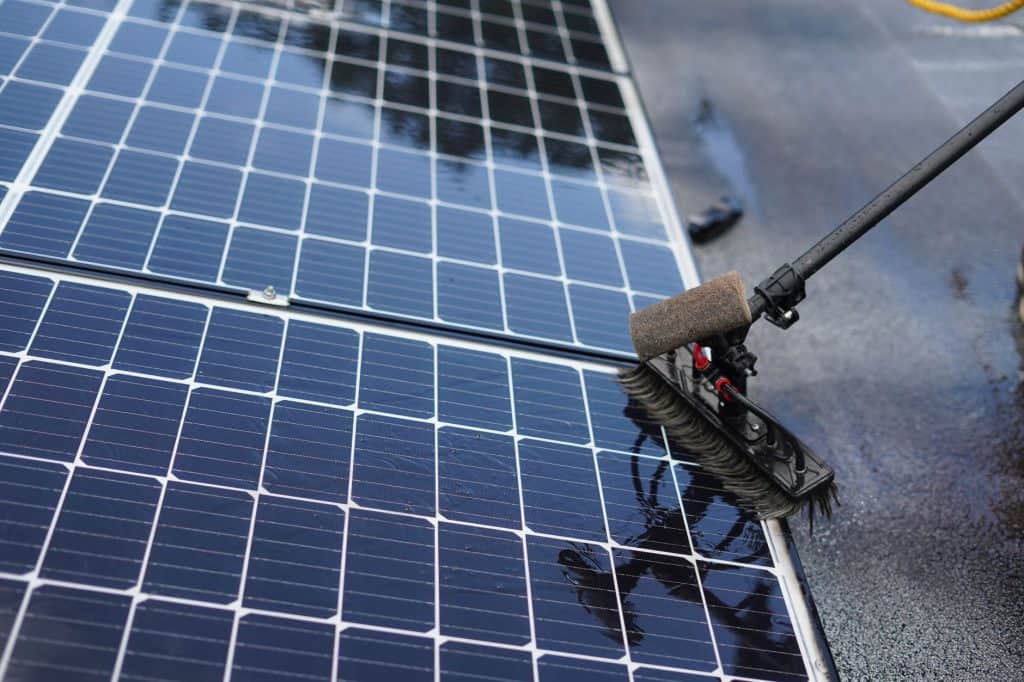
Mounting includes ventilated sensor domes and anti-soiling measures like automatic wipers or hydrophobic coatings where dust accumulation is prevalent, improving data quality by minimizing measurement artifacts associated with environmental conditions.
Calibrating and Maintaining Solar Irradiance Sensors to Ensure Long-Term Accuracy
Calibration aligns sensor electrical output with irradiance levels determined by traceable reference instruments, aiming to control overall measurement uncertainty within industry standards. Primary references include absolute cavity radiometers maintained by national metrology institutes, which provide the basis for secondary standard calibration at accredited laboratories.
Thermopile pyranometers can experience annual sensitivity drift in the range of 0.5% to 3%, depending on operating environment factors such as temperature variability, humidity, and exposure to pollutants. Silicon-cell sensors typically exhibit higher drift rates due to changes in spectral responsivity and temperature sensitivity.
Solar Plus Garden institutes annual recalibration procedures consistent with ISO 9060 guidelines, entailing sensor removal, cleaning, laboratory calibration against a reference standard, and replacement of absorptive domes or diffusers as needed. Maintenance includes monthly onsite cleaning of sensor surfaces and quarterly inspections of desiccant cartridges to prevent moisture-induced measurement errors.
Comprehensive documentation of calibration certificates, maintenance logs, and sensor serial numbers is maintained within the project’s data governance framework, enabling traceability and auditability required for investor confidence and regulatory compliance.
Interpreting Solar Irradiance Data for Optimizing Solar Plant Performance and Agrivoltaic Yield
Solar irradiance data serve as a cornerstone for operational control and agronomic optimization in the Solar Plus Garden system.
- Operational maintenance: Threshold-based monitoring triggers maintenance actions; for example, irradiance values below 200 W/m² sustained over several hours during expected peak sunlight times may indicate panel soiling, obstruction, or sensor faults. Prompt cleaning and inspection are scheduled accordingly.
- Performance forecasting: Correlation of irradiance data with inverter output enables detection of performance deviations exceeding typical variance bands (±5%) that may signal equipment degradation or shading. Trend analysis over 10-minute to daily intervals aids predictive maintenance planning.
- Agrivoltaic optimization: Integrating irradiance data with microclimate variables such as relative humidity and soil temperature supports refinement of planting schedules and irrigation management. Spectral irradiance variations measured through advanced sensors help estimate photosynthetically active radiation (PAR), directly linked to crop growth rates.
Operational decision models incorporate these irradiance data streams with local climatic baselines, adjusting thresholds seasonally and by crop type to optimize combined solar energy and agricultural productivity within the garden membership community.
Legal and Technical Standards Governing Solar Irradiance Sensor Use in Project Development
The selection and deployment of solar irradiance sensors are governed by international and regional standards ensuring homogeneity, data quality, and regulatory acceptance.
ISO 9060:2018 classifies pyranometers into three categories based on parameters such as response time (≤5 seconds for first-class), directional response (700 W/m² tilt error ≤±15 W/m²), and spectral selectivity (spectral mismatch less than ±3%). Deploying at least first-class or secondary standard sensors satisfies requirements for utility-scale solar farm monitoring and investor reporting.
Data integrity regulations applicable to Solar Plus Garden’s Estonian OÜ and Serbian DOO entities mandate transparent irradiance measurement and logging practices, supporting compliance with feed-in tariff eligibility and incentive programs. These often require continuous data archives stored securely with audit trails, as well as submission to national grid operators or regulatory bodies on predefined schedules (e.g., monthly or quarterly).
Solar Plus Garden’s structure incorporates strict data governance policies resembling escrow arrangements, where irradiance data and associated metadata are stored in tamper-evident databases accessible to investors and auditors. This ensures verifiable performance verification and aligns with long-term community investment transparency.
Advanced Technologies and Innovations in Solar Irradiance Sensing for Enhanced Agrivoltaic Systems
Recent developments expand the functionality and integration potential of solar irradiance sensors, specifically targeting agrivoltaic applications where combined energy and food production metrics are critical.
- Wireless and IoT-enabled sensors use low-power wide-area network (LPWAN) protocols such as LoRaWAN or NB-IoT to transmit high-resolution irradiance data at intervals as frequent as one measurement per minute. These systems reduce installation complexity and enable widespread sensor deployment across the 3,000-plot garden community.
- Multispectral irradiance sensors differentiate between spectral bands—ultraviolet, visible, and near-infrared—quantifying not only total irradiance but also spectral quality affecting photosynthesis. These sensors integrate narrowband filters and photodiode arrays, supporting refined crop growth models and shading analysis.
- AI-driven analytics platforms process multi-sensor data streams combining irradiance, temperature, humidity, and yield data using machine learning algorithms. This supports anomaly detection, yield prediction, and resource optimization, tailored to the Solar Plus Garden agrivoltaic system’s community-scale operations.
Solar Plus Garden’s current 6 to 12-month pilot integrates IoT-enabled irradiance sensors with cloud-hosted monitoring dashboards. This pilot assesses data latency, sensor network reliability, and analytics potential, informing future scaling decisions for the integrated solar plus garden investment model.
Frequently Asked Questions
What is the difference between a pyranometer and a silicon-cell solar irradiance sensor?
Pyranometers employ thermopile detectors covering the broadband spectrum of 300–2800 nm and offer measurement uncertainties typically below ±2%, making them suitable for precise solar radiation assessment. Silicon-cell sensors use photodiodes sensitive mostly to visible and near-visible light (400–1100 nm) and provide approximate irradiance levels with higher uncertainty and temperature-dependent response.
How often should solar irradiance sensors be calibrated to maintain reliable data?
Calibration against traceable reference instruments is recommended at least once per year to correct for sensor drift caused by environmental exposure and component aging. This annual interval supports maintenance of data accuracy within ±2% uncertainty as outlined in ISO 9060 and IEC 61724-1 standards.
Can solar irradiance sensor data improve the performance of agrivoltaic systems like Solar Plus Garden?
Yes. Solar irradiance measurements enable identification of shading, soiling, and sensor anomalies affecting solar panel output and crop light conditions. Coupled with microclimate monitoring, this data supports operational maintenance, yield forecasting, and optimized agronomic management within the community garden framework.
What are the key considerations when selecting a solar irradiance sensor for integration into a weather station?
Sensor selection must consider measurement accuracy class (per ISO 9060), spectral sensitivity aligned with project goals (GHI or DNI), output compatibility (analog voltage/current versus digital protocols like Modbus), calibration traceability, and environmental durability (IP rating, resistance to soiling). Integration requires matching sensor signal type with data logger inputs and ensuring proper sensor mounting to minimize measurement errors.
Conclusion
Precision in solar irradiance measurement through properly specified, installed, and calibrated solar irradiance sensors is fundamental for Solar Plus Garden’s 10 MW solar plant and its agrivoltaic community operations. Compliance with ISO 9060 and IEC 61724-1 standards, combined with routine calibration, ensures data quality necessary for operational control, investor confidence, and regulatory compliance.
Emerging sensor technologies, including IoT connectivity and multispectral sensing, offer prospects to enhance system monitoring and agronomic synergy. Ongoing pilot evaluations will clarify scalability and integration pathways, shaping future investment and operational strategies within Solar Plus Garden’s community-focused solar ecosystem. Given the dynamic regulatory landscape and technological advances, periodic review of sensor technology and data governance practices will be critical to sustaining transparency and performance over the project lifecycle.
Related reading
- Maximizing Solar Efficiency with Concentrated Photovoltaics: Technology and Investment Insights
- Optimizing Clean Energy: How Solar Integration with CHP and BESS Enhances Reliability and Efficiency
- How Solar PV Integration with Blockchain Technology Enhances Renewable Energy Systems and Investment Transparency