









How Solar Investment Green Bonds Finance Clean Energy Projects and Offer Sustainable Returns
Understanding Solar Investment Green Bonds and Their Structure
Solar investment green bonds are fixed income securities issued by capital markets participants to finance solar power projects within the renewable energy sector. These bonds provide investors with debt instruments that pay periodic interest and return principal at maturity, while channeling funds explicitly to environmentally beneficial initiatives.
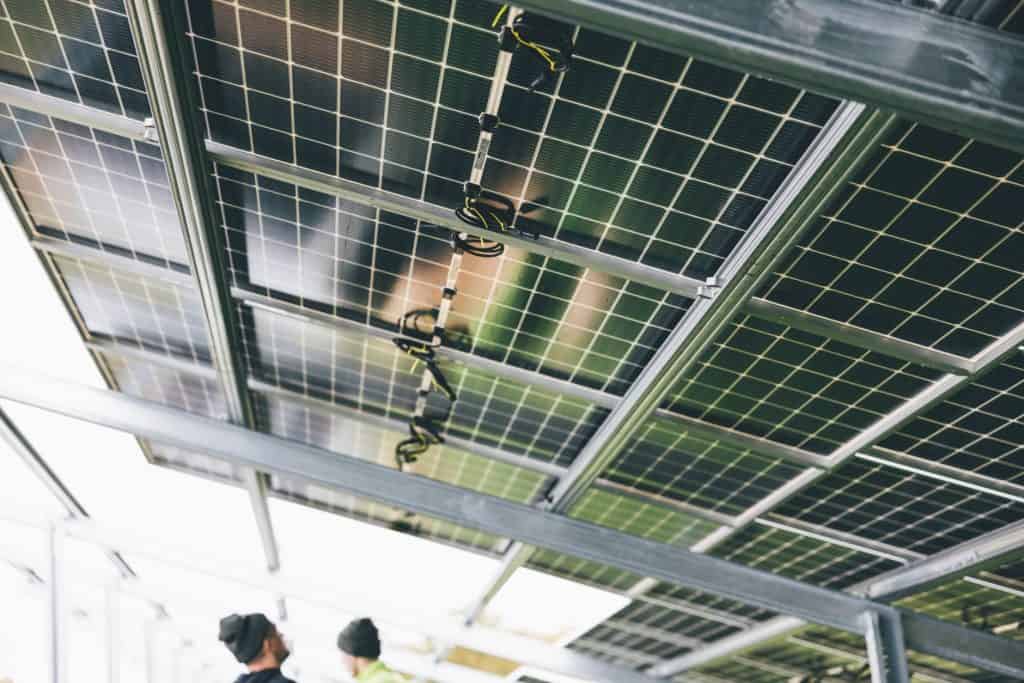
To qualify as green bonds, issuances must allocate their use of proceeds exclusively to solar power projects, including construction, operation, or expansion of photovoltaic installations and advanced solar panel technology such as bifacial panels or agrivoltaic systems that combine solar energy with agriculture on the same land. These criteria must comply with internationally recognized certification frameworks, primarily the International Capital Market Association’s (ICMA) Green Bond Principles established in 2022. These principles mandate formal project evaluation, transparent fund allocation, regular impact reporting, and third-party verification to certify environmental integrity.
The bond issuance process involves critical sequential steps to align with green bond certification: first, conducting detailed project evaluation to assess technical feasibility, environmental impact, and financial viability; second, structuring the bond issuance to satisfy certification and legal frameworks; third, marketing the bond to investors targeting sustainable finance portfolios; fourth, establishing escrow accounts or equivalent controls that lock funds to ensure proper use; and finally, maintaining ongoing transparency requirements through periodic financial and sustainability reporting audited by external verifiers. Unlike generic corporate bonds, solar green bonds integrate a demonstrable environmental impact dimension bridging capital markets and climate change mitigation.
Key Financial Characteristics and Mechanism of Solar Green Bonds
Solar green bonds are structured as fixed income securities with maturities commonly ranging from 5 to 15 years, reflecting the typical operational lifespan and expected cash flow periods of utility-scale solar power projects. Some bonds extend to 20 years if backed by long-term power purchase agreements (PPAs) providing revenue certainty.
The interest rates offered incorporate multiple factors affecting risk and return profiling:
- Credit risk assessment includes issuer solvency and project-specific technology reliability, including degradation rates of panels (typically 0.5% to 1% annual efficiency loss) and inverter replacement cycles around years 10-12;
- Solar energy production projections draw on quantitative irradiance data, typically derived from satellite and ground measurements over 10-20 years, adjusted by system efficiency metrics that range 18%-22% for crystalline silicon panels;
- Government incentives play a stabilizing role, including feed-in tariffs guaranteed for predefined periods (often 10-15 years), investment tax credits, or operational subsidies that reduce project revenue volatility;
- Prevailing market interest rates and investor appetite for sustainable finance instruments influence coupon pricing within the context of credit spreads for comparable commercial debt.
Typically, solar green bonds pay fixed or floating coupons annually or semi-annually, with principal repaid at maturity. Transparency requirements enforced by certification bodies and third-party verification prevent greenwashing by verifying that proceeds are used as promised and that solar projects continue meeting environmental standards.
How Solar Green Bonds Support Climate Change Mitigation and Energy Transition Goals
Solar green bonds directly finance solar power projects that reduce greenhouse gas emissions, contributing to measurable carbon footprint reduction through avoided CO2 emissions. This reduction is quantified using methodologies aligned with the Global Reporting Initiative (GRI) and Carbon Disclosure Project (CDP) standards, which calculate annual avoided emissions based on kilowatt-hours (kWh) generated and emission factors of displaced fossil fuel generation (commonly averaging 0.4 to 0.6 kg CO2 per kWh depending on electricity grid mix).
Such bonds are instruments within broader climate finance strategies aiming to support net-zero targets endorsed by the United Nations Framework Convention on Climate Change (UNFCCC) and regional frameworks like the European Green Deal, which mandates scaling renewables to achieve climate neutrality by 2050. Issuers embed solar green bond programs into their corporate social responsibility frameworks, reinforcing accountability and signaling alignment with sustainability strategies demanded by investors and regulators.
Ongoing impact reporting includes metrics such as:
- Total installed or maintained solar capacity, often reported in megawatts peak (MWp); typical utility projects span 1 MWp to 50 MWp;
- Annual renewable energy production measured in MWh;
- Estimated CO2 emissions avoided, calculated via established algorithms and verified by independent auditors;
- Local environmental co-benefits such as biodiversity enhancement in agrivoltaic installations and contributions to sustainable local food production.
These transparent, quantified outcomes ensure solar green bonds drive the energy transition by financing verifiable, impactful solar projects.
Investment Opportunities and Market Demand for Solar Investment Green Bonds
The market for solar investment green bonds has expanded steadily as investor awareness of climate-related financial risks rises alongside market demand for sustainable finance products. Institutional investors — including pension funds, insurance companies, and asset managers — increasingly integrate solar bonds to improve portfolio diversification by reducing exposure to traditional fossil fuel assets and capturing stable cash flows correlated with predictable solar energy output.
Government incentives remain critical drivers of market growth. These include:
- Investment tax credits and accelerated depreciation schedules;
- Feed-in tariffs or premium pricing secured through long-term PPAs;
- Regulatory frameworks facilitating grid interconnection and priority dispatch for renewables;
- Access to green financing guarantees reducing credit risk.
Such incentives improve bond credit profiles by enhancing project cash flow stability and lowering default probabilities.
According to market data from 2026, the European Union annually issues solar green bonds totaling several billion euros, representing a significant portion — up to 30% — of all renewable energy green bonds issued in the region. This reflects deepening investor appetite within regulated and voluntary sustainable finance markets.
Solar green bonds offer investors:
- Access to fixed income securities embedding environmental value;
- Potentially competitive interest rates supported by policy frameworks and credit enhancements;
- Opportunities to pool capital into scalable solar power projects that may be inaccessible individually.
Risk Factors and Mitigation Strategies in Solar Green Bond Investments
Solar green bond investors face distinct investment risks that require careful assessment:
- Technological risk: Includes solar panel degradation (0.5% to 1% efficiency annually), inverter failures requiring replacement typically within 10-12 years, and uncertainties from adoption of new solar technologies that may not meet expected performance;
- Regulatory risk: Potential changes in subsidy schemes, feed-in tariffs, or grid access regulations that could reduce project revenues;
- Credit risk: Relates to issuer solvency and the project’s operational financial viability, influenced by factors such as counterparty risk in off-take agreements;
- Market risk: Liquidity limitations in secondary bond markets that could impact price realization and exit strategies.
Projects like Solar Plus Garden implement mitigation measures including legally segregated entities (an Estonian OÜ for investment and a Serbian DOO for operations), escrow accounts controlling fund allocation, and transparency requirements that ensure proceeds are used strictly for solar power project expenses. This reduces operational risks and enhances investor protection. Additional controls comprise independent third-party audits and staggered payment tranches contingent on verified project milestones.
Given the long-term investment horizon, investors should evaluate these risks in conjunction with holding period and market conditions. Rigorous project evaluation prior to investment and ongoing disclosures facilitate informed portfolio risk management.
Regulatory Environment and Compliance for Solar Green Bond Issuance
By 2026, solar green bond issuance must comply with a comprehensive regulatory framework that includes the EU Green Bond Standard, effective across member states. This standard mandates detailed disclosure requirements such as pre-issuance impact assessment, ongoing reporting of environmental performance, use of the EU Taxonomy for sustainable activities, and mandatory external reviews certifying green credentials.
The ICMA Green Bond Principles continue as a global market benchmark, requiring:
- Explicit definition of use of proceeds;
- Formal evaluation and selection criteria aligned with sustainability objectives;
- Stringent transparency requirements through regular impact reporting;
- Independent external review by parties such as Sustainalytics or Vigeo Eiris.
Solar Plus Garden adheres to these standards by embedding impact reporting, third-party verification, and escrow mechanisms into its issuance and operational processes. This regulatory compliance fosters investor confidence by reducing investment risks associated with sustainability claims.
Evaluating Investor Suitability for Solar Investment Green Bonds
Investors suitable for solar investment green bonds typically have medium- to long-term horizons, moderate tolerance for technology and credit risk, and a preference for integrating sustainable finance with stable financial returns. They often seek to align portfolios with climate change mitigation goals and demonstrate corporate environmental responsibility.
Solar Plus Garden’s community membership model enhances accessibility by enabling participation without direct solar project investment. A one-time €200 membership fee combined with an optional €20 per month garden box subscription allows members to gain benefits from community-funded solar revenues supporting local agrivoltaic activities. This model accommodates entry points as low as €500, enabling small and medium investors to diversify into green bonds with manageable capital commitment.
Decision criteria for potential investors include:
- Alignment of risk tolerance with solar project and bond credit dynamics;
- Interest in both measurable environmental impact and steady income streams;
- Suitability of investment minimums and liquidity preferences within the fixed income asset class;
- Appetite for community engagement and additional social impact beyond pure financial exposure.
Frequently Asked Questions
What distinguishes solar investment green bonds from traditional corporate bonds?
Solar investment green bonds allocate proceeds legally and transparently to solar or renewable energy projects, certified under frameworks like the ICMA Green Bond Principles, unlike traditional corporate bonds that have no mandated environmental criteria or mandatory impact reporting.
How is the financial return on solar green bonds affected by government incentives?
Government incentives, including investment tax credits and feed-in tariffs, stabilize cash flows from solar energy production, reducing credit risk and enabling issuers to offer competitive interest rates comparable to other fixed income instruments of similar credit quality.
Can small investors participate in solar investment green bonds through Solar Plus Garden?
Yes, Solar Plus Garden provides access starting at €500, combined with a community membership model funded by solar revenues, widening participation in sustainable finance and renewable energy investments.
What are the primary risks investors should consider before buying solar green bonds?
Main risks include solar panel technology degradation, changing regulatory policies, issuer credit risk, and limited secondary market liquidity. Solar Plus Garden’s escrow and legal structures mitigate these through stringent controls and transparency.
Conclusion
Solar investment green bonds offer investors exposure to the financing of large-scale solar power projects aligned with global energy transition and climate change mitigation objectives. Regulatory clarity from the EU Green Bond Standard and ICMA guidelines, combined with established transparency requirements and third-party verification, substantiate their environmental credibility.
Platforms such as Solar Plus Garden facilitate inclusive access for smaller investors through community membership and low entry points, integrating financial returns with tangible social and environmental impact. This approach enables diversified portfolios aligned with sustainable finance mandates and corporate social responsibility commitments.
Investors are advised to maintain vigilant monitoring of evolving government incentives, regulatory developments, and technological advances in solar panel technology to manage dynamic investment risks and ensure alignment with long-term financial and environmental objectives.