

Solar Renewable Energy Transition for Investors in Community Solar
Current Role of Solar Energy in the Renewable Transition
As of early 2026, installed solar capacity across Europe exceeds 150 gigawatts (GW), accounting for approximately 15% of the EU’s renewable electricity generation. This capacity growth is a key component of the EU’s Fit for 55 package, aiming to increase renewable energy consumption to at least 40% of total energy use by 2030. Solar energy, specifically photovoltaic (PV) technology, is the fastest-growing renewable source within the EU, supporting national and regional decarbonization strategies.
The renewable energy mix is composed of multiple technologies. Photovoltaic solar and solar thermal technologies serve distinct roles: PV converts sunlight directly to electricity, representing over 90% of installed solar capacity, while solar thermal technology harnesses solar heat for residential, industrial, or district heating applications, contributing significantly to sustainable heat supply.
Solar power is integrated with wind, hydro, and biomass generation in energy strategies designed to match supply with variable demand profiles. Grid operators employ forecasting and balancing reserves to manage solar intermittency. In regions such as Southern Europe, where solar penetration exceeds 20% of peak demand during daylight, diversified renewable sources and energy storage solutions maintain grid stability, illustrating the energy strategy needed for the transition to clean energy at scale.
Mechanisms Behind Solar Renewable Energy Generation
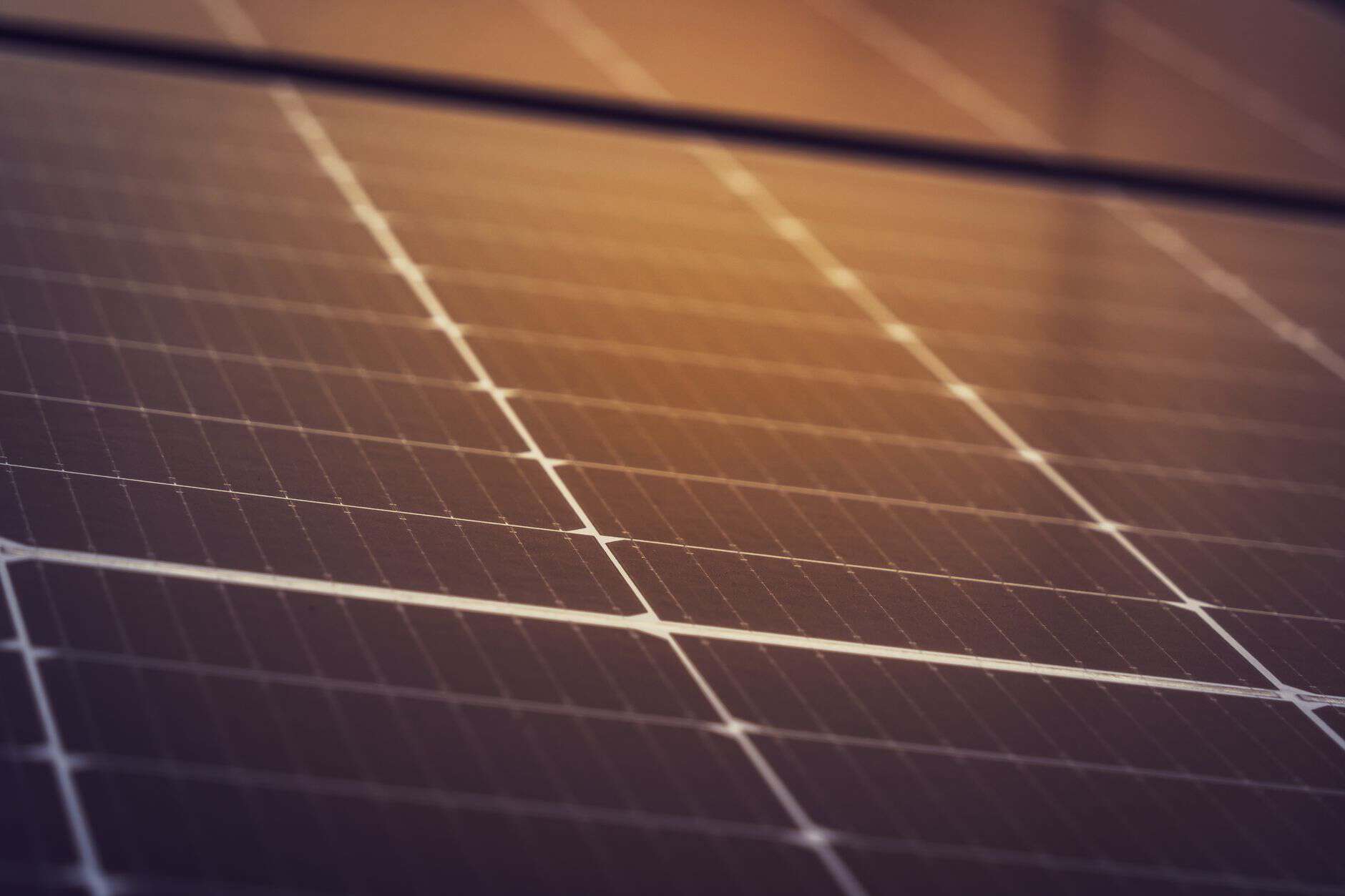
Photovoltaic solar panels convert sunlight to electricity using semiconductor materials, primarily silicon-based cells. Current commercially deployed solar PV modules exhibit conversion efficiencies between 18% and 22%, with monocrystalline panels reaching the upper end under standard test conditions (STC: 1,000 W/m² irradiance, 25°C cell temperature). These efficiencies determine the ratio of incident solar radiation converted to usable electric power.
Solar thermal technology uses flat-plate or evacuated-tube collectors to absorb solar heat, transferring it to water or heat-transfer fluids for applications such as space heating or industrial processes. Systems can achieve thermal efficiencies ranging from 40% to 70%, depending on collector design and operating temperature, and can be integrated into combined heat and power (CHP) systems to augment renewable energy shares beyond electricity production.
Concentrated Solar Power (CSP) employs heliostats or parabolic troughs to concentrate sunlight to temperatures between 400 and 1,000 °C. This thermal energy heats a working fluid, typically molten salt or oil, which enables energy storage through thermal reservoirs, allowing dispatchable electricity generation after sunset. CSP plants deliver capacity factors up to 40%, higher than typical PV systems, mitigating solar variability challenges within integrated grids.
Grid integration of solar power requires additional infrastructure such as inverters meeting EU Grid Code requirements (such as voltage and frequency regulation), battery energy storage systems (BESS) sized to buffer short-term fluctuations, and demand response mechanisms. These components together ensure load balancing and power quality as solar capacity scales towards multi-gigawatt levels.
Community Investment Models Supporting Solar Transition
Solar Plus Garden offers a community solar investment model based on a planned 10 MW centrale solare, managed by a Serbian DOO and incorporated within an Estonian OÜ entity founded on 20 February 2026. This dual-legal structure is designed to comply with both Serbian and EU regulations, establishing a transparent and regulated investment framework suitable for small to medium investors.
The Garden membership model enables participation without direct capital exposure to solar asset equity. A one-time membership fee of €200 is invested into the solar project’s capital pool, producing funds allocated exclusively toward project financing. Additionally, members may subscribe to a €20 monthly Fioriera, receiving 18 deliveries annually of fresh, local produce, linking renewable energy investment with tangible community benefits.
Funds collected pass through rigorously monitored escrow and payment controls to prevent unauthorized expenditure, maintaining a secure investment environment consistent with financial supervisory requirements in Estonia and Serbia.
The investor journey includes the following sequence:
- Registration and membership fee payment to join the Garden community
- Option to extend participation through equity or loan instruments in the 10 MW solar plant
- Receipt of returns from solar-generated revenue streams and/or community produce
The operational separation between the solar plant owner and Garden community entity provides clear delineation of asset ownership and service provision. This structure enhances legal clarity and segregates financial risks, preserving investor interests while fostering sustainable energy community engagement.
Benefits of Integrating Agrivoltaics in Solar Renewable Energy Projects
Solar Plus Garden si integra agrivoltaico, combining photovoltaic solar power generation with agricultural production on the same land area. Panels are elevated approximately 2.5 meters above ground to permit cultivation beneath, optimizing land use and increasing overall site productivity.
Research indicates that strategically spaced PV panels reduce total irradiance by 10–15%, but this shading mitigates heat stress on plants and lowers water evaporation, improving crop resilience. Crop varieties are selected based on tolerance to partial shading and local microclimates. This approach balances solar energy yield, which may decline by up to 5% due to shading, against improved agricultural outputs, supporting sustainable food systems alongside renewable energy production.
The Garden community supports environmental goals by maintaining local biodiversity and enhancing soil health through regenerative agriculture practices linked with agrivoltaics. Economically, it enables up to 3,000 parcel memberships, creating scalable community involvement and consistent delivery logistics for 18 produce shipments yearly.
Regulatory and Legal Framework Guiding Solar Plus Garden Operations
Solar Plus Garden operates under a dual legal entity framework: the Estonian OÜ holds the project’s overarching ownership and governance role, while the Serbian DOO owns and operates the physical 10 MW solar plant. This separation complies with EU cross-border investment standards and Serbian energy sector regulations effective as of early 2026.
The legal framework reflects compliance with EU directives, including the Renewable Energy Directive (EU) 2018/2001 and relevant Serbian national laws governing renewable power generation, investor protection, and financial transparency.
A transparent payment and escrow framework governs all investor funds, structured to comply with anti-money laundering (AML) standards and financial supervisory authority requirements in Estonia. Unlike escrow-like services without oversight, this model implements continuous monitoring of fund allocation, pre-authorized disbursements, and mandatory reporting to maintain trust and accountability.
Clear ownership partitions exist, with the Serbian DOO controlling solar assets and the separate Garden community entity possessing rights over garden operations and membership services. This legal clarity underpins the project’s ability to scale and offer secure investment rights without financial or operational cross-contamination.
Operational Steps to Join and Benefit from the Solar Renewable Energy Transition
Prospective members register through the Solar Plus Garden platform, submitting identification as part of Know-Your-Customer (KYC) and Anti-Money Laundering (AML) compliance. Upon paying the one-time €200 membership fee, users gain access to community features including garden participation and updates.
Members may increase their exposure to the solar energy transition by investing in the 10 MW solar plant via equity shares or loan agreements tailored to their financial tolerance. Investment registration and verification conclude within 48 hours, streamlining onboarding.
Fund flows follow governed steps: payments are received into monitored escrow accounts; funds are released against approved project milestones; solar PV output is tracked monthly using standardized measurement protocols (e.g., IEC 61724 performance monitoring standard); and revenue from electricity sales under relevant power purchase agreements (PPAs) or feed-in tariff schemes is distributed accordingly.
Returns materialize as either financial payouts calibrated by project generation performance or as community produce distributions. Operational transparency is ensured by internal tracking using Notion AI for project data consolidation and Trello for task execution, supporting clear communication and milestone visibility for members.
Environmental and Economic Benefits of the Solar Renewable Energy Transition
The shift to solar renewable energy reduces carbon dioxide emissions proportionate to the displacement of fossil fuel generation. For instance, each megawatt-hour (MWh) of electricity from the Solar Plus Garden 10 MW plant could abate roughly 400–500 kilograms of CO₂ compared with coal-based generation, contributing to the EU’s target to reduce emissions by 55% relative to 1990 levels by 2030.
Economically, stable revenue streams are generated via power sales under contracts designed to minimize dependency on variable subsidies, ensuring investor cash flow reliability. The transparent regulated investment model limits risk exposure and upholds fund security through strict financial controls.
Combining solar power with local agriculture fosters regional sustainable energy transitions, promoting resilience through diversified income streams and enhanced food security. The appartenenza alla comunità structure supports social cohesion by engaging local participants directly in clean energy benefits and regenerative agriculture practices.
Investors thereby contribute to regional and EU decarbonization strategies, advancing the shift to renewable energy sources while realizing economic and environmental returns aligned with demand-driven clean power generation and sustainable local produce provision.
FAQ
- How does the Garden membership model allow access without direct solar investment?
- A single €200 membership fee is allocated into the solar project capital, granting access to the community, services, and agricultural produce without requiring equity participation in the solar plant itself.
- What technologies does Solar Plus Garden use in its solar power generation?
- The primary technology deployed is crystalline photovoltaic solar panels for electricity generation, with agrivoltaic integration enhancing land productivity by co-locating solar infrastructure and food production.
- What legal protections ensure that investor funds are used transparently in Solar Plus Garden?
- The project uses a clearly defined payment and escrow model governed by Estonian and Serbian legal standards, augmented by continuous oversight to strictly limit fund usage to authorized project costs.
- How can small investors participate in the solar renewable energy transition through Solar Plus Garden?
- Small and medium investors can join by paying the Garden membership fee, allowing indirect participation in the solar power transition and access to community benefits without additional capital commitment to solar assets.
Illustration: Simplified Year-by-Year Investment and Return Flow for a Typical Garden Member
| Year | Membership Fee (€) | Garden Box Cost (€) | Solar Revenue Share (€)* | Community Produce Value (€/year) | Net Financial Outlay (€) |
|---|---|---|---|---|---|
| Anno 1 | 200 (one-time) | 360 (20 x 18 months deliveries) | 0 (initial ramp-up period) | ~200 (estimated retail value of 18 deliveries) | 360 (garden box) + 200 (membership) – 200 (produce value) = 360 net |
| Year 2 | 0 | 360 | Variable, dependent on solar plant generation and payment terms | ~200 | 360 (garden box) – solar revenue share – 200 (produce value) |
| Year 3 and beyond | 0 | 360 | Increasing solar revenue as plant reaches full operational performance | ~200 | 360 – solar revenue share – 200 net adjusted annually |
*Solar revenue share varies with generation output and contractual terms. Garden box value assumes market price of fresh local produce deliveries. All values are indicative and subject to operational performance.
Letture correlate
- Investire in progetti di energia rinnovabile: una guida pratica per investitori lungimiranti.
- Investire in progetti di energia rinnovabile: una guida pratica per proprietari immobiliari, sviluppatori e investitori.
- Come un sistema di scambio di energia solare integra le energie rinnovabili e gli investimenti della comunità per una gestione efficace dell'energia solare