









Solar Panel Types and Efficiency: A Guide to Solar Technology Comparison
Choosing the best solar begins with understanding how each solar panel type converts sunlight into solar power. Today’s solar industry offers different types of solar panels, each with distinct efficiency levels, costs, and panel technology. From monocrystalline solar to polycrystalline solar panels and thin-film panels, the module type you select shapes system size, panel efficiency, and long-term returns. This guide explains how solar cells, materials, and manufacturing influence efficiency rating and performance so you can match a solar energy system to your roof, budget, and energy goals. Whether you’re planning a solar installation for a home or business, comparing solar technology helps identify efficient solar panels that maximize solar energy production over decades.
Understanding Different Types of Solar Panels

Different types of solar panels use varied solar technology to capture solar energy and convert it to electricity. The main types of solar panel are monocrystalline, polycrystalline, and thin-film, each with trade-offs in efficiency, cost, and weight. Monocrystalline solar typically delivers higher efficiency, while polycrystalline solar offers a balance of price and performance. Thin-film panels prioritize low weight and flexible installation. Some advanced options, like bifacial panels and PERC solar enhancements, further raise efficiency levels by capturing additional light. Understanding how panels use materials and design helps you compare module type, efficiency rating, and system layout for larger panel arrays or space-limited roofs.
Monocrystalline Solar Panels
Monocrystalline panels are usually the most efficient, producing more power per square foot. These monocrystalline panels achieve higher efficiency and strong efficiency ratings, producing more solar power per square foot than other types of solar panel. With PERC solar cell designs and, in some cases, bifacial solar configurations, this panel technology pushes panel efficiency to leading efficiency levels. They suit space-limited roofs because fewer panels are needed to reach a target output. Premium brands, including names like Canadian Solar among others in the solar industry, offer monocrystalline options optimized for residential and commercial solar installation where long-term solar panel efficiency is a priority.
Polycrystalline Solar Panels
Polycrystalline panels typically have lower efficiency but offer strong value when space is ample. Polycrystalline solar panels use multiple silicon crystals per solar cell, which introduces boundaries that typically result in lower efficiency compared to monocrystalline panels. However, this solar panel type can provide a cost-effective path to solar energy, especially when ample roof or ground space allows for a larger panel array. A modern polycrystalline panel can still offer solid efficiency levels for many solar panel systems, striking a balance between price and performance in different types of solar projects. For budget-conscious solar installation plans, polycrystalline solar can be the best solar value when the efficiency rating is adequate for energy goals. As panel technology improves, some poly modules incorporate features inspired by PERC solar to narrow the panel efficiency gap.
Thin-Film Solar Panels
Thin-film panels trade lower efficiency for low weight, flexibility, and better performance on unconventional surfaces. Thin-film solar panels are made by depositing photovoltaic materials onto glass, metal, or flexible substrates, resulting in lightweight modules that simplify certain solar installation scenarios. While thin-film solar panel options usually have lower efficiency, they excel where weight, shading tolerance, or unconventional surfaces matter more than maximum panel efficiency. This module type includes technologies like amorphous silicon, CdTe, and CIGS, each a distinct type of solar with varied efficiency levels. Thin-film panels can cover large areas effectively, and their uniform look appeals to some architectural designs. Although not typically the most efficient panel choice, advances in solar technology and bifacial panels in niche applications continue to expand how thin-film panels use light to deliver practical solar energy in the solar industry.
Efficiency of Solar Panels

Panel efficiency dictates energy yield per area, impacting system size and cost. Across different types of solar panels, panel technology and materials influence how panels use light, heat, and electrical pathways inside each solar cell. Higher-efficiency modules can reduce the number of panels needed, which is crucial when roof space is limited. Monocrystalline panels and bifacial solar options tend to deliver higher efficiency, while polycrystalline solar panels and thin-film panels often trade some efficiency for lower cost or weight. Understanding these trade-offs helps you select the solar panel type and module type that supports your solar installation goals with efficient solar panels.
What is Solar Panel Efficiency?
Efficiency is the percentage of sunlight converted to electricity under standard test conditions. It reflects how effectively a solar cell turns photons into electrons, and it is summarized as an efficiency rating on product datasheets. A higher efficiency panel produces more solar power from the same area, enabling a smaller array or avoiding a larger panel footprint. In practice, efficiency levels vary among different types of solar panels because panel technology, manufacturing quality, and solar technology features like PERC solar affect internal losses. For homeowners and businesses, solar panel efficiency impacts overall solar energy yield, inverter sizing, and the cost per watt of a solar energy system. Accurate ratings help compare a type of solar module to find the best solar fit.
Factors Affecting Panel Efficiency
Cell quality, architecture (PERC, bifacial), temperature, shading, and soiling are major drivers of real-world efficiency. Material purity and crystal structure determine recombination losses, so monocrystalline solar often achieves higher efficiency than a comparable polycrystalline panel. Advanced panel technology such as PERC solar improves light capture and electron flow, while bifacial panels harvest light from both sides to lift efficiency levels on reflective surfaces. Temperature, shading, and soiling reduce solar panel efficiency in real-world conditions, as do wiring and mismatch losses in solar panel systems. Encapsulation materials, anti-reflective coatings, and how panels use busbars also matter. Installation angle and ventilation affect heat buildup, and choosing the right solar panel type and module type for climate and roof space can prevent lower efficiency outcomes over decades of solar installation.
Comparative Efficiency of Different Types of Solar Panels
Monocrystalline typically leads in efficiency, polycrystalline offers lower-cost performance, and thin-film excels in specialized use cases. Among different types of solar, monocrystalline panels typically deliver higher efficiency thanks to uniform crystal structure, often leading the solar industry’s efficiency rating charts. Polycrystalline solar panels provide solid performance at lower cost but generally show lower efficiency, requiring a larger panel array to match output. Thin-film solar panel technologies, including various thin-film panels, are usually the lowest in panel efficiency but excel where weight, flexibility, or diffuse light response matters. Bifacial solar modules can outperform standard monocrystalline in suitable sites by capturing rear-side irradiance, while premium manufacturers such as Canadian Solar offer efficient panel options across multiple types of solar panel. Comparing solar technology side by side helps identify efficient solar panels that meet space, budget, and energy goals in a solar energy system.
Technological Advances in Solar Panel Types

Modern cell architectures and materials are pushing efficiencies higher while reducing costs. Manufacturers are refining solar cell architectures, materials, and panel technology to deliver efficient solar panels that produce more solar power per square foot. From monocrystalline solar to polycrystalline solar panels and thin-film solar, breakthroughs in passivation, packaging, and light management are raising efficiency levels and extending lifespans in solar panel systems. PERC, heterojunction, and bifacial designs increasingly boost real-world performance. As different types of solar panels evolve, installers can match the best solar module type to site constraints, enabling smarter solar installation strategies and reliable solar energy system performance.
Innovations in Monocrystalline Technology
PERC, TOPCon, half-cut, and multi-busbar designs lead to top-tier mono efficiency. PERC solar and TOPCon passivation reduce recombination losses, while multi-busbar and half-cut cell layouts lower resistance, lifting panel efficiency without increasing footprint. Bifacial panels based on monocrystalline solar capture rear-side irradiance, translating to higher efficiency levels on reflective rooftops and ground mounts. Premium brands, including Canadian Solar, pair high-purity wafers with robust encapsulation, resulting in an efficient panel with strong reliability metrics and an elevated efficiency rating. Emerging heterojunction and back-contact architectures further optimize how panels use light, converting more solar energy into solar power with less heat loss. These innovations make this type of solar ideal where roof space is limited and a larger panel count is impractical.
| Design/Feature | Main Benefit |
|---|---|
| PERC and TOPCon passivation | Reduce recombination losses to boost efficiency |
| Half-cut and multi-busbar layouts | Lower resistance without increasing panel footprint |
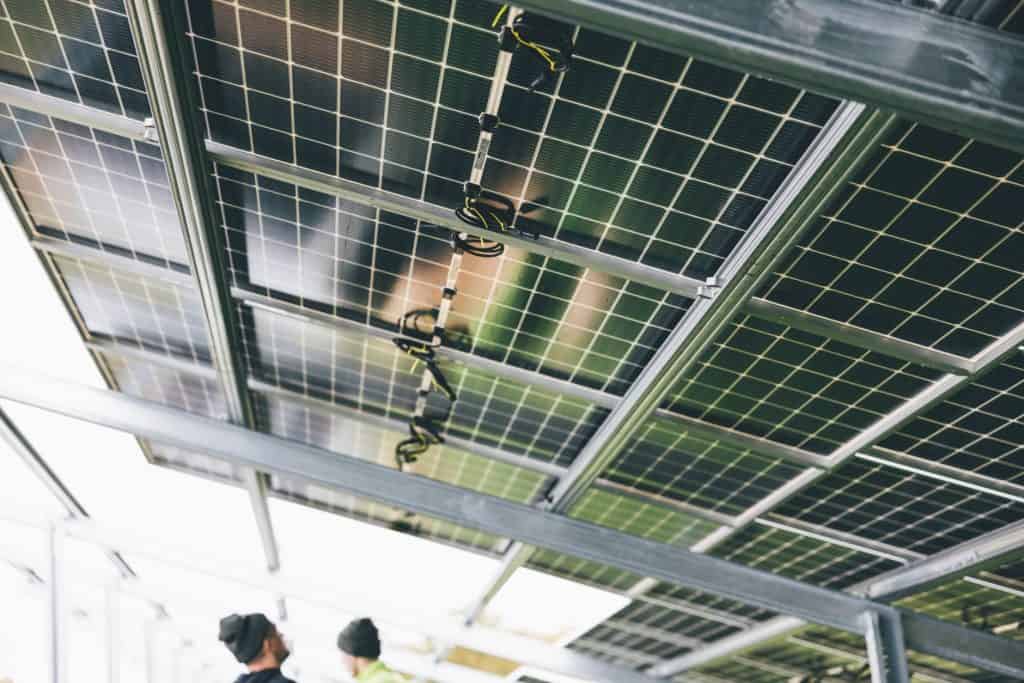
| Bifacial monocrystalline panels | Capture rear-side irradiance for higher output on reflective sites |
| High-purity wafers and robust encapsulation | Improve reliability metrics and elevate efficiency rating |
| Heterojunction and back-contact architectures | Convert more light to power with less heat loss |
Advancements in Polycrystalline Solar Panels
Recent polycrystalline improvements narrow the efficiency gap with mono while keeping costs low. Polycrystalline solar has benefited from manufacturing refinements that narrow the historical gap with monocrystalline. Modern polycrystalline panel designs integrate PERC solar, improved texturing, and enhanced anti-reflective coatings to lift solar panel efficiency beyond earlier generations. Half-cut formats and better busbar layouts reduce resistive losses, while upgraded glass and encapsulants preserve efficiency levels in harsh climates. Although a polycrystalline panel still tends to show lower efficiency than mono, cost-per-watt gains and reliable performance make this solar panel type attractive for sites that can host a larger panel array. Some polycrystalline solar panels also adopt bifacial solar configurations for added yield on reflective surfaces. As a result, this type of solar balances price and performance, offering an efficient panel option for budget-focused solar installation projects.
Future of Thin-Film Solar Technology
Thin-film gains from CIGS/CdTe efficiency boosts, tandem stacks, and better encapsulation for hot or shaded sites. Thin-film solar is advancing through new materials and smarter deposition methods that enhance panel efficiency while preserving low weight and flexibility. CIGS and CdTe thin-film panels now achieve improved efficiency rating numbers due to better bandgap tuning, light trapping, and passivation. Novel tandem stacks and perovskite-on-thin-film approaches promise higher efficiency by capturing a broader spectrum of solar energy. Manufacturers are refining encapsulation, enabling thin-film solar panel modules to maintain output in hot or shaded conditions where different types of solar often suffer. Bifacial thin-film concepts and large-format module type designs aim to maximize how panels use diffuse and reflected light. While thin-film typically trails monocrystalline in higher efficiency, its unique form factors unlock applications where traditional types of solar panel are impractical, expanding options for future solar panel systems.
Choosing the Best Type of Solar for Your Needs

Match panel type to energy goals, budget, and roof constraints for best results. Selecting the best solar solution requires matching the solar panel type to your energy profile, site constraints, and budget. Start by defining annual solar energy consumption and roof availability, then compare different types of solar panels on efficiency levels, cost, and warranty. Monocrystalline panels deliver higher efficiency where space is limited, while polycrystalline solar panels can minimize upfront cost when a larger panel array fits. Thin-film solar excels on low-load rooftops or irregular surfaces, and bifacial solar lifts yield over reflective ground. Compare efficiency rating, degradation, temperature coefficient, incentives, and installer expertise to optimize lifetime value. A well-sized solar energy system that aligns panel efficiency with site conditions will maximize returns and reliability.
| Panel type | Best use case |
|---|---|
| Monocrystalline | Higher efficiency where roof space is limited |
| Polycrystalline | Lower upfront cost when a larger array fits |
| Thin-film | Low-load rooftops or irregular surfaces |
| Bifacial | Boosted yield over reflective ground |
| Comparison factors | Purpose |
|---|---|
| Efficiency rating | Match output to limited space |
| Degradation | Preserve long-term performance |
| Temperature coefficient | Maintain output in heat |
| Incentives | Improve project economics |
| Installer expertise | Ensure quality design and reliability |
Evaluating Solar Panel Models
Prioritize verified efficiency, temperature coefficients, reliability data, and strong warranties. When comparing models, focus on verified solar panel efficiency, power class, and the efficiency rating under standard test conditions. Examine datasheets for panel technology details such as PERC solar, half-cut cells, multi-busbar layouts, and whether panels use bifacial designs. Look for third-party certifications and accelerated aging results that indicate an efficient panel will maintain output. Check temperature coefficients to understand performance on hot roofs, and compare warranty terms for product and linear output. Monocrystalline solar from reputable brands, including Canadian Solar, often combines higher efficiency with strong reliability, while a polycrystalline panel may offer lower cost per watt. Thin-film panels can win in diffuse light or weight-limited sites. Balance price, availability, and installer support to select the best solar model for your solar installation.
| Evaluation Focus | What to Check |
|---|---|
| Performance | Verified efficiency, power class, STC efficiency rating, temperature coefficients |
| Reliability | Third-party certifications, accelerated aging results, product and linear output warranties |
| Technology Details | PERC, half-cut cells, multi-busbar layouts, bifacial designs |
| Selection Factors | Price, availability, installer support |
Determining the Right Size and Type of Solar Panel
Use your annual kWh and roof layout to size the array; higher-efficiency panels reduce module count. Right-sizing begins with your annual kWh usage, peak demand, and roof geometry. Use production estimates to calculate how many modules each solar panel type requires, then map layouts to avoid shading. Monocrystalline panels with higher efficiency reduce the count needed, ideal when setbacks or obstacles constrain space. If roof area is ample, polycrystalline solar can meet targets at lower cost even with a larger panel count. Thin-film solar panel options fit low-load structures or curved surfaces where rigid modules struggle. Consider bifacial panels on light-colored membranes or ground mounts to boost yield. Evaluate inverter and racking compatibility with each module type, and plan wire runs to limit losses. Align panel technology with climate, soiling risk, and maintenance access to build a durable solar energy system.
Benefits of Efficient Solar Panels in 2026
By 2026, higher-efficiency panels will cut system size, balance-of-system costs, and improve lifetime returns. By 2026, efficient solar panels are set to deliver higher efficiency with improved durability, enabling more solar power from limited rooftops. Advances in solar technology such as PERC solar, heterojunction, and refined bifacial solar will push efficiency levels while lowering balance-of-system costs. An efficient panel reduces racking, labor, and inverter capacity for the same energy output. Monocrystalline panels will continue to lead, while polycrystalline solar narrows gaps through better passivation and texturing. Thin-film panels will gain ground in high-temperature and low-weight applications. Smarter monitoring in solar panel systems will optimize how panels use light throughout the day. For homeowners and businesses, these improvements mean better lifetime economics, greater resilience, and more flexible designs across different types of solar panel choices.
Invest in the Future with Solar Plus Garden
Why just install solar when you can grow an ecosystem? The Solar Plus Garden project is a premier investment opportunity for those who want their capital to work for both the planet and the plate. By investing in our solar-plus-garden plots, you aren’t just buying into renewable energy; you’re securing a stake in a resilient, dual-income land model.
Why Invest in Solar Plus Garden?
Dual Revenue Streams: Benefit from high-efficiency solar energy production paired with high-value naturally grown crop yields.
Land Efficiency: Our designs use advanced racking to ensure that while the panels capture the sun, the soil stays fertile and productive.
Proven Sustainability: Help reduce the “energy vs. food” land conflict by supporting a model that delivers both simultaneously.
Secure Your Stake in a Greener 2026
Whether you are looking for a personal garden parcel to grow bio food or a larger investment in a sustainable energy plant, Solar Plus Garden provides the platform to grow your wealth and your harvest.
Discover our investment tiers and parcel options: solarplusgarden.com