








How Sovereign Wealth Funds Drive Strategic Solar Investments for Long-Term Global Impact
The Evolving Role of Sovereign Wealth Funds in Solar Energy Investment
Sovereign wealth funds (SWFs) are state-owned financial entities tasked with managing national reserves through capital allocation strategies that support economic stabilization, infrastructure investment, and long-term savings. Prominent SWFs such as Norway’s Government Pension Fund Global, Abu Dhabi Investment Authority, and Singapore’s GIC have systematically increased allocations to renewable energy investments, focusing heavily on solar energy projects as part of broader commitments to climate change finance and sustainable development goals (SDGs).
Between 2020 and 2025, industry reports show an average annual increase of 3-5% in renewable energy investments within SWF portfolios, with solar energy projects accounting for roughly 25-35% of these allocations. This shift reflects a growing prioritization of green finance principles and recognition of solar energy’s role in the energy transition towards low-carbon economies.
SWFs invest strategically in solar energy to achieve:
- Reduction of the carbon footprint associated with their investment portfolios, aligning with global environmental targets.
- Exposure to a long-term asset class characterized by stable, contractually backed cash flows linked to economic growth trajectories.
- Compliance and alignment with international policy commitments underpinning affordable and clean energy access under SDG 7.
In monetary terms, sovereign wealth funds channel tens of billions of euros annually into climate-aligned infrastructure investments, with solcellspark development projects representing approximately 20-30% of these commitments. These volumes correspond with scaling renewable infrastructure as a cornerstone of global infrastructure investment strategies aimed at driving the energy transition.
Types of Solar Projects Targeted by Sovereign Wealth Funds and Their Investment Profiles
SWFs diversify their solar energy investments across project types to balance risk, returns, and portfolio objectives. Predominant project categories include:
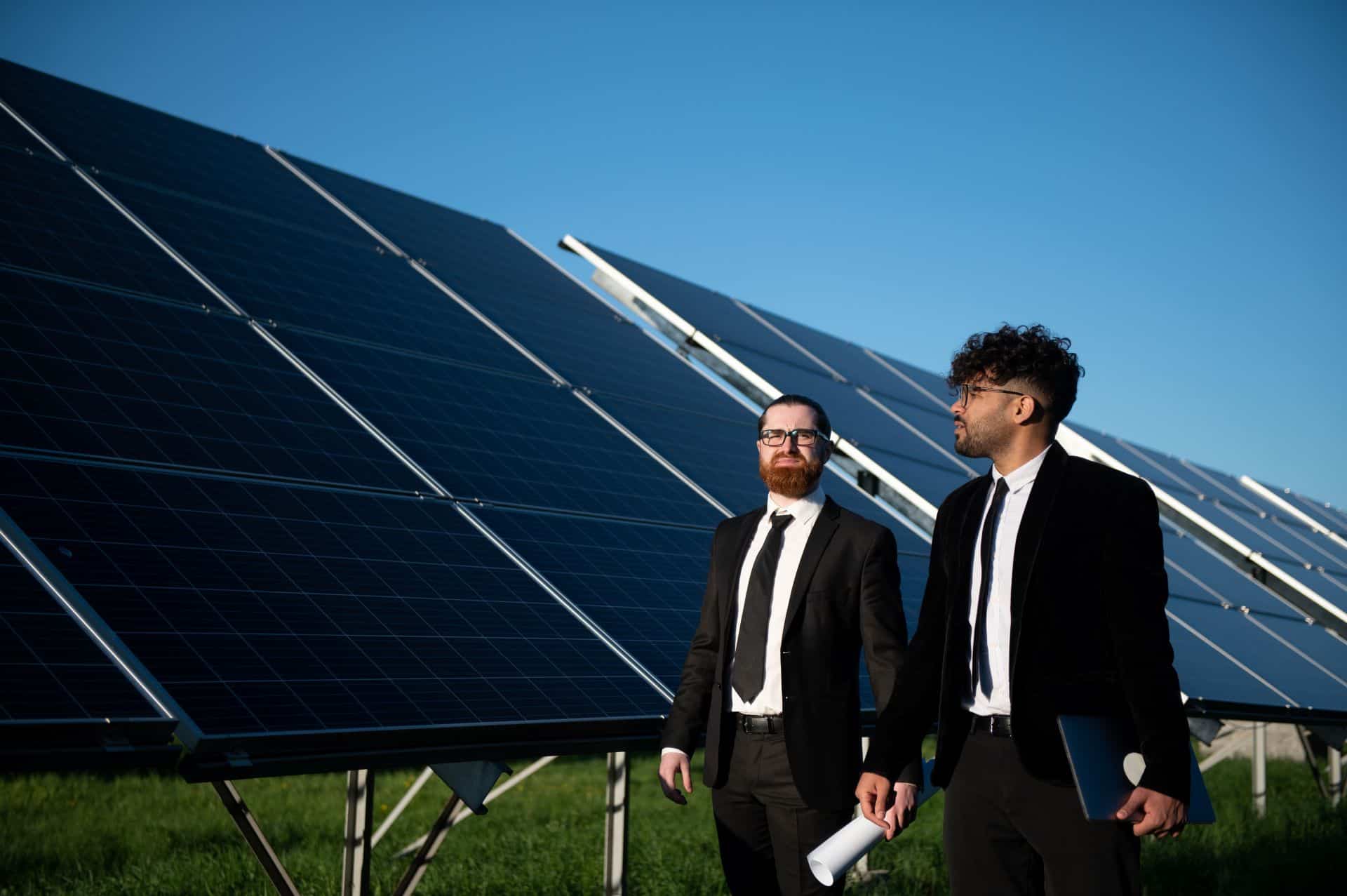
- Solcellsparker i stor skala: Large-scale ground-mounted photovoltaic (PV) systems with typical capacities starting at 10 MW, extending up to several hundred megawatts. Capital deployment per project ranges between €10 million and over €100 million, subject to site location, technology mix, and permitting complexity. Project development includes structured phases: site assessment and permitting (6-9 months), procurement (3-6 months), construction (6-12 months), culminating in commissioning within 12 to 24 months.
- Distributed solar assets: Smaller installations such as rooftop PV arrays and localized community solar projects, generally under 1 MW capacity, enabling grid decentralization, localized energy production, and diversification within investment portfolios.
- Agrivoltaic projects: Innovative dual-use solar land projects integrating crop production and solar farm infrastructure, exemplified by the Solar Plus Garden’s 10 MW agrivoltaic facility. These projects combine renewable energy generation with sustainable land use and community engagement, aligning with the SDGs on zero hunger and affordable clean energy.
Scalability is inherent in utility-scale projects through solar capacity expansion phases, enabled by regulatory approvals and grid integration upgrades. Integration of energy storage solutions—commonly lithium-ion battery systems with capacities ranging from 1 to 10 MWh per solar farm—is increasingly common to mitigate intermittency and enhance grid stability.
Asset management strategies for these portfolios involve comprehensive risk assessments concerning technology obsolescence, regulatory shifts, and market conditions. Long-term solar project evaluation includes modeling revenue streams from power purchase agreements (PPAs) typically spanning 15-25 years, alongside policy risk evaluations to ensure alignment within investment horizons of 10-25 years consistent with sovereign wealth funds’ mandates for capital preservation and growth.
Policy and Regulatory Frameworks Influencing Sovereign Wealth Funds’ Solar Commitments
Policy regulations impose a structured environment essential to sovereign wealth fund capital allocation decisions in solar energy projects. In the European Union, binding directives such as the EU Renewable Energy Directive (Directive (EU) 2018/2001) establish minimum renewable energy targets and harmonize support mechanisms drawing capital into clean energy investments.
Government incentives, including feed-in tariffs (FiTs), feed-in premiums, and investment tax credits, affect the financial modeling of solar projects by decreasing investment risk and enhancing fund liquidity. As of mid-2026, typical EU FiTs for utility-scale solar installations range from €0.05 to €0.10 per kWh, varying according to national implementation and site-specific parameters such as solar irradiation and grid connection costs. These incentives usually operate under long-term contracts (10-20 years), providing revenue certainty crucial for sovereign wealth fund capital deployment.
Regulatory stability is a primary consideration in project financing; sovereign wealth funds conduct detailed legal due diligence and scenario analyses on policy shifts including carbon pricing scheme variations and subsidy reforms. Compliance frameworks require fund managers to adhere to transparency and governance standards aligned with international sustainability disclosure protocols such as the Task Force on Climate-related Financial Disclosures (TCFD) and the United Nations Principles for Responsible Investment (UN PRI). These frameworks enforce regular reporting and auditing of fund performance and project financing governance, strengthening stakeholder engagement and fiduciary oversight.
Financial Returns and Risk Management Strategies in Sovereign Wealth Fund Solar Investments
Solar investments within sovereign wealth fund portfolios target internal rates of return (IRR) typically between 7% and 12%, contingent on project type, jurisdiction, and contractual security. Utility-scale 10 MW solar farms—with PPAs and government-backed incentives—are structured to deliver predictable revenue streams across investment horizons of 20 to 25 years.
Investment risk management addresses technology lifecycle risks due to advances in solar panel technology—such as bifacial PV modules and perovskite-silicon tandem cells—which may rapidly shift economic competitiveness. Sovereign wealth funds mitigate these through phased capital allocation and diversified technology vendor selection.
Regulatory risks—comprising potential changes in feed-in tariffs, carbon pricing mechanisms, or permitting rules—are managed by geographic diversification across markets with stable energy policy regimes and through contractual protections including price floors and take-or-pay PPA clauses.
Other risk mitigation tactics include:
- Maintaining geographic diversification to limit region-specific regulatory or market volatility.
- Balancing capital among utility-scale, distributed, and agrivoltaic solar projects to manage financial returns versus environmental and social impact objectives.
- Implementing advanced asset management systems for continuous monitoring of energy production metrics, predictive maintenance, and cost-reduction solar strategies to optimize operational efficiency.
- Employing escrow accounts and transparent payment mechanisms—as seen in development platforms like Solar Plus Garden—to protect investor funds and ensure adherence to approved capital expenditure schedules.
These frameworks enhance fund performance visibility and investor confidence, supporting efficient capital allocation aligned with sovereign wealth fund mandates for risk-adjusted returns and sustainability.
Integrating Community and Agrivoltaics in Sovereign Wealth Fund Solar Investment Portfolios
The integration of community-oriented agrivoltaic solar projects represents a transformative model for combining energy infrastructure investment with social and environmental outcomes. Solar Plus Garden’s 10 MW facility exemplifies this approach by coupling solar farm development with a regulated agrivoltaic garden community in Serbia.
Structurally, the solar plant is operated by an Estonian OÜ entity focused on electricity production, while the agrivoltaic garden community functions through a separate Serbian legal entity. This dual legal structure ensures transparent governance and capital flow separation, consistent with sovereign wealth fund standards for compliance and risk control.
De Trädgårdsmedlemskap model employs a clear payment framework:
A one-time €200 membership fee grants access to community facilities, while an optional monthly €20 Trädgårdslåda subscription provides 18 annual deliveries of fresh, locally sourced produce funded by solar farm revenues. These revenues derive from the solar capacity’s commissioned output and contractual PPAs.
Key portfolio benefits include:
- Increased stakeholder engagement, integrating local community participation with large-scale infrastructure investment.
- Enhanced investment diversification by blending financial returns from solar farm development with verified environmental impact metrics such as food security and biodiversity.
- Capacity planning for up to 3,000 garden plots alongside solar capacity expansion, demonstrating modular scalability in asset management and community involvement.
This model advances sovereign wealth funds’ ability to align capital allocation with multiple Sustainable Development Goals, notably SDG 7 (affordable clean energy) and SDG 2 (zero hunger), while maintaining rigorous governance and fund liquidity safeguards.
Global Trends and Future Outlook for Sovereign Wealth Funds in Solar Energy Financing
Market forecasts suggest sovereign wealth funds will progressively increase solar energy allocations beyond 2026, predicated on maturing policy regulations, advancing solar panel technology, and broader adoption of cost reduction solar methods such as module efficiency gains and balance-of-system optimizations.
Energy storage systems—primarily large-scale lithium-ion battery installations with capacities between 5 and 50 MWh—are projected to become integral components of solar investments. The adoption timeline for these storage solutions within SWF portfolios is estimated between 3 and 7 years, contingent on cost trajectories and regulatory acceptance frameworks favoring grid resilience enhancement.
Cross-border international investments and private sector collaboration mechanisms enable sovereign wealth funds to capitalize on differential solar resource availability and regulatory climates. However, geopolitical risks such as trade policy shifts and currency fluctuations remain notable constraints on fund liquidity and capital deployment.
Evolving environmental, social, and governance (ESG) criteria impose increasing obligations on SWFs for detailed reporting, enhanced stakeholder engagement, and transparent fund management standards. These requirements necessitate balancing complex investment risk considerations with long-term green finance objectives and clean energy targets under a dynamic global energy landscape.
Vanliga frågor
- How do sovereign wealth funds choose between different types of solar projects?
- Decision criteria include project scale, capital requirements, risk-return profiles, development timelines, and alignment with overarching strategic objectives like investment diversification and sustainability. Utility-scale solar farms generally provide more predictable cash flows, while agrivoltaic projects are selected to achieve integrated environmental impact and community engagement goals.
- What regulatory factors most affect sovereign wealth fund solar investments in Europe?
- Essential factors are EU directives such as the Renewable Energy Directive, national feed-in tariff schemes, carbon pricing mechanisms, and the stability of regulatory frameworks across the investment horizon. Compliance with transparency and governance standards ensures secure and compliant investment deployment.
- How is investment risk managed in large-scale solar projects funded by sovereign wealth funds?
- Risk management involves diversification across geographies and project types, use of escrow accounts and transparent payment models, comprehensive assessment of technology and regulatory risks, and employment of contractual safeguards to protect fund capital from market and policy volatility.
- Can sovereign wealth funds support community-focused solar projects like Solar Plus Garden’s model?
- Yes, sovereign wealth funds increasingly incorporate community-based and agrivoltaic solar projects. These are structured with distinct legal entities and transparent membership and payment models, enabling the alignment of financial returns with social and environmental impact, thereby maximizing stakeholder engagement.
Slutsats
Investors evaluating solar investment sovereign wealth funds should prioritize entities demonstrating expertise in managing large-scale solar farm development within stable policy and regulatory environments. Robust risk mitigation strategies and asset management practices are critical for securing financial returns over long-term investment horizons. Incorporation of innovative community-based agrivoltaic models such as Solar Plus Garden’s platform contributes additional dimensions of sustainable development and investment diversification. Monitoring advances in solar panel technology, evolving policy regulations, and emerging market trends will be essential for optimizing capital allocation and achieving targeted fund performance in the context of a globally shifting energy transition and green finance landscape.