









How to Build and Use a Solar Financial Model for Effective Project Finance Decisions
Defining the Scope and Structure of a Solar Project Finance Model
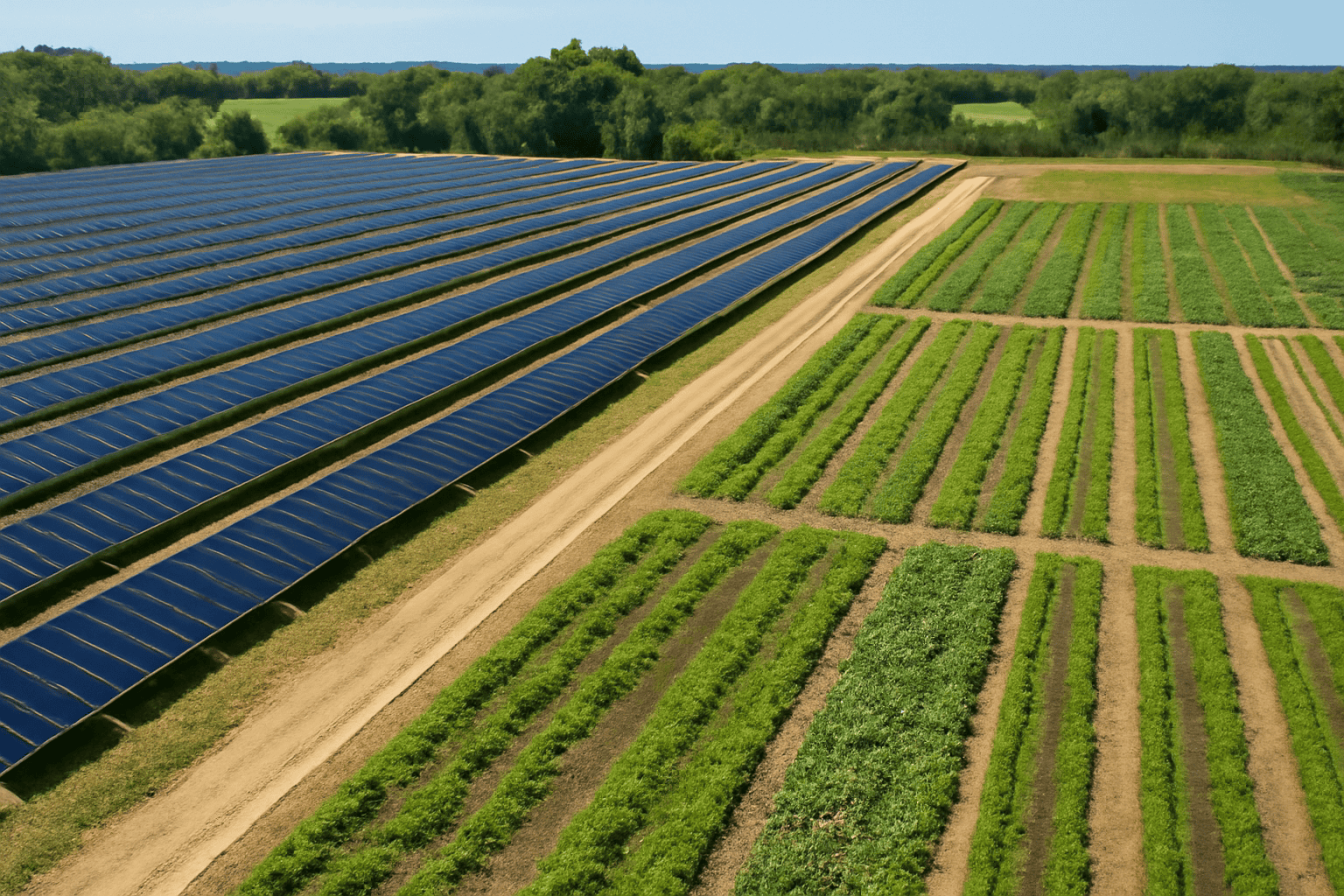
A robust solar project finance model begins with defining project scale, legal structure, and operational components. Solar Plus Garden bases its financial model on a 10 MW solar plant, a capacity typical for small utility-scale installations. This scale informs key assumptions such as annual energy output, capacity factors, and grid interconnection standards.
The solar project operates under a Special Purpose Vehicle (SPV), structured as an Estonian OÜ (osaühing). This entity isolates project assets and liabilities, enabling clear accounting of capital expenditures (CAPEX), operational expenditures (OPEX), and revenue flows. The SPV allows for straightforward tracking of investments in fotonaponska (PV) panels, string inverters, balance of system components, and grid connection costs—critical inputs for the CAPEX schedule in the financial model.
Separately, community and garden activities are managed by a Serbian DOO (društvo sa ograničenom odgovornošću), which holds exclusive rights to the članstvo u bašti content and operations. This bifurcated legal framework ensures distinct revenue and cost streams with appropriate regulatory compliance and fiscal reporting under Estonian and Serbian jurisdiction, respectively.
Operational cost components incorporated in the model typically include scheduled maintenance contracts for PV arrays, inverter replacements within their 10-15 year lifespan, land lease fees where applicable, insurance premiums aligned with regional risk profiles, and compliance costs such as grid usage charges and environmental permits. Financial modeling captures these as recurring OPEX across the assumed project lifetime, typically 25-30 years.
Revenue assumptions incorporate Power Purchase Agreement (PPA) income, članstvo u zajednici fees, and ancillary sources consistent with Solar Plus Garden’s integrated agri-solar value proposition. By combining solar project cash flows with garden membership revenues, the model reflects a diversified income mix that enhances the financial resilience of the total project finance model.
Revenue Modeling in Solar Projects: PPA Pricing, Membership Fees, and Community Revenue Allocation
Revenue modeling pivots on the PPA, a long-term contract lasting typically between 15 and 25 years in European renewable markets. The PPA fixes or indexes the price per megawatt-hour (MWh), providing predictable and contractually stable cash inflows. These inflows are foundational for debt service coverage and investor return modeling in the solar project finance model.
Solar Plus Garden integrates community membership fees as a secondary revenue stream originating from the garden and community concept. Membership fees include a one-time €200 fee granting access rights to the community and ongoing administrative services, plus an optional €20 monthly subscription for a baštenska kutija. The garden box subscription entails 18 periodic deliveries per year of fresh vegetables sourced from community-managed plots.
These fees are incorporated into the financial model as recurring, relatively stable cash flows decoupled from solar generation variability. This distinction helps reduce overall project cash flow volatility when combined with PPA revenues that fluctuate due to seasonal solar resource variation.
The model uses separate revenue allocation mechanisms aligned with the dual-entity legal structure: solar-generated income covers the Estonian OÜ’s CAPEX servicing, OPEX, and debt service, while the Serbian DOO utilizes membership fees to finance garden community activities, administrative expenses, and reinvestment into agri operations. Accounting lines are explicitly separated to comply with auditing standards and investor transparency requirements.
Forecasting these streams requires detailed assumptions on PPA price indexing, often linked to regional wholesale electricity prices or inflation indices, and anticipated garden membership growth rates based on marketing and community engagement data. Such assumptions enable scenario analysis incorporating base-case, upside, and downside market conditions for the solar project finance model.
Debt Sizing and DSCR: Balancing Leverage in Solar Project Finance Models
Debt sizing is a critical factor in solar project finance modeling, assessed primarily via the Debt Service Coverage Ratio (DSCR). DSCR measures operating cash flow availability relative to scheduled debt repayments, with the formula DSCR = Net Operating Income / Debt Service. For European solar projects of this size, lenders generally expect DSCR in the range of 1.25 to 1.35 to ensure adequate cushion for variability in production and OPEX.
For Solar Plus Garden’s 10 MW facility, debt service schedules must be modeled over the chosen amortization period, commonly 15 to 20 years, with interest rates reflecting current market conditions for renewable energy project finance. The financial model details principal amortization, interest expense, and any reserve requirements, producing periodic debt service projections. Sensitivity tests simulate impact of adverse scenarios such as prolonged below-average solar irradiation or regulatory shifts.
The SPV structure with regulated escrow accounts and payment controls reduces risk for lenders by ensuring funds flow strictly according to payment schedules and approved operational budgets. This financial discipline can enable better debt terms and potentially higher leverage ratios, improving overall project equity returns.
Optimization of the equity-to-debt ratio in the solar project finance model involves balancing revenue certainty against financing costs, thereby maximizing the Net Present Value (NPV) while maintaining DSCR covenant compliance throughout the project lifecycle.
Valuation Techniques for Solar Projects Within Financial Models
Valuation analysts primarily apply Discounted Cash Flow (DCF) approaches in solar project finance modeling. The DCF method discounts forecasted net operating cash flows—revenues less CAPEX, OPEX, refinancing costs, and taxes—at a discount rate reflecting project-specific risk and market conditions.
The discount rate incorporates risk premiums for regulatory uncertainty, solar resource variability, operational contingencies, and diversification from integrated community revenues. Solar Plus Garden’s dual-revenue model requires valuation analysts to differentiate risk profiles between the SPV solar cash flows and the garden membership fees, often employing scenario and sensitivity analyses to capture these dynamics.
Sensitivity analyses include:
- Variations in solar irradiation tied to historical meteorological data with ±10% ranges applied to generation forecasts.
- Fluctuations in PPA pricing, including indexation to inflation or regional power market benchmarks.
- Operational cost inflation assumptions, typically indexed to Consumer Price Index (CPI) rates ranging from 2% to 4% annually.
- Community membership growth rates and attrition assumptions for garden box subscriptions.
The combined valuation from solar and garden operations provides investors with a comprehensive picture, including the value of non-electricity revenue diversification and associated governance structures, influencing investment pricing and decision-making.
Incorporating Regulatory and Legal Structures into Solar Project Financial Models
Solar project finance models must precisely reflect the legal and regulatory environments governing both asset operations and revenue collection. Solar Plus Garden exemplifies sound structuring by dividing ownership and operational management between an Estonian OÜ for solar assets and a Serbian DOO for the garden/community memberships, enabling compliance with jurisdiction-specific corporate governance and tax regulations.
Escrow accounts regulate payment flows, ensuring disbursements meet preapproved conditions and limiting counterparty credit risk. This enhances transparency and investor confidence by documenting financing and operating cash flows distinctly and in compliance with EU and Serbian financial regulations.
Regulatory factors incorporated into the model include taxes (corporate, VAT, and potential local environmental levies), grid connection fees, and ongoing compliance costs such as safety inspections and system certifications. These are scheduled as outflows aligned with regulatory timetables and renewal periods of permits.
Membership fees and community rules comply with consumer protection and financial services regulations in Serbia, dictating fee structures, refund policies, and membership rights. Mapping these requirements into the financial model ensures ongoing adherence and anticipates potential cost impacts on community operation sustainability.
Building Decision-Ready Solar Project Models: Tools, Best Practices, and Team Collaboration
Solar project finance modeling demands precise data management, checkpointing, and version control. Solar Plus Garden uses Excel for detailed modeling calculations supplemented by cloud-based collaboration tools—Notion for documentation and decision logs, and Trello for task management and execution tracking.
Best practices include modular model structure—breaking down CAPEX, OPEX, revenue streams, financing, and valuation into discrete worksheets—facilitating ease of updates and scenario testing. Documentation within Notion records assumption rationales, version histories, and risk mitigation decisions, creating an audit trail for stakeholders.
Regular model refreshes aligned with project milestones—construction start, commissioning, initial production data—correct deviations and update projections to maintain accuracy. Common pitfalls avoided include overestimating capacity factors beyond typical regional averages (commonly 14-17% for fixed-tilt PV in Central Eastern Europe), under-representing operational cost inflation, and omitting timing delays risk.
The integrated workflow ensures that financial modeling supports investment committee decisions by providing transparent, traceable, and scenario-ready project finance models, closely aligned with Solar Plus Garden’s structured governance and community engagement strategy.
Modeling Community Membership Impact alongside Solar Project Finance
Inclusion of community membership effects in solar project finance modeling enhances financial robustness by adding stable, non-generation-dependent revenues. Solar Plus Garden’s garden membership operates under a Serbian DOO, legally distinct and solely responsible for community content and management rights.
The garden’s capacity is fixed at 3,000 plots or “boxes,” defining a maximum membership revenue ceiling. The model incorporates uptake assumptions for both the €200 membership fee and the €20 monthly garden box subscription—scaled by adoption curves over the initial 3-5 years to reflect realistic growth and retention rates.
A portion of these membership fees is reinvested into sustaining community activities and administrative functions. The financial model explicitly captures this reinvestment cycle as operational expenditure within the membership entity, ensuring consistent cash flow coverage and aligning with predefined governance rules.
This dual-revenue stream approach influences valuation and risk assessment by providing steady, contractually backed revenues independent of solar generation fluctuations or market electricity prices, therefore reducing overall project financial risk.
Često postavljana pitanja
What key financial metrics should be prioritized in solar project financial models?
Net Present Value (NPV), Internal Rate of Return (IRR), Debt Service Coverage Ratio (DSCR), and payback period are critical metrics. They indicate project profitability, financing feasibility, debt capacity, and expected duration for capital recovery.
How does Solar Plus Garden’s community membership affect traditional solar project finance modeling?
Community membership fees introduce a supplemental, relatively stable revenue stream distinct from energy sales. Models must segregate these revenues per legal entity, accounting for reinvestment into garden operations, which diversifies risk and supports community engagement costs.
What are typical DSCR requirements for solar project financing in Europe, and why are they important?
DSCR ratios of 1.25 to 1.35 are common thresholds imposed by lenders to ensure solar projects generate sufficient operating cash flow to cover debt service with an adequate safety margin against production variability and cost increases.
Which legal structures support transparent financial modeling for solar projects like Solar Plus Garden?
Separate entities such as an Estonian OÜ for solar assets and a Serbian DOO for community management, coupled with regulated escrow accounts, enable clear segregation of cash flows, compliance with multiple jurisdictions, and enhanced transparency essential for investor due diligence and lender security.
Zaključak
Developing a comprehensive solar project finance model requires integration of technical capacity parameters, PPA-linked revenues, and additional community membership incomes within clearly defined legal structures. Debt sizing calibrated through DSCR metrics and rigorous valuation methods guide sound financing and investment decisions.
Utilizing collaborative tools like Notion and Trello, as practiced by Solar Plus Garden, facilitates concurrent model updates, documentation, and cross-team coordination, maintaining model integrity and relevance amid evolving market and regulatory conditions.
Any significant changes in regulatory frameworks, market pricing environments, or community participation levels necessitate revisiting assumptions and recalibrating the model to preserve project viability and fulfill investor expectations.