









Navigating Organic Solar Cells: Technology, Efficiency, and Market Potential for 2026
Core Structure and Materials of Organic Solar Cells
Organic solar cells are a subset of organski fotonaponski sistemi distinguished by the use of carbon-based polymers and small molecules as the primary photoactive materials, unlike conventional silicon-based modules. The aktivni sloj—a thin film usually between 100 and 300 nanometers thick—is sandwiched within the stek ćelija, enabling absorption of sunlight and charge generation. This comparatively ultrathin tanki film allows organic solar cells to be lightweight, flexible, and adaptable to unconventional surfaces.
Common polymer donors include poly(3-hexylthiophene) (P3HT) and the low-bandgap polymer PTB7, poly[4,8-bis(5-(2-ethylhexyl)thiophen-2-yl)benzo[1,2-b:4,5-b’]dithiophene-2,6-diyl-alt-(4-(2-ethylhexyl)-3-fluorothieno[3,4-b]thiophene))-2-carboxylate-2-6-diyl)], which feature complementary absorption profiles from visible to near-infrared wavelengths. These donors are combined with acceptor materials—initially fullerene derivatives and, increasingly, non-fullerene acceptors—to optimize exciton dissociation and charge transport.
The stek ćelija configurations mainly follow two architectures: discrete heterojunction i heterospoj u masi. The discrete heterojunction consists of distinct, stacked donor and acceptor layers, generating excitons that diffuse to a planar interface for separation. However, limited exciton diffusion lengths (~10 nm) constrain efficiency in this design. To address this, bulk heterojunctions blend donor and acceptor materials into an interpenetrating network, maximizing the donor-acceptor interface area within the aktivni sloj. Nanoscale phase separation (~10-20 nm domain sizes) achieved via solvent engineering during roll-to-roll processing facilitates exciton dissociation and reduces charge recombination losses.
This combination of ultrathin tanki film active layers and morphology-optimized cell stacks distinguishes organic solar cells and supports applications demanding flexibility, weight reduction, and semi-transparency.
How Organic Solar Cells Work: Photoelectric Conversion Mechanism
The core steps explaining how organic solar cells work involve photophysical and electronic processes within the aktivni sloj of the stek ćelija:
- Apsorpcija fotona: Polymer donor molecules in the active layer absorb sunlight within wavelengths approximately 400–800 nm, creating tightly bound electron-hole pairs, called excitons, rather than free charges immediately.
- Exciton diffusion: Excitons diffuse with diffusion lengths typically around 10 nm before recombining. Hence, the morphology of the aktivni sloj must ensure that most excitons encounter a donor-acceptor interface within this diffusion distance.
- Exciton dissociation: At the heterojunction interface, differences in highest occupied molecular orbital (HOMO) and lowest unoccupied molecular orbital (LUMO) levels between donor and acceptor materials provide the driving force to split excitons into free charge carriers.
- Charge transport and collection: Free electrons and holes traverse their respective pathways within the acceptor and donor phases of the stek ćelija—electrons through acceptor domains, holes through polymer chains—to reach cathode and anode electrodes. The design of transport layers and electrode work functions, as well as minimizing trap states, reduces recombination losses and maximizes the extracted current.
Optimizing nanoscale control of domain purity and size during the roll-to-roll coated aktivni sloj enables an efficient balance between power conversion efficiency and operational stability, critical for commercial viability.
Roll-to-Roll Processing and Module Fabrication
The scalable production of organic solar cells critically depends on obrada sa rolne na rolnu, a continuous coating and fabrication technique performed on flexible substrates such as polyethylene terephthalate (PET) or polyethylene naphthalate (PEN). This manufacturing method significantly reduces energy input and capital expenses compared to crystalline silicon wafer production.
Key sequential steps in obrada sa rolne na rolnu uključuju:
- Coating: Deposition of polymer active layers and other functional films via slot-die coating, gravure printing, or inkjet printing, achieving uniform thickness control within ±10 nm.
- Solvent drying: Precisely controlled evaporation parameters, including substrate temperature (typically 60–100 °C) and drying atmospheres, define the aktivni sloj morphology, influencing domain size and crystallinity.
- Layer stacking: Sequential deposition of charge transport layers, electrodes (such as transparent indium tin oxide or metal grids), and interlayers optimized for energy level alignment and environmental stability.
- Encapsulation: Application of multilayer barrier films or atomic layer deposition coatings to limit oxygen and moisture penetration, crucial for extending the stabilnost organskih solarnih ćelija.
Typical roll-to-roll lines achieve speeds exceeding 100 meters per minute, enabling throughput improvements that could reduce module manufacturing costs under €0.15 per watt, though market prices remain subject to scale and technology maturity.
The resultant moduli are ultra-light (<1 kg/m²) and mechanically flexible, expanding integration into building facades, vehicles, wearables, and agrivoltaic installations.
Efficiency and Stability Challenges of Organic Solar Cells
Current commercial and near-commercial organic solar cells achieve power conversion efficiency (PCE) values between 12% and 17%, measured under AM1.5G standard illumination with 1000 W/m² irradiance and 25 °C cell temperature. This compares to 20–22% PCE typical for monocrystalline silicon modules. Advances in bulk heterojunction morphology control, novel polymer donors, and non-fullerene acceptors target gradual closing of this gap.
Stability of organic solar cells remains a primary obstacle. Photochemical degradation under UV exposure, oxygen-induced oxidation, and moisture ingress disrupt conjugation in polymers and degrade interfaces, accelerating performance loss. Without enhanced encapsulation, operational lifetimes rarely exceed five years, far below the 25+ years typical of crystalline silicon, limiting bankability and inventory value. Stability testing protocols follow IEC 61646 and IEC 61215 with adaptations for organic materials.
Notable stability of organic enhancements include:
- Multilayer barrier films with water vapor transmission rates (WVTR) below 10−4 g/m²/day combined with UV-absorbing encapsulants.
- Chemical design of intrinsically photochemically stable polymer donors with enhanced backbone rigidity and side-chain engineering to resist photooxidation.
- Optimized device architectures incorporating inverted stacks and stable interfacial layers such as zinc oxide (ZnO) and molybdenum oxide (MoO3).
Extending the stabilnost organskih solarnih ćelija to 10 years or more under operating conditions remains a critical R&D objective to unlock broader market adoption.
Advanced Polymers and Non-Fullerene Acceptors in Development
Ongoing razvoj organskih solarnih ćelija centers on novel polymer donors and non-fullerene acceptor (NFA) molecules that improve spectral absorption, energy level alignment, and morphological stability. Prominent NFAs like Y6 (a fused-ring electron acceptor) have enabled small-area research devices to achieve power conversion efficiency surpassing 17%, outperforming traditional fullerene acceptors such as PCBM.
These advanced materials exhibit broader absorption extending to 900 nm, facilitating enhanced photocurrent generation. Furthermore, they enable finer nanoscale phase separation in bulk heterojunction active layers, improving charge carrier lifetimes and reducing recombination.
Challenges remain in translating laboratory-scale performance to industrial-scale module fabrication via high-speed obrada sa rolne na rolnu. Maintaining consistent morphology and avoiding defects over large areas require precise solvent formulation, drying profiles, and substrate handling. Moreover, the long-term environmental stability of these novel materials under combined light, heat, and humidity stresses is under active investigation.
Successful implementation of these advanced materials promises to shape the budućnost organskih solarnih ćelija by increasing both efficiency and lifetime benchmarks to meet commercial viability criteria.
Integration Potential of Organic Solar Cells with Agrivoltaics and Community Models
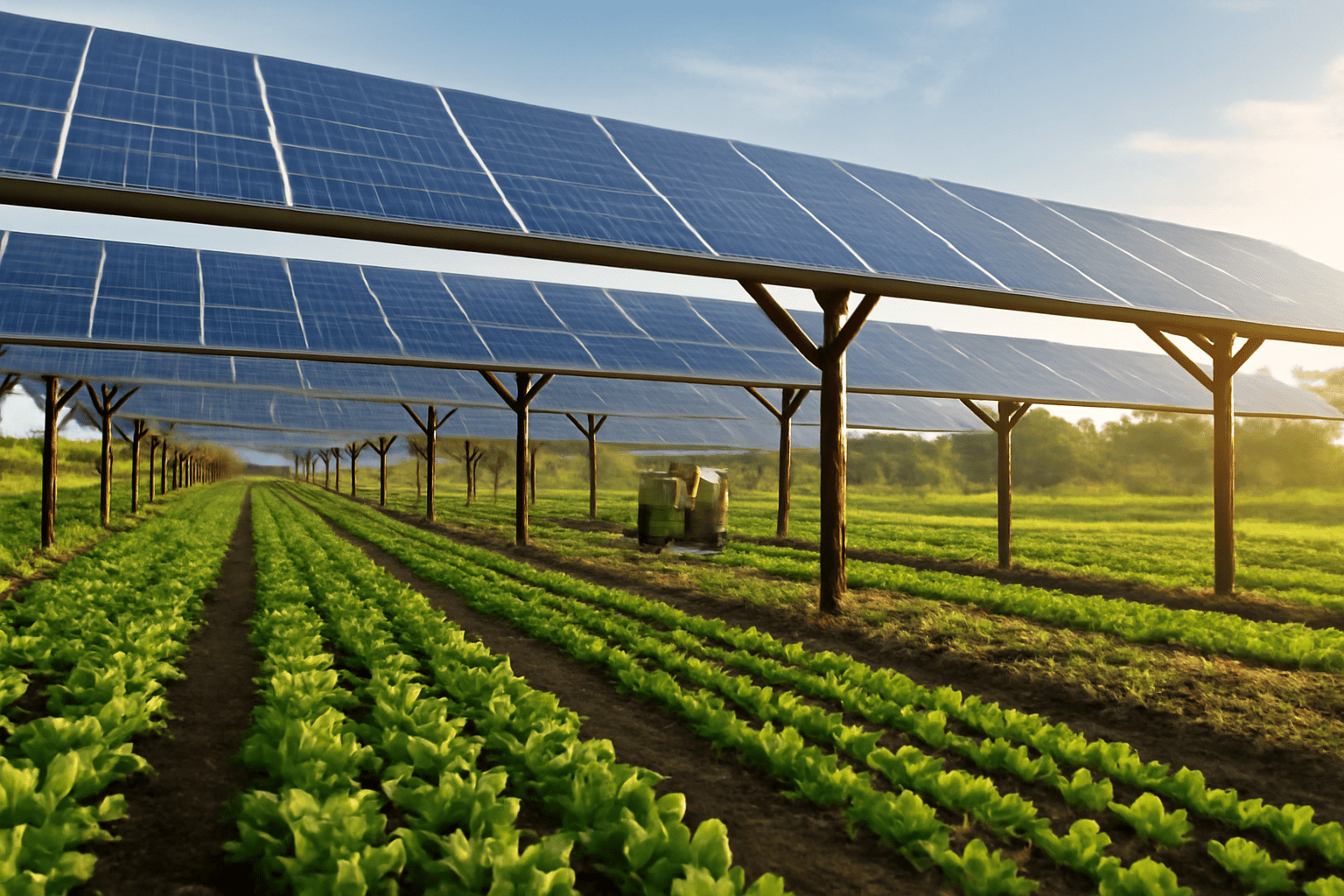
The adaptable physical properties of organic solar cells, especially their light weight, mechanical flexibility, and controllable semi-transparency, offer unique integration opportunities in agrivoltaic systems where photovoltaic generation coexists with agricultural production.
At Solar Plus Garden, a 10 MW solarna elektrana is combined with an innovative baštenska zajednica membership model. Here, small and medium investors access the project via a regulated, transparent structure, funding solar infrastructure that financially supports up to 3,000 garden parcels. This integration employs organic solar modules engineered to transmit 10–30% of photosynthetically active radiation (PAR) wavelengths, balancing electricity output with light availability for crops.
The financial model links solar generation revenues with community activities and garden maintenance costs, managed through a defined membership fee that supports sustainable agrivoltaic operation. This approach aligns with evolving investment preferences favoring combined environmental impact and local food production as part of renewable energy portfolios.
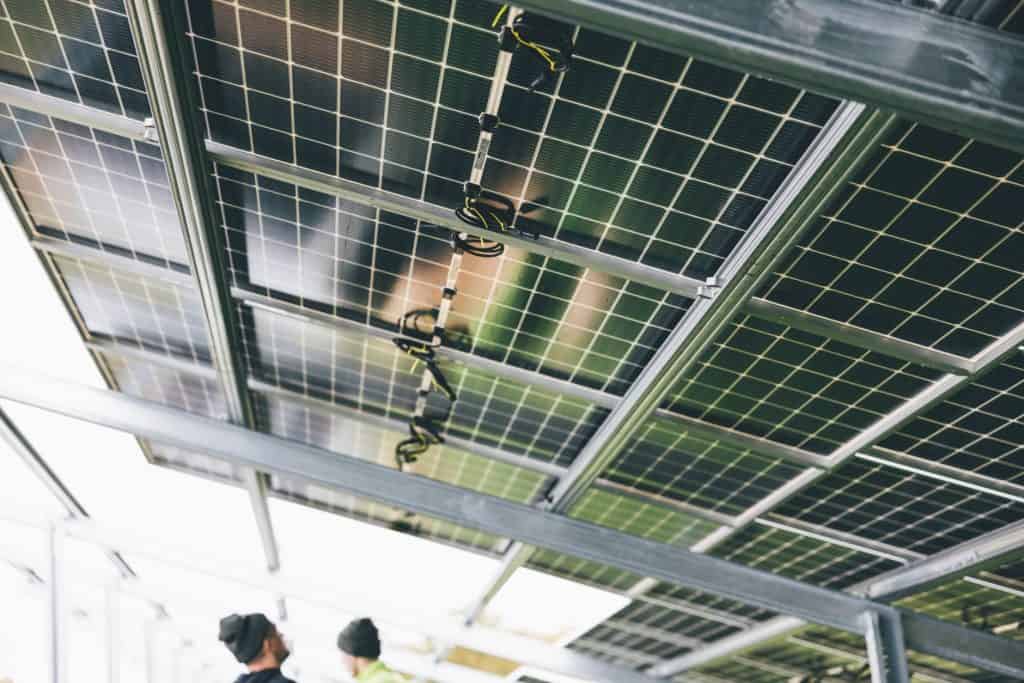
The physical thin-film and flexible nature of organska solarna ćelija moduli permits installation on structures like greenhouses, shading nets, or open fields without compromising agricultural productivity, expanding their application beyond traditional rooftop or ground-mounted arrays.
Future Outlook: Market Adoption and Regulatory Environment by 2030
Industry roadmaps such as the US Department of Energy’s Renewable Energy Technologies Office 2025 report set goals for organic photovoltaics to surpass 15% power conversion efficiency coupled with operational lifetimes exceeding 10 years by 2030, benchmarks pivotal for market expansion.
Regulatory environments in regions like the European Union are evolving with proposed eco-design and sustainability criteria specifically targeting photovoltaic modules. These regulations aim to standardize performance, enhance recyclability, and enforce supply chain transparency. Compliance with EN 61215, EN 61646, and tailored certifications for emerging technologies like organic photovoltaics will define market access rules and investor risk profiles.
Market adoption will likely prioritize niche applications such as building-integrated photovoltaics (BIPV), agrivoltaiku, and portable energy solutions where organic solar cells‘ unique form factors and lightweight properties provide competitive advantages over silicon-based modules.
Često postavljana pitanja
- What is the typical lifespan of an organic solar cell compared to traditional silicon panels?
- Without advanced encapsulation, organic solar cells typically achieve effective operation for less than 5 years due to environmental degradation. In contrast, crystalline silicon modules usually maintain performance over 25 years. Ongoing developments in materials and encapsulation aim to extend organic solar cell lifetimes toward or beyond 10 years, improving their commercial feasibility.
- How does the roll-to-roll processing method impact the cost and scalability of organic solar cells?
- Obrada sa rolne na rolnu enables continuous, high-speed (<100 mmin) deposition of active layers and associated functional components on flexible substrates, significantly reducing energy consumption capital costs compared to batch-processed wafer manufacturing. this advantage supports scalable production large-area moduli at lower per-watt manufacturing costs, facilitating mass-market deployment.
- Can organic solar cells be integrated into agrivoltaic systems effectively?
- Yes. The semi-transparent, flexible tanki film nature of organic solar cells allows them to be deployed in agrivoltaic systems where they transmit a controlled fraction (10–30%) of solar radiation, ensuring crop growth compatibility while producing renewable energy. Solar Plus Garden demonstrates this integration in a community-backed model combining energy and local agriculture.
- What efficiency can investors realistically expect from organic photovoltaics in commercial applications?
- Current commercially available organic solar modules achieve power conversion efficiencies between 12% and 17% under standard test conditions (AM1.5G, 1000 W/m² irradiance, 25 °C). As next-generation polymer donors and non-fullerene acceptors progress, these figures are expected to improve, narrowing the efficiency gap with silicon-based technologies.
Zaključak
Property owners, project developers, and investors assessing organic solar cells must carefully weigh current challenges in power conversion efficiency and operational stabilnost organskih solarnih ćelija against advantages of flexible, lightweight manufacturing enabled through roll-to-roll processing. The incorporation of organic photovoltaics within agrivoltaic and community-driven projects like Solar Plus Garden offers a transparent, regulated investment framework combining environmental and social impact.
Monitoring advances in novel polymer materials, non-fullerene acceptors, and encapsulation technologies, alongside evolving certification standards, will be essential to optimize investment timing and risk. Changes in regulation and technology maturation may position organic solar cells as complementary contributors in the renewable energy landscape by the end of this decade.