










How Organic Farming Benefits Your Land, Health, and Community
Defining Organic Farming and Its Regulatory Framework
Organic farming is an agricultural system that excludes synthetic chemicals such as pesticides and mineral fertilizers, and prohibits genetically modified organisms (GMOs). It relies exclusively on natural inputs and practices designed to sustain ecological balance and foster biodiversity within the agroecosystem.
Within the European Union and associated regions like Serbia and the Baltics, organic agriculture must comply with Regulation (EU) 2018/848, effective from 2026. This regulation establishes comprehensive requirements for organic production methods, certification, labeling, and traceability, ensuring uniform standards across member states and third countries adhering to EU equivalence rules.
Key elements of this regulatory framework include:
- Prohibition of synthetic pesticides, herbicides, fungicides, and mineral nitrogen, phosphorus, and potassium fertilizers.
- Mandated use of organic fertilizers such as mature compost and well-managed manure to supply macro and micronutrients.
- Compulsory crop rotation schemes to maintain nutrient balance and disrupt pest and disease cycles, detailed in farm plans submitted for certification.
- Soil fertility management focused on maintaining or increasing soil organic carbon content and microbial biodiversity.
- Rigorous documentation and data retention for all inputs, practices, harvests, and processing steps to enable traceability and auditability.
This structure supports sustainability by legally defining the technical and procedural standards that underpin the benefits of organic farming systems.
Soil Health Improvement Through Organic Fertilizers and Crop Management
The productivity and sustainability of an organic farm rest primarily on preserving and enhancing soil fertility through biological processes rather than synthetic nutrients. The slow nutrient release profile of organic fertilizers like compost—typically containing 1-3% total nitrogen—and manure contributes to sustained nutrient availability while minimizing leaching losses common with mineral fertilizers.
Enhanced microbial biomass and activity are measurable outcomes of organic fertilizer application. Soil samples under organic management often show increases in microbial biomass carbon by approximately 15-25% within 3 years. These microbes facilitate organic matter decomposition, nutrient mineralization, and soil aggregate formation, which improves porosity and water-holding capacity, particularly critical during periods of drought or heavy precipitation.
Comparative field studies indicate that organic farms typically achieve a rise in soil organic matter content by 10-15% over a 5-year transition, depending on initial soil conditions and management intensity. This increase reduces erosion risks by stabilizing soil structure and surface cover.
Crop rotation strategies in organic systems systematically alternate crops among different botanical families—legumes (Fabaceae) fix atmospheric nitrogen, cereals (Poaceae) extract residual nutrients, and root vegetables improve soil aeration and structure. These rotations are precisely planned to optimize nutrient cycling and suppress pest and disease populations without synthetic pesticides.
Environmental Benefits of Organic Farming Practices
Environmental benefits of organic agriculture extend to water quality, greenhouse gas mitigation, and biodiversity conservation. Avoidance of synthetic nitrogen fertilizers contributes notably to reducing nitrate leaching; monitoring data reports reductions up to 40% in nitrate leaching relative to conventional systems, based on soil and hydrological conditions studied in temperate European regions.
Organic soil management enhances carbon sequestration: soils under certified organic management can accumulate soil organic carbon at rates around 0.3 to 1.1 metric tons carbon per hectare per year, depending on climate and soil type. This carbon storage mitigates atmospheric CO2 concentrations, contributing to climate change adaptation and mitigation strategies.
Faunal diversity benefits are documented with significant increases in key taxa: pollinator abundance (notably Apis mellifera and Bombus spp.) can be 20-30% greater on organic farms due to reduced pesticide exposure. Soil fauna such as earthworms, collembolans, and nematodes show enhanced populations, supporting nutrient cycling and soil health.
Health Advantages of Consuming Organic Food
Consuming organic food primarily reduces exposure to synthetic pesticide residues. Comprehensive residue monitoring reveals that organic vegetables consistently contain pesticide residues below detectable limits or reduced by magnitudes of 70-95% compared to conventional counterparts.
Additional research suggests elevated levels of some antioxidants and micronutrients, such as vitamin C and phenolic compounds, in organic crops; however, these variations depend strongly on soil conditions, crop species, and local climate, leading to substantial heterogeneity in findings.
Continuous exposure to synthetic pesticide residues identified in conventional food chains has been associated in toxicological studies with potential endocrine-disrupting effects and neurotoxicity at high or frequent exposure levels, although such risks vary based on compound type and exposure characteristics.
The most consistent public health benefit derived from organic food consumption is the substantial reduction of chemical residues, contributing to safer dietary intake profiles.
Integrating Organic Farming Into Community Models Like Solar Plus Garden
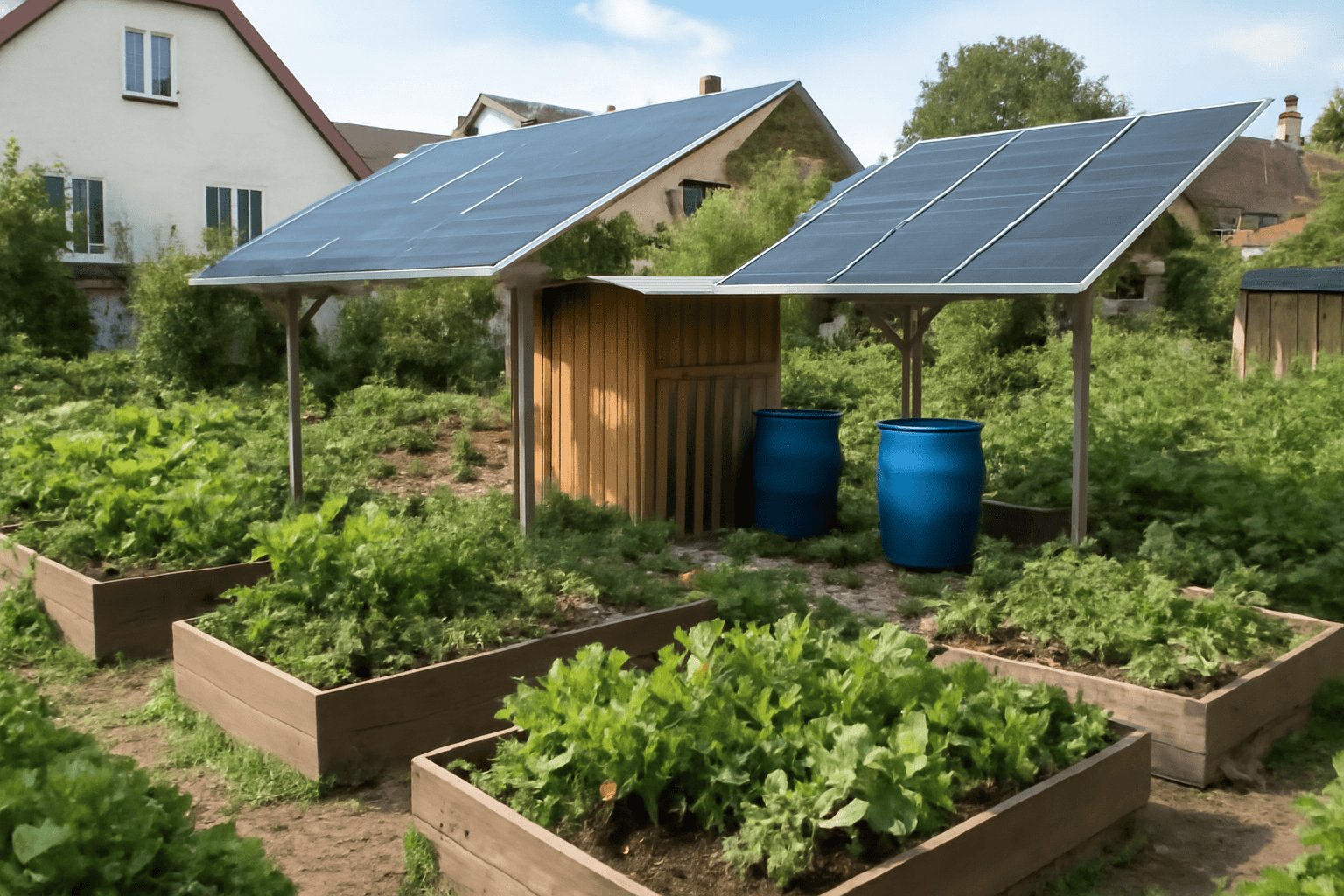
Innovative community models are integrating organic farming with renewable energy infrastructure to create environmental, social, and economic synergies. Solar Plus Garden combines a large-scale 10 MW solar фотонапонска power plant with an organic garden community capable of supporting up to 3,000 individual garden parcels, leveraging solar revenues to fund community organic agriculture.
Participation in the garden community requires a membership fee of 200 евра једнократно and offers an optional Garden box subscription at €20 per month, providing 18 annual servings of local seasonal organic vegetables. This business model is designed to include small and medium investors through regulated membership, ensuring transparent financial flow governed by legally distinct entities in Estonia and Serbia.
Revenue generated from solar energy production directly supports ongoing operational costs of the organic garden system, creating a financially sustainable linkage between clean energy investment and local organic food production. This approach advances local food sovereignty, reduces carbon footprint, and fosters community resilience.
Agronomic Challenges and Risk Management in Organic Farming
Organic farming faces agronomic challenges principally linked to the prohibition of synthetic pesticides and fertilizers, necessitating integrated pest management (IPM) techniques tailored to organic certification rules. Strategies include biological pest control agents, use of disease-resistant cultivars, mechanical weeding, and cultural tactics like timely planting.
Yield reductions under organic management compared to conventional agriculture are generally reported in the range of 10-20%, influenced by factors such as soil fertility status, pest pressure, farmer experience, and weather conditions. These differences highlight the need for informed risk management and optimization of organic practices.
The transition phase requires a strict 3-year conversion period during which no prohibited substances may be used, but produce cannot be marketed as organic. Maintaining productivity during this phase depends on careful nutrient cycling management, including precise application of organic fertilizers and soil amendments, plus adaptive cultural practices.
Steps to Transition a Conventional Farm to Organic Standards
Transitioning a conventional farm to organic certification follows a defined procedural roadmap, comprising:
- Initial Soil Residue Testing: Collect soil samples to identify residues of prohibited chemicals, establishing a compliant baseline.
- Gradual Elimination of Synthetic Inputs: Cease application of mineral fertilizers, synthetic pesticides, and herbicides, replacing nutrient sources with approved organic fertilizers such as composted manure or green manures delivered at agronomically justified rates.
- Design and Implement Crop Rotations and Cover Crops: Develop multi-year crop rotation plans incorporating legumes and deep-rooted crops to enhance nitrogen fixation and improve soil structure.
- Maintain Comprehensive Documentation: Record all inputs, field activities, harvests, and sales data meticulously to meet certification audit standards.
- Complete the 3-Year Conversion Period: After continuous compliant management during this timeframe, the farm becomes eligible for full organic certification verification and labeling.
Each step must be planned to mitigate productivity losses and ecological risks during conversion.
Често постављана питања
- What differentiates organic fertilizer from conventional fertilizer?
- Organic fertilizers derive from natural sources such as decomposed plant residues, animal manure, and compost. They provide nutrients gradually through microbial decomposition, enhancing soil biotic activity and structure. Conventional fertilizers comprise synthetic chemical compounds designed for immediate nutrient availability but can contribute to soil degradation and nutrient runoff over time.
- How long does it take for a farm to become certified organic?
- The mandatory conversion period is three years during which crops must be grown according to organic standards without prohibited inputs. No products from these fields can be sold as organic until certification is granted.
- Does organic food always contain higher nutrient levels than conventional food?
- Certain antioxidants and micronutrient levels have been measured at higher levels in some organic crops; however, this varies due to numerous agronomic and environmental factors. The main documented advantage of organic food is significantly reduced synthetic pesticide residues.
- Can organic farming be profitable compared to conventional farming?
- Organic farming generally yields 10-20% less per hectare but benefits from reduced costs related to synthetic inputs and typically commands price premiums in markets valuing organic certification. Profitability depends on effective farm management, access to premium markets, and capacity to manage agronomic challenges.
Закључак
The benefits of organic farming encompass environmental conservation through reduced chemical runoff, enhanced soil health via organic matter accumulation, and improved biodiversity. Health benefits mainly arise from reduced consumer exposure to pesticide residues. The transition to organic standards is regulated by strict certification frameworks requiring multi-year conversion and documented compliance.
Community-integrated models such as Solar Plus Garden show practical applications of combining organic agriculture with renewable energy investment. These models demonstrate scalable pathways to long-term sustainability and investor participation while preserving ecological and social values. Stakeholder decisions should fully consider agronomic constraints and plan transitions systematically to optimize the realized benefits of organic farming.