









Maximaliseer uw investering: Inzicht in hoogrendementszonnepanelen voor betere resultaten met zonne-energie
What Defines High Efficiency Solar Panels and How Are Their Efficiency Ratings Measured?
High efficiency solar panels are distinguished by their superior solar cell efficiency, which determines the fotovoltaïsch conversion rate—the percentage of solar irradiance converted into usable electrical energy. Standard photovoltaic modules normally offer module efficiency between 15% and 18% under Standard Test Conditions (STC, defined as 1,000 W/m² irradiance at a cell temperature of 25°C). High efficiency panels exceed 20% module efficiency, with some premium products reaching up to 23-24% as validated by certification agencies such as PV Evolution Labs (PV-EL) of UL 1703 testing standards.
Efficiency ratings are reported primarily through the following metrics:
- Module Efficiency: The ratio of DC power output to incident solar energy under STC, measuring the intrinsic performance of the panel’s solar cells and materials.
- Performance Ratio: A system-level metric representing actual electricity generation versus theoretical energy output, accounting for real-world losses including temperature effects, inverter losses, wiring resistance, and shading impact. For high efficiency systems, performance ratio commonly ranges between 75% and 85% depending on site conditions.
Environmental conditions during testing and deployment impact these metrics. For example, solar irradiance fluctuations, ambient temperature differences, and measurement protocol disparities—such as IEC 61215 or IEC 61730 compliance—must be considered when comparing panel efficiencies. Reliance on validated laboratory data and field-tested degradation profiles enhances investment reliability.
Types of High Efficiency Solar Panels and Their Distinct Technologies
The majority of high efficiency solar panels employ monocrystalline cells, crafted from single-crystal silicon wafers that facilitate efficient electron transport and reduce recombination losses. Typical monocrystalline panels achieve module efficiencies in the 20-22% range under STC. Their uniform crystalline structure is the principal driver of solar cell efficiency improvements compared to alternatives.
Polycrystalline cells consist of multiple silicon crystals forming a grainy texture. While less expensive to produce, their heterogeneous structure limits efficiency to approximately 15-18%. This makes them suitable where solar panel cost constraints outweigh space limitations, such as large utility-scale arrays with abundant land.
Thin-film technology panels use amorphous silicon or other semiconductor layers deposited on glass or flexible substrates. They offer benefits like reduced weight and flexibility but exhibit module efficiencies typically between 10% and 13%, limiting their applicability to large, unconstrained areas or specialized solar power applications.
Advances in solar cell design have introduced:
- Passivated Emitter Rear Contact (PERC): This cell architecture adds a passivation layer on the rear side of the cell, reflecting unused photons back into the silicon to improve light capture. PERC enhances typical monocrystalline efficiency by approximately 1–2 percentage points.
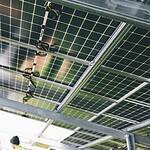
- Bifacial Solar Panels: Featuring active cells on both sides, these panels capture diffuse and reflected light from the ground, increasing energy yield by 5-15%. Their effectiveness depends strongly on installation factors such as mounting height, ground albedo, and orientation.
Alternative materials like perovskite-silicon tandems and heterojunction cells promise theoretical efficiencies exceeding 30%, but as of 2026, these remain largely in pilot or early commercial stages, with limited deployment within large projects.
Environmental and Operational Factors Affecting Solar Panel Efficiency
Efficiency measured in controlled settings differs from real-world performance because of environmental and operational variables:
- Temperature Coefficient: Defined as the percentage drop in power output per degree Celsius increase over 25°C. High efficiency panels typically have a temperature coefficient between -0.3% and -0.4%/°C, compared to -0.4% to -0.5%/°C for standard panels, resulting in superior performance in hot climates.
- Shading Impact: Even partial shading disrupts current flow in series-connected solar cells, causing disproportionate losses. The integration of bypass diodes and maximum power point tracking (MPPT) algorithms via microinverters or power optimizers mitigates shading-related energy losses.
- Installation Angle and Sunlight Absorption: Optimal tilt angles generally approximate the site’s latitude to maximize annual solar irradiance capture. Fine-tuning based on energy demand profiles (e.g., south-facing with latitude tilt for grid-tied systems, adjustable for off-grid solar) influences energy output.
- Solar Panel Degradation Rate: Panels degrade gradually due to UV exposure, thermal cycling, and moisture ingress. High efficiency monocrystalline panels exhibit degradation rates of approximately 0.5% per year, with warranties typically guaranteeing at least 80% performance retention after 25 years.
- Inverter Efficiency and MPPT: Inverter units convert DC to AC power. Modern inverters exceed 95% efficiency, employing MPPT to continuously adjust electrical operating points under varying irradiance and temperature, extracting maximum power from the array and increasing overall system efficiency.
Optimizing Efficiency: Advanced Systems and Installation Strategies
Improvement of electricity generation beyond panel specifications requires system-level choices:
- Solar Tracking Systems: Single-axis trackers pivot panels along one axis to follow the sun’s trajectory, boosting annual yields by roughly 15%. Dual-axis trackers, adjusting along both azimuth and elevation, can deliver up to 25% additional energy output, but necessitate greater capital and ongoing maintenance.
- Panel Placement and Orientation Best Practices: Aligning panels to true south (Northern Hemisphere) or true north (Southern Hemisphere) with an inclination matching site latitude optimizes sunlight absorption. Ensuring no nearby obstructions causes shadowing preserves module output integrity.
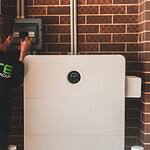
- Energy Storage Integration: Coupling solar arrays with lithium-ion or flow batteries balances intermittent production and load consumption. Storage systems augment returns by shifting self-consumption to non-generating periods, facilitating grid-tied systems and enhancing resilience in off-grid solar setups.
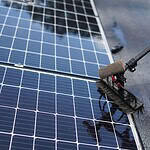
- Solar Panel Maintenance: Routine cleaning every 3 to 6 months is recommended to remove dust, pollen, and bird droppings, which can reduce panel output by up to 10%. Inspections of electrical connections and mounting hardware twice yearly ensure minimal degradation and address safety risks.
Cost-Efficiency Analysis: Balancing Investment and Returns with High Efficiency Panels
Investment decisions require evaluation of the trade-offs between upgraded solar panel cost and projected financial returns:
- Initial Cost Differential: High efficiency solar panels generally cost 10-30% more per watt than standard polycrystalline alternatives, reflecting enhanced materials such as higher purity silicon and additional manufacturing steps like PERC processing.
- Energy Payback Time: The period required for a panel to produce the energy consumed during its manufacturing. High efficiency modules typically have an energy payback time of 1-3 years, depending on geographic location and insolation levels, compared to 2-4 years for lower efficiency panels.
- Long-term Energy Savings and Solar Panel Warranty: Reduced installation footprint and higher yield facilitate faster ROI, especially important in constrained urban settings or areas with favorable net metering policies. Warranties usually cover 10-25 years for product and performance guarantees, providing risk mitigation for investors.
- System Sizing: Accurate load and irradiance assessment ensures capacity aligns with consumption patterns, avoiding oversizing and unnecessary expenditure. Integration with energy storage and smart inverters further optimizes financial returns.
How High Efficiency Solar Panels Align with Renewable Energy Goals and Solar Plus Garden’s Community Model
High efficiency solar panels improve renewable energy benefits by maximizing electricity generation per unit land area, contributing to accelerated vermindering van de CO2-voetafdruk and better resource utilization. This feature aligns with the dual goal of energy production and sustainable land use inherent to agrivoltaic systems.
At Solar Plus Garden, the 10 MW solar plant is designed around these panels to optimize clean energy output within limited site space, integrating a tuingemeenschap model that couples solar power investment with local fresh food production. This solar power application exemplifies a closed-loop approach, utilizing agrivoltaïcs to enhance land productivity and community engagement simultaneously.
The platform incorporates transparent investment structures and regulated membership fees, financing both solar infrastructure and community activities, reinforcing a long-term sustainable return framework.
Veelgestelde vragen
- What efficiency levels should I expect from high efficiency solar panels in residential installations?
- Residential-grade high efficiency solar panels typically achieve module efficiencies exceeding 20%, often utilizing monocrystalline cells with passivated emitter rear contact technology to maximize space-constrained roof output.
- How does temperature affect the performance of high efficiency solar panels?
- High efficiency panels feature a temperature coefficient approximately between -0.3% and -0.4% per °C, meaning each degree above 25°C decreases power output by this amount, lessening energy losses in warmer regions compared to panels with higher temperature coefficients.
- Are high efficiency solar panels cost-effective despite their higher upfront price?
- Though initial solar panel cost is 10-30% higher, their shorter energy payback time (1-3 years) and greater energy production enhance lifecycle energy savings, providing better returns especially where installation area or export incentives via net metering are constraining factors.
- Can high efficiency solar panels be integrated into community projects like Solar Plus Garden’s model?
- Yes, these panels optimize limited space yields. Solar Plus Garden’s framework combines high efficiency photovoltaic technology with a lidmaatschap van de gemeenschap approach that funds both solar infrastructure and ongoing agrivoltaic activities, balancing financial and environmental objectives.
Conclusie
For property owners, developers, and investors aiming to optimize solar power applications, high efficiency solar panels deliver measurable benefits in energy output, site utilization, and long-term operational savings. A detailed assessment of site-specific parameters such as local climate, shading impact, installation angle, and available area is critical to fully capture these advantages.
Ongoing advances in solar cell design, combined with system-level enhancements like solar tracking systems, high inverter efficiency, En energy storage integration, continue to push the performance envelope. Investors should maintain vigilance on regulatory frameworks, including net metering policies, which materially affect project economics.
Aligning these technical and financial considerations assures informed investment choices in line with sustainable energy goals and community-centered models such as Solar Plus Garden.