Ga direct naar de inhoud






Bosnia Solar Energy Opportunities: Where the Permits Actually Clear
Most Bosnia Solar Energy Opportunities fail on paperwork, not on irradiance. Bosnia and Herzegovina receives a workable solar resource, holds land, runs a coal-heavy generation fleet under pressure, and has a growing base of citizens installing rooftop systems. What separates a project that earns from one that stalls is whether the developer understood, before paying for land, how the permit sequence, the entity rulebooks and the substation capacity interact. This article walks that sequence in the order it actually has to happen.
What the OIEIEK Registry Actually Requires Before a Plant Earns
A zonne-energiecentrale in Bosnia and Herzegovina earns support revenue only once it holds the status of a privileged producer. That status is granted separately from the construction permit. This is the single most expensive misunderstanding in the market: a plant can be physically complete, connected, and still earn nothing until the registry entry is issued. Investors who treat the building permit as the finish line discover the gap only after the modules are mounted.
The sequence runs roughly as follows, and each step blocks the next:
- Concession or lease arrangement on the land.
- Urban planning consent: lokacijska informacija (location information), then urbanistička saglasnost (planning consent).
- Environmental screening or assessment, scaled to project size and location.
- Construction permit (građevinska dozvola).
- Grid connection agreement with the relevant operator.
- Registration in the registry of renewable energy sources and efficient cogeneration maintained by OIEIEK.
OIEIEK is the market operator and registry body. It is not the incentive payer, and mixing these two roles up is a common cause of wasted months: developers file with the wrong institution, wait, and then restart. The support scheme itself is administered by the Operator for Renewable Energy (Operator za OIE) in each entity — FERK-linked in the Federation of Bosnia and Herzegovina and RERS-linked in Republika Srpska. Which operator handles your file depends entirely on where the land sits.
The rules governing privileged producer status and the support mechanism are subject to change. Read the current entity rulebook at the moment of filing, not the version that was current when the site was identified. A filing checklist assembled six months earlier is a liability, not an asset.
Why Two Entities Means Two Regulatory Doors and Two Permit Clocks
The Federation of Bosnia and Herzegovina and Republika Srpska run separate energy ministries, separate grid operators and separate support rulebooks. The Brčko District is a third case with its own arrangements. A developer comparing two parcels is not comparing two prices for the same product — the product itself differs by entity.
The Federation of Bosnia and Herzegovina adds a layer that Republika Srpska does not duplicate: ten cantonal planning layers below the entity level. The same megawatt project therefore carries a cantonal consent step on one side of the Inter-Entity Boundary Line and a single entity planning channel on the other. That is a difference in paper count and elapsed time, not a difficulty ranking that can be fixed once for all sites.
Connection follows a similar split. Transmission-level connection is handled at state level through NOS BiH. Lower-voltage connection is handled by the entity distribution operator. The voltage level determines which operator signs the connection agreement and how long the study queue runs, so the connection point is a regulatory question as much as an engineering one.
The practical rule: compare entity rulebooks and connection points, not just irradiance. A site with better yield behind a constrained node is a worse site than a lower-yield parcel with confirmed capacity. A 1 MW installation at a node with free transformer headroom can reach connection while a 3 MW plant in a better irradiance zone sits behind a reinforcement that no one has scheduled.
What Has to Change at Substation Level Before a PV Project Connects
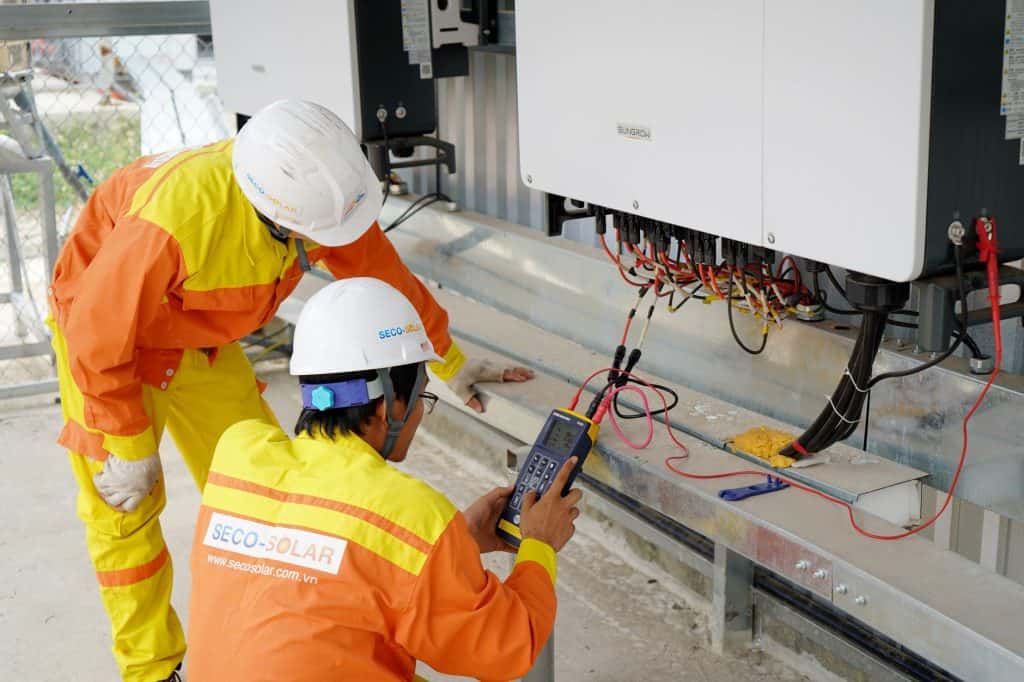
The connection study (studija priključenja) is the gating technical document for any installation. It evaluates short-circuit capacity at the point of connection, transformer headroom, and whether the local network can absorb the plant’s output at peak without violating voltage or protection limits. The operator issues it on request; it is not a document the developer writes.
Several equipment decisions fall out of that study, and each carries a cost:
- Transformer rating and tap changer position.
- Medium-voltage feeder configuration and cable routing.
- Protection relay settings coordinated with the existing network.
- Reactive power capability at the point of connection.
The barrier that stops most projects is not module cost. It is a substation with no free capacity. Site selection should therefore start from the grid map and work backwards to the land, not the other way round. An installation behind a constrained node can be technically complete and still wait years for the network to be reinforced — and queue position in that wait becomes a negotiation asset, which is why developers trade developed projects rather than greenfield parcels.
Before paying anything for land, request written capacity confirmation from the distribution operator at your intended connection point. A verbal indication is not a position in a queue, and it carries no weight in a due-diligence file.
Coal, Wind Farm and PV in the Same Queue: Reading the Generation Mix
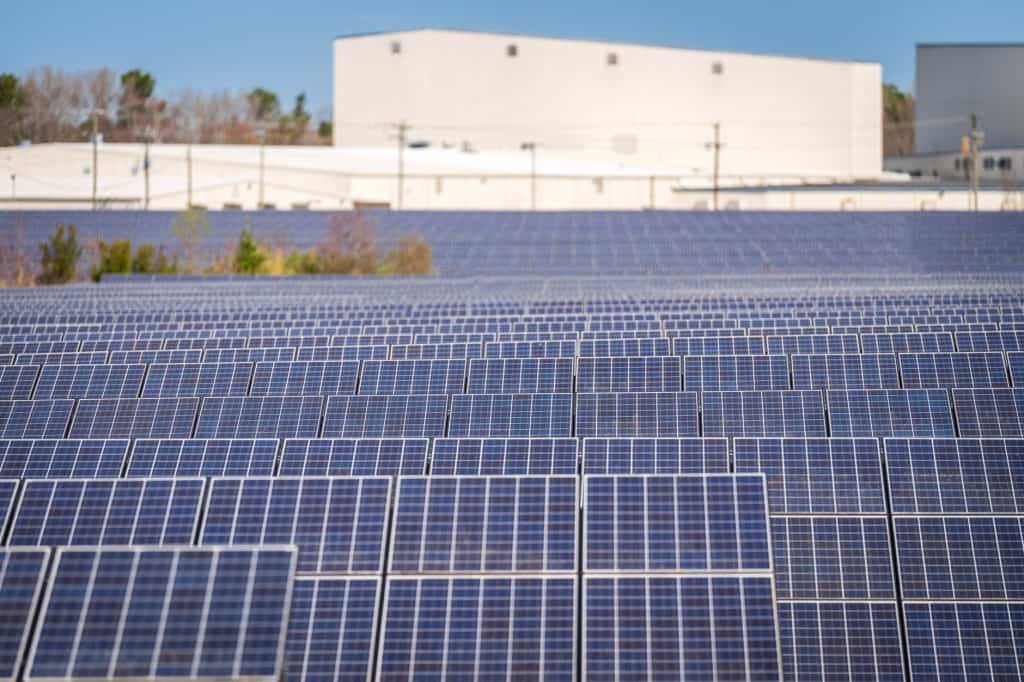
Bosnia and Herzegovina’s electricity system is coal-dominant. Thermal power plants supply the bulk of generation, and in good hydro years the country exports surplus. Renewables sit honestly at the margin: installed wind farm capacity is small, utility-scale solar power plants are a recent addition, and most PV growth has come from rooftop installation rather than ground-mounted plants.
That structure creates a specific strategic tension. Coal plant retirement is slow, so each new renewable energy source competes for scarce grid capacity inside the same constrained network. A new PV project is not competing against coal on price at the dispatch level — it is competing against every other pending project, wind or solar, for a limited number of nodes with headroom.
Plan on a gradual squeeze rather than a step change. Do not expect a collapse in coal capacity inside a five-year horizon, and do not build a business case on one. Expect new PV to be added node by node, with each connection requiring its own study. Published installed-capacity figures for BiH move and are revised; verify any number you rely on against a current official source rather than a secondary summary.
One structural constraint belongs in the model from day one: energy from an intermittent source is priced and dispatched differently from baseload coal output, and support is awarded through a limited quota mechanism rather than an open-ended entitlement. Whether your plant clears the quota in a given round is a filing-timing decision, not a design decision.
The Prosumer Route: Distribution Operator Rules for Rooftop Installation
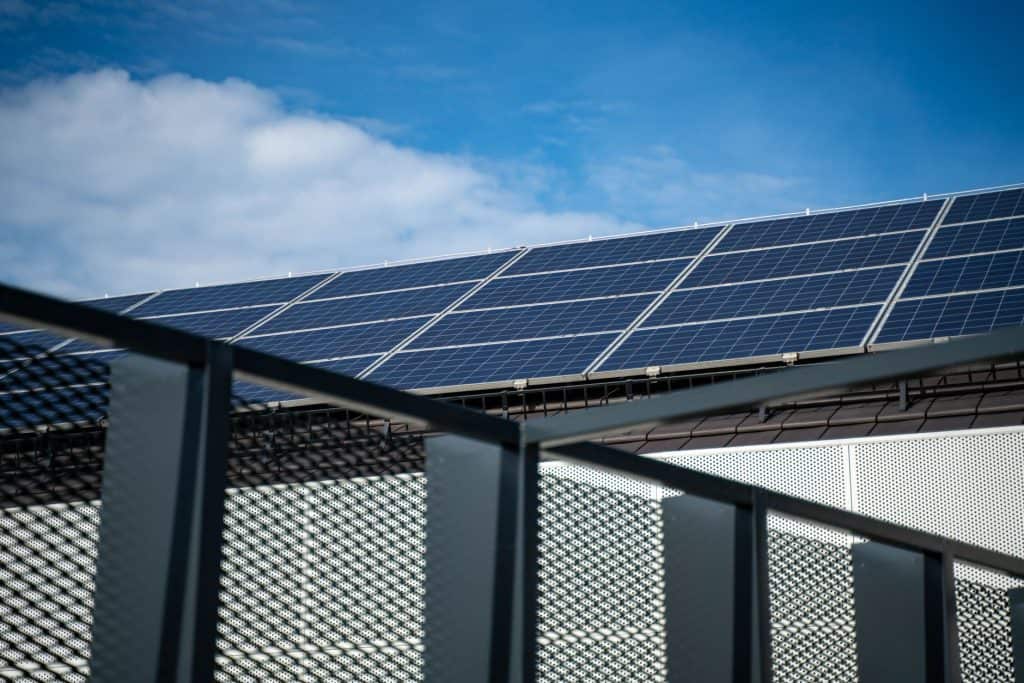
The mass-market entry point for a citizen in Bosnia and Herzegovina is behind-the-meter rooftop PV. The mechanism is simple in principle: a household or business installs a system behind its own meter, self-consumes the output, and either sells or nets the surplus under the terms the distribution operator in that entity allows.
The economics differ from wholesale sale in a way that should drive design. The avoided retail tariff is worth more per kWh than a wholesale export price. Sizing to the daytime load profile therefore matters more than generating the highest possible annual yield — an oversized array exports cheap and earns less than a right-sized one that displaces expensive retail units. A household with a 4 kW daytime base load and a 10 kWp array is selling most of its production at export value; the same household with a 5-6 kWp array keeps more of each kWh at retail value.
The practical friction points are metering configuration, inverter certification, and the distribution operator’s connection form. The prosumer route has grown quickly precisely because it skips the concession and privileged-producer track entirely; it is a different process, not a smaller version of the utility-scale one. Net-metering and surplus-purchase terms are subject to change per entity rulebook, so confirm the current terms with your operator before ordering equipment.
Agrivoltaics on the Land: Why Co-Location Changes the Site Economics
A pure ground-mounted plant and a co-located agrivoltaic layout on the same parcel differ on four dimensions that the engineer will fix before any layout drawing is approved:
- Mounting height above the crop.
- Row spacing wide enough for machinery or for light to reach the ground.
- Cable trench routing around cultivation and drainage.
- Access for maintenance and harvest equipment.
Agrivoltaïcisme raises civil and mounting cost per kW. It also preserves agricultural use of the land, which can matter where agricultural land classification restricts conversion to non-agricultural use. The trade-off is plain: a plant built higher with wider rows produces fewer kW per hectare, and the case rests on whether the retained agricultural activity and land-use eligibility outweigh that yield loss.
Design levers include panel height, tracker choice, elevation angle and rain-water runoff management. Operating cost also shifts — maintenance access on foot rather than by tractor is slower and more expensive per visit. The kW-per-hectare penalty and the added mounting cost must be supplied per site by the engineer. They are not constants that can be assumed across parcels.
Illustrative Cost Stack for a 1 MW Ground-Mounted Plant
The table below is an illustration of structure only. Every figure must be populated from a dated supplier quotation and the distribution operator’s connection cost estimate. No price is implied by this layout.
| Line item | What drives the number | Source to use |
|---|---|---|
| Modules | Wattage, technology, delivered price | Dated supplier quote |
| Omvormers | String vs central, reactive power capability | Dated supplier quote |
| Mounting structure | Fixed vs tracker, height, wind and snow load | Dated supplier quote |
| DC/AC balance of system | Cabling, combiner boxes, monitoring | Dated supplier quote |
| Grid connection works | Transformer, feeder, protection, reactive power | Operator connection cost estimate |
| Civil works | Access roads, foundations, drainage | Contractor quote |
| Design and permitting | Entity and cantonal layers, location information and planning consent, studies, registry filing | Consultant quote |
| Contingency | Study revisions, queue delay, rulebook revision | Your own allowance |
In Bosnia and Herzegovina, the permitting, grid-connection works and land-access lines carry proportionally more weight than in markets with simpler connection queues, because those steps decide whether the project exists at all. Cost per kW is a poor comparison metric across entities, since connection works scope differs by node — two 1 MW projects in different cantons or entities can have materially different grid-connection line items for reasons that have nothing to do with equipment.
Build the stack from three supplier quotes plus the operator’s connection cost estimate, and treat everything else as contingency. When a vendor offers a single all-in number, ask which of the table rows it excludes; the answer is usually the two that decide the project.
What Kills a BiH Solar Project: Queue Position, Entity Risk and Support Change
Three failure modes account for most losses, in rough order of frequency:
- No grid capacity at the chosen node. The land was bought first, the study came back negative, and the project has no connection.
- Permit sequence completed in the wrong order. The registry entry is refused because a prior consent was skipped or issued by the wrong authority.
- Support scheme terms revised after financial close. The business plan assumed a fixed tariff across the plant’s life.
Support mechanism rules and feed-in terms are subject to change. A financial model that treats the tariff as fixed for twenty years is the single most exposed assumption in the file; a sensitivity that treats it as fixed is not much better. Stress the case against the current quota mechanism rather than against a number remembered from a previous filing round.
Add the boundary risk. Land near the Inter-Entity Boundary Line requires title verification through the relevant cadastre before anything else is spent, and entity rules do not travel across that line — a permit valid on one side means nothing on the other.
Queue position is also not transferable in the way many developers assume. Acquiring a developed project means acquiring its specific registry status, not just a folder of permits. The mitigation is a payment structure: stage payments against registry milestones such as privileged producer status being granted, not against construction milestones such as panels installed. Installed panels without registry status generate no support revenue, so paying on construction progress transfers the wrong risk to the buyer.
A Sequenced Walk-Through for a Citizen Investor Entering at Small Scale
For a small investor — whether building a single installation or entering through a pooled or community structure — the sequence is the same, and it should be demanded as evidence.
- Pick the entity and the property. Pull the cadastre extract and confirm agricultural versus construction land classification before anything else.
- Request written capacity confirmation from the relevant distribution operator for the intended connection point.
- Obtain urban planning consent in the correct cantonal or entity channel — this is where the Federation of Bosnia and Herzegovina process branches.
- Commission the connection study and fix transformer, protection and reactive power scope.
- Complete permitting, build, then file for OIEIEK registration and privileged producer status before assuming any revenue.
A pooled vehicle can only distribute what the plant actually earns, so the investor should ask for the same five steps as evidence: cadastre extract, written capacity confirmation, urbanistička saglasnost, connection study, and registry status. If any of those is described as “in progress” without a document, the risk sits with the investor.
Ask one further question: which entity holds the title, and which entity’s Operator for Renewable Energy will receive the filing. A community or pooled structure that crosses the Inter-Entity Boundary Line has to answer that before it can quote any figure at all.
Veelgestelde vragen
Do I need a concession to build a solar power plant in Bosnia and Herzegovina?
It depends on the entity and the land status. A concession or lease arrangement on the land typically sits at the front of the sequence, followed by location information and planning consent, environmental screening, construction permit, a grid connection agreement and finally registration with OIEIEK. The entity rulebook where the land sits governs, and those rules are subject to change, so confirm the current requirement with the entity ministry before committing to a site.
Can I install rooftop solar and sell the surplus to the grid?
The prosumer route exists through the distribution operator in each entity, but the terms differ between the Federation of Bosnia and Herzegovina and Republika Srpska. In practice, self-consumption against your own retail tariff is worth more per kWh than an export price, so the system should be sized to your daytime load rather than to maximum annual yield. Net-metering and surplus-purchase terms are subject to change, so confirm the current rulebook with your distribution operator.
How long does grid connection take for a project in Bosnia and Herzegovina?
There is no single answer, because the connection study length depends on the voltage level and on whether the local substation has free capacity. Transmission-level connection goes through NOS BiH while lower voltage goes through the entity distribution operator, and the two have different study queues. The practical defence is to request written capacity confirmation before paying for land, since a project at a constrained node can be technically complete and still wait years.
Is Republika Srpska or the Federation of Bosnia and Herzegovina easier for solar permits?
Neither is straightforward, and the difference is structural rather than a simple difficulty ranking. Republika Srpska runs a single entity planning layer, while the Federation of Bosnia and Herzegovina adds ten cantonal layers below the entity level, so the same megawatt project carries a different paper count depending on which side of the Inter-Entity Boundary Line the land falls. Compare the entity rulebooks against your specific site and connection point rather than treating either as generally easier.
Where to Start
Start with the grid, not the land. Request written capacity confirmation from the distribution operator at your intended connection point, pull the cadastre extract, and confirm which entity rulebook and planning layers apply. Only then commit money to land or design.
If capacity is refused, or if the entity support rulebook is being revised and you cannot read the current terms, the answer changes. Move to a different node, drop to a behind-the-meter prosumer installation, or wait until the rulebook settles. Everything time-sensitive in this article — privileged producer terms, support mechanism rules, net-metering terms, quota rounds — is subject to change and should be re-read at the moment you file.