


Solar Battery for House: How to Choose and Use Home Battery Backup
Key Components of a Solar Battery System for Homes
A residential solar battery system consists of several integrated components designed to store solar energy and provide home battery backup during grid outages or peak usage periods. The battery stores electricity generated by the panneau solaire array, typically during daylight hours when production exceeds consumption.
Common solar batteries for residential use include:
- Lithium-ion batteries: Currently the market leader due to high energy density (200–265 Wh/kg), cycle life (up to 6,000 full cycles for models such as Tesla Powerwall 2 and LG Chem RESU), and efficiency around 90–95%. The nominal capacity of these units is generally 13.5 kWh, designed for typical household backup needs.
- Lead-acid batteries: Traditional and often used in off-grid solar setups due to low upfront solar battery cost. They have lower cycle life (500–1,200 cycles), depth of discharge limited to about 50% for longevity, and require maintenance such as electrolyte checks.
- Batteries à flux : Still emerging for home systems, flow batteries offer scalable capacities and multi-thousand cycle lives but come with higher complexity and initial battery cost.
Essential system components beyond the battery cells are:
- Inverter: Converts DC electricity from solar panels and batteries into AC suitable for household use. Hybrid inverters support multiple power sources and seamlessly switch between grid, solar, and battery modes using transfer times under 20 milliseconds.
- Système de gestion de batterie (BMS) : Controls charging parameters, monitors temperature and voltage, protects batteries by preventing overcharge and deep discharge, critical for maintaining warranty compliance.
- Charge controller: Regulates input from the panneau solaire array to optimize battery charging efficiency and prevent damage, especially relevant in off-grid solar battery systems.
Residential battery storage typically ranges from 5 kWh to 20 kWh, with 13.5 kWh models meeting the needs of average homes. Systems are often designed to support critical loads rather than total home consumption for cost efficiency and effective home battery backup.
How Solar Batteries Work to Provide Backup Power
Solar batteries work by storing excess electricity generated by solar panels during peak production hours. This energy is reserved for use when solar generation declines, including nighttime or overcast conditions.
The battery inverter converts stored DC power to 230V AC (or 120V AC in some markets) compatible with home electrical systems. In grid-tied configurations with battery backup, the inverter manages seamless transitions (‘islanding’) during grid outages to prevent power interruption—typically within 10 to 20 milliseconds, abiding by standards such as IEEE 1547 for interconnection safety.
During normal operation, the battery charges from solar excess or grid (if permitted), then discharges during peak tariffs to reduce grid dependency or fully during outages.
Off-grid solar battery systems function independently without grid support, requiring precisely sized batteries and solar arrays combined with robust charge controllers and inverters. Users must ensure battery capacity covers expected consumption for multiple days without sun, accounting for local solar irradiance patterns.
Determining the Right Solar Battery Size for Your House
Sizing a battery system involves assessing load, backup duration, and solar panel output capabilities.
First, calculate average hourly and daily electricity consumption using utility bills or energy monitors. A typical European mid-sized home uses roughly 30 kWh/day, often with critical loads accounting for 20–50% of total consumption, depending on user needs.
Define the desired backup time, e.g., 12 hours for essential systems (lighting, refrigeration, communications). Multiply the critical load by backup hours to estimate usable energy demand.
Adjust for battery operating limits such as depth of discharge (DoD). Lithium-ion batteries, for example, commonly use a conservative DoD of 80%, implying usable capacity is 80% of nominal rating to maintain warranty and lifecycle expectations.
Consider recharge capability based on your solar panel system size. For instance, a 5 kW solar array can recharge a 10 kWh battery in approximately 2 to 3 hours under optimal sunlight, assuming 80% system efficiency.
The table below illustrates calculation logic balancing capacity and load:
| Parameter | Value | Comment |
|---|---|---|
| Battery nominal capacity | 10 kWh | Manufacturer rating |
| Depth of Discharge (DoD) | 80% | Recommended limit to preserve battery life |
| Usable capacity | 8 kWh | Energy available for loads |
| Load (steady use) | 2 kW | Example critical load (e.g., refrigeration, lighting) |
| Backup duration | ~4 hours | Usable capacity ÷ Load |
To ensure reliability and account for inverter losses (typically 5–10%), slightly oversize battery capacity relative to critical load is recommended.
Accurate Cost Breakdown of Solar Batteries for Houses
The total solar battery cost reflects several components:
- Battery modules: Cells, packaging, and integrated cooling systems contribute 60–70% of installed system cost.
- Inverter and power electronics: Hybrid inverters and BMS hardware accounting for 15–25% of cost.
- Installation labor: Electrical connections, system integration, ground or wall mounting, and commissioning, often 10-20% of the total depending on regional labor rates.
- Permitting and inspections: Fees for utility interconnection, building permits, and safety inspections which vary by jurisdiction.
- Monitoring systems: Hardware and subscription software for remote oversight of system performance and diagnostics.
In 2026, the installed price for 10 to 15 kWh residential home batteries is approximately €7,000 to €12,000, equating to €600–€900 per kWh installed. Prices fluctuate with component supply, technology advances, and local market factors.
Financing schemes such as loans or leases spread upfront battery cost but introduce interest payments that affect net savings. Analysis of total cost of ownership against expected energy bill savings and incentives is essential for informed decision-making.
Benefits and Limitations of Integrating Solar Batteries in Homes
Solar batteries bring measurable benefits:
- Energy independence: Batteries can help maintain power flow during blackouts, supporting critical functions like lighting, refrigeration, and communication.
- Load shifting: Store solar energy during low-tariff periods and discharge during peak tariff hours to reduce electricity bills, applicable where time-of-use rates or demand charges apply.
- Increased solar self-consumption: Enhances use of onsite solar, reducing exported energy that may otherwise be subject to low feed-in tariffs or zero compensation in some markets.
- Grid impact: Reduces peak grid demand and supports stability by smoothing household load profiles.
Limitations include:
- Battery degradation: Lithium-ion batteries degrade 2–3% capacity annually, influenced by operating conditions and cycling frequency; warranties commonly cover 10 years or ~6,000 cycles.
- Storage capacity: Typique home battery backup systems provide only 3–6 hours of power for essential circuits; covering full home load for extended outages requires significantly larger systems.
- Upfront investment: Despite decreasing prices, the initial battery cost remains a considerable capital expense.
- Risque technique : Inverter or BMS failures, undersized systems, or improper integration may leave homes vulnerable during outages.
- Conformité réglementaire : Systems must meet fire safety standards such as UL 9540A (battery fire testing) and comply with local grid interconnection rules, which can add complexity and cost.
Steps to Get Started with a Solar Battery for Your House
- Energy audit: Conduct a detailed analysis of household energy use, including critical loads to be backed up.
- Equipment selection: Choose solar panels and manufacturer-certified solar battery system components compatible with your electrical infrastructure and local regulations. Verify inverter and battery models have integrated communication protocols (e.g., CAN bus) for system coordination.
- Permits and approvals: Obtain necessary local construction permits, utility interconnection consent, and compliance with building codes and fire safety standards.
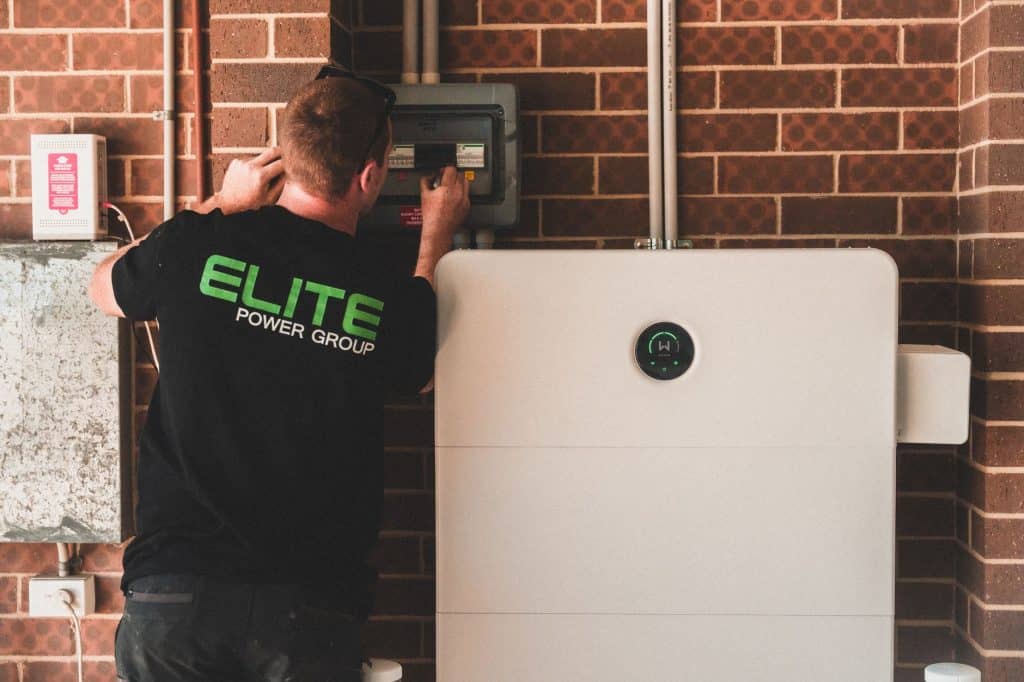
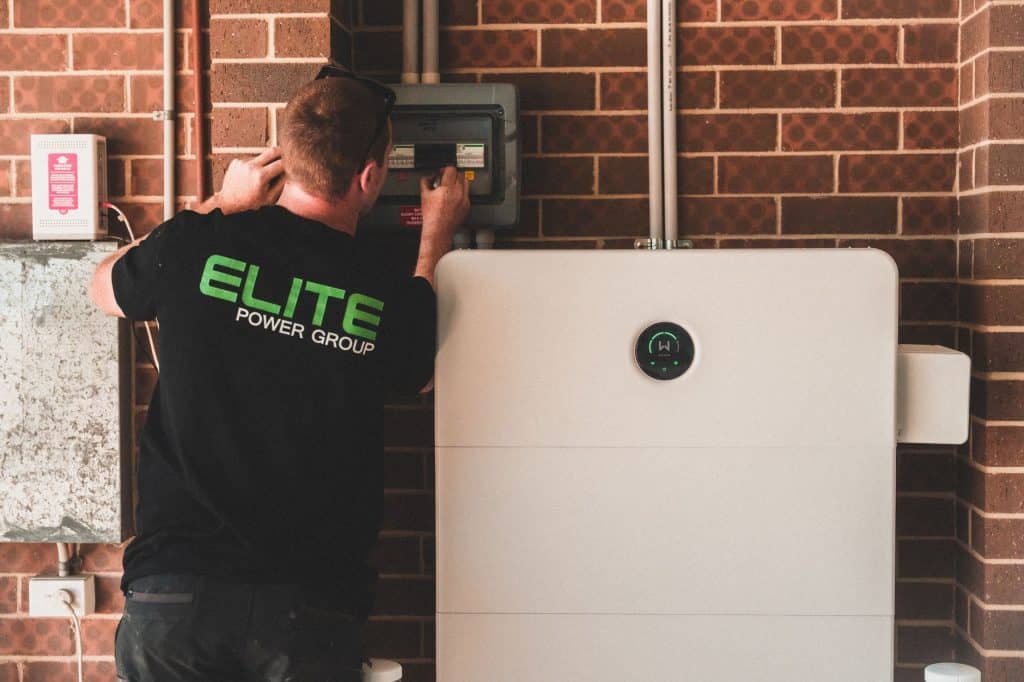
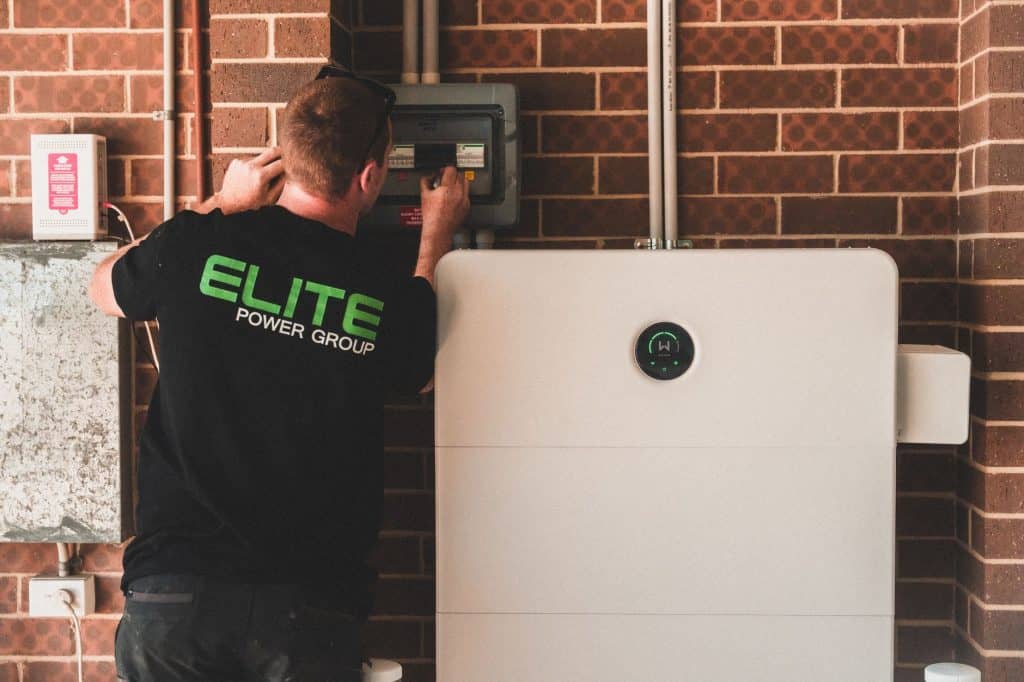
- Installation: Engage certified electricians to mount and wire solar panels, batteries, inverters, and safeguards including circuit breakers and disconnect switches. Typical installation span is 2 to 5 days based on system scale.
- Mise en service : Perform functional tests including full battery conditioning charge, inverter software configuration, and verification of backup operation modes.
- Monitoring and maintenance: Implement scheduled checks per battery manufacturer guidelines, monitor system remotely for performance deviations, and plan battery replacement or warranty service aligned with lifecycle milestones.
Solar Battery Options within Off-Grid House Systems
Off-grid solar battery systems require full energy autonomy, demanding larger battery banks and solar capacity than typical grid-tied setups.
Battery capacities for off-grid homes commonly range from 20 kWh to over 50 kWh, depending on energy consumption patterns, solar irradiance availability, and required autonomy (days of usable storage without sunlight).
Due to continual deep cycling and extended storage, chemistries such as lithium iron phosphate (LiFePO4), notable for thermal stability and cycle durability, and advanced AGM or gel lead-acid batteries are prevalent.
Off-grid solar batteries must accommodate surge loads (e.g., refrigerator compressor startups) and provide consistent voltage regulation. System design often incorporates charge controllers compliant with MPPT (Maximum Power Point Tracking) standards to maximize charging efficiency.
Using Solar Calculators to Estimate Battery Needs and Savings
Many online solar calculators allow users to model expected system performance by inputting local irradiance data, daily energy use, solar panel capacity, and battery specifications.
These tools provide estimations of:
- Grid electricity offset based on solar and battery storage integration.
- Potential payback periods considering local feed-in tariffs, retail rates, and consumption trends.
- Comparative analysis between scenarios with and without solar batteries.
Calculators rely on assumptions such as constant weather, electricity prices, and system degradation rates. For example, a model might forecast a 6–8 year payback period for a 10 kWh battery assuming stable tariffs and average sunlight, though actual figures depend on regulatory and market changes.
Foire aux questions
How long does a typical home solar battery last before replacement?
Most lithium-ion solar batteries carry a 10-year warranty corresponding to roughly 6,000 full charge-discharge cycles. Capacity degradation averages 2–3% per year, meaning effective lifespan ranges from 8 to 15 years depending on usage intensity and environmental conditions.
Can a solar battery power my entire home during a blackout?
This depends on the battery capacity and household load profile. A 10 kWh battery generally supports essential home loads for 3–6 hours. Extending backup duration or powering full home loads typically requires higher capacity battery banks combined with sufficient solar panel arrays or grid charging capability.
What are the installation costs besides the battery itself?
Installation includes costs for labor, hybrid inverter and BMS setup, permitting, electrical upgrades (such as circuit breakers and disconnects), and system commissioning. These typically constitute 10–20% of total system costs and vary with regional labor rates, system complexity, and permitting requirements.
Are solar batteries compatible with existing solar panel systems?
Many battery systems can be retrofitted to existing grid-tied solar installations. Compatibility depends primarily on inverter type (hybrid vs string inverter with separate battery inverter) and communication protocols. Professional assessment is necessary to ensure integration and regulatory compliance.
Conclusion
After evaluating your household’s energy use and backup needs, assess solar battery system options by capacity, chemistry, cost, and integration compatibility with your panneau solaire system. Engage professionals to perform energy audits and system design conforming to local electrical codes and safety standards. Market conditions, tariffs, and regulations may influence your optimal choice; continuous monitoring of these variables will support informed decision-making before investment.