Saltar al contenido







Solar Project Development in Serbia: 2026 Grid, Land and BESS Realities
Solar Project Development in Serbia has moved past the stage where a good site and a willing investor were enough. In 2026, the binding constraints sit in three places: what the grid operator will let you connect, whether the land can legally host the array, and whether storage changes the revenue picture enough to justify its cost. Serbia’s solar pipeline is now large enough that development capacity — not sunlight — is the scarce input. This article walks through each constraint with the specific instruments, documents and arithmetic needed before committing capital.
Serbia Solar Business Frameworks: What the 2026 Rule Set Actually Requires
A solar business in Serbia can sit in one of three legal routes, and the route determines almost everything downstream — offtake, licensing, grid access and how a funder will read the project.
- Licensed producer selling to the market. The plant holds a licence from the Energy Agency of the Republic of Serbia (AERS) and sells electricity commercially, either bilaterally or on the organised market. This is where a 10 MW plant normally lands, because it is too large for the small-plant support framework and too capital-intensive to run on a retail net-metering arrangement.
- Producer under a power purchase agreement (PPA). Output is sold to a named buyer under a long-term contract. The PPA is the document that makes bank debt possible, because it converts merchant price risk into counterparty risk.
- Prosumer with net metering or net billing. This is the household and small-commercial route — a legitimate renewable energy entry point, but not the structure a 10 MW investment uses.
The core instruments you will meet:
- El Energy Law of the Republic of Serbia, the framework statute. It has been amended more than once; confirm the version in force in the current Official Gazette before any transaction, because the version you model against is the version that governs your permit.
- El feed-in tariff framework for small plants and the market-premium (feed-in premium) auction scheme for larger ones. These are two different support mechanics with different risk profiles: a feed-in tariff is a fixed payment, while a market premium sits on top of a market price and therefore shares price exposure with the producer.
- AERS licensing thresholds, which decide whether your plant needs a licence and under what conditions.
A Serbia solar investment case is only as solid as the support route behind it. All tariffs, premiums, auction quotas and auction calibers are subject to change and must be confirmed with the Ministry of Mining and Energy and AERS at the time of the deal. Treat any figure quoted to you from a 2024 or 2025 document as a starting point for a phone call, not as a term sheet.
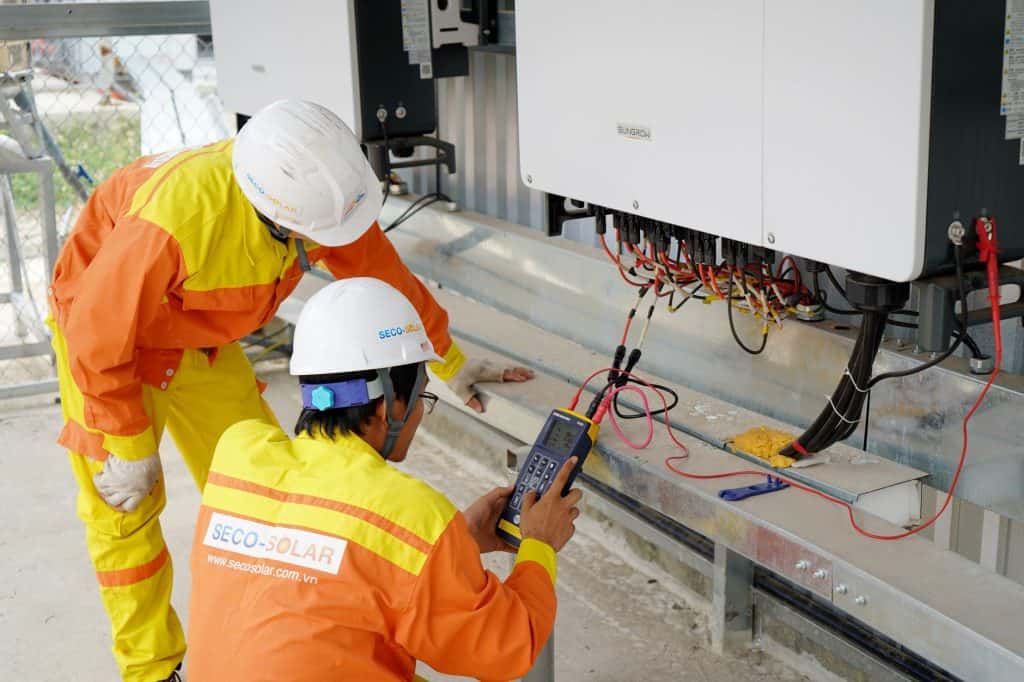
Grid access follows a parallel track. Transmission-level plants apply to EMS (Elektromreža Srbije); distribution-level plants apply to EPS (Elektrodistribucija Srbije). In both cases the gating document is the connection study (studija priključenja) — not the land contract, not the EPC quote. The study issues the technical terms the plant must satisfy, and those terms are what the rest of the design is built around. Developers who buy land first and commission the study second are building on an assumption they have not tested.
Why 10 MW Is the Scale Where Serbian Solar Project Development Turns Into a Grid Problem
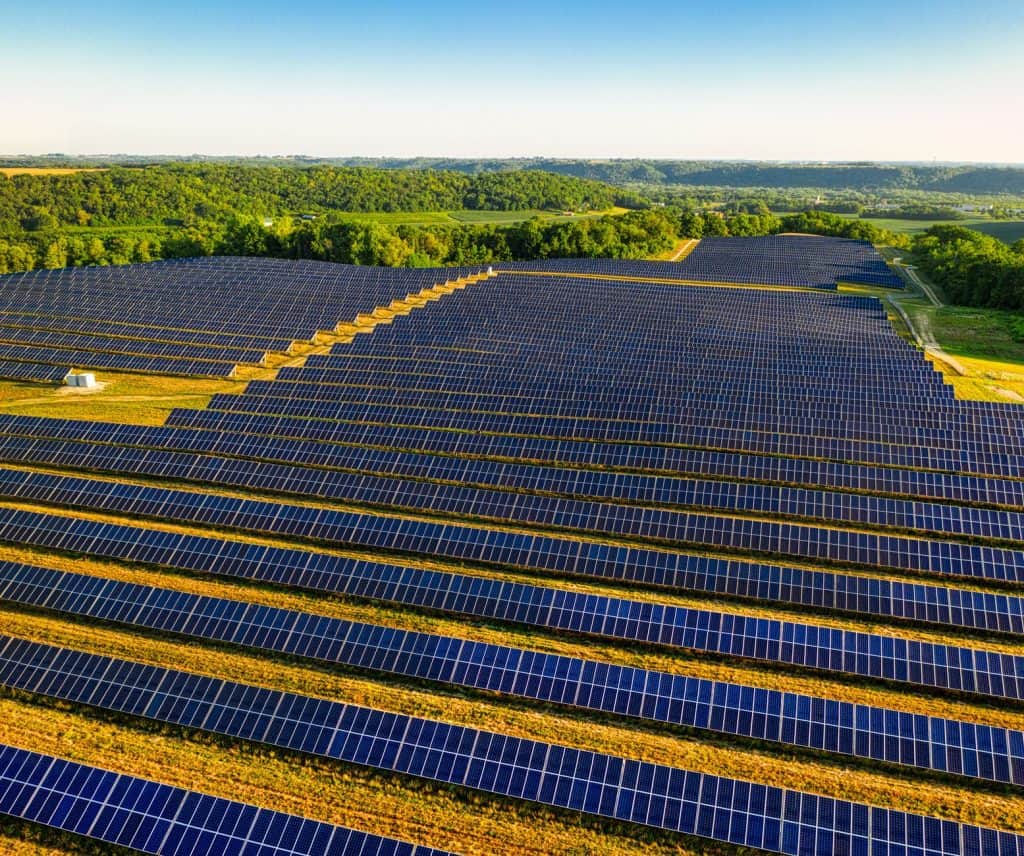
The arithmetic at this size is straightforward. Take 10 MW of DC capacity at 1,150–1,300 full-load hours per year, which brackets the range between the flatter irradiation of the Vojvodina plain and the hillier south.
Illustration: 10 MW × 1,150 hours = 11.5 GWh/year; 10 MW × 1,300 hours = 13 GWh/year. So roughly 11.5–13 GWh/year, assuming no curtailment, no availability loss and a clean DC/AC ratio. Real output will be lower; the point of the calculation is scale, not accuracy.
That volume is also where the project usually crosses from distribution to transmission connection. That crossing is not administrative. It changes the operator you deal with (EPS to EMS), the study that governs your design, the cost-sharing rule that decides who pays for reinforcement, and the construction timeline. A 10 MW array connected at distribution level and a 10 MW array connected at transmission level are different projects that happen to share a nameplate figure.
Connection cost has three components, and none can be quoted from a brochure:
- the connection fee charged by the operator;
- the reinforcement works the operator requires before it will accept your capacity;
- metering and protection equipment at the point of connection.
All three are determined by the connection study. Anyone who gives you a number before the study is issued is guessing.
Between 2023 and 2025, available grid capacity in parts of Vojvodina became the binding constraint on large-scale solar — ahead of land and ahead of permits. That pattern is the most expensive lesson in Serbian project development: a developer who options land in a capacity-constrained area can hold a perfectly good parcel that cannot be connected for years. Verify capacity with the operator antes land is optioned, and re-verify it, because capacity queues move.
Agrivoltaics as a Serbian Land-Use Answer, Not a Marketing Layer
Agricultural land conversion is a permitting step with a political cost attached. Taking arable land out of production is contested, and the procedure reflects that. An agrivoltaic layout is designed to keep the parcel in agricultural use, which changes the permitting route — that is its primary value in Serbia, before any yield or crop benefit is counted.
The physical configuration looks like this:
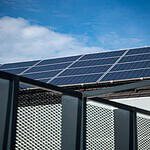
- Elevated PV tables, typically 2.5–3.5 m of clearance, so machinery and livestock can pass beneath.
- Wider row spacing, often 4–6 m between table rows, versus the tighter pitch of a pure ground-mount array.
- Bifacial modules, to recover some yield from the higher albedo of the ground cover beneath and between rows.
The trade-offs are real and should be stated plainly:
- Lower MW per hectare. An agrivoltaic layout typically carries roughly 40–60% of ground-mount density on the same parcel, subject to design.
- Higher mounting steel cost, because taller tables with longer spans need more structural material per kW.
- A crop-selection constraint. Shade-tolerant crops or pasture, not full-sun arable.
Solar Plus Garden’s membresía de jardín model sits on this layer, and precision matters here. Garden community access is funded separately from the plant’s own revenue and is not a return on the solar investment. Membership is a €200 one-time fee, and an optional jardinera is €20 per month for 18 deliveries of fresh produce per year. Stated capacity is up to 3,000 plots. Community access is no longer conditional on making a direct solar investment — the membership fee itself is what gets invested in solar, and community activities and costs are funded and managed from solar revenue. Read those as membership terms, not as yield.
Battery Energy Storage: Where Serbian Large-Scale Solar Economics Actually Move in 2026
Serbian solar output peaks in the middle of the day, when day-ahead prices are typically at their lowest. A plant without storage therefore sells the largest part of its annual production into the weakest hours. That mismatch, not any technology preference, is why battery energy storage is on the table.
The mechanism: a grid-scale battery energy storage system (BESS) of roughly 2–4 hours duration, co-located with the plant, shifts part of the output into evening hours and can participate in balancing services as a second revenue line. The architecture that governs the decision:
- Lithium iron phosphate (LFP) cells for the energy block.
- A power conversion system (PCS) handling DC/AC conversion.
- A battery management system (BMS) handling cell-level monitoring and protection.
- Grid-code compliance with the requirements EMS sets for storage connection. The specific requirements must be obtained from EMS for your connection point; do not assume a standard from another jurisdiction transfers.
Approach storage as a decision rule, not a default:
Add storage only when (price spread between charge and discharge hours + ancillary-service revenue) exceeds (round-trip efficiency loss + capex over the project’s life).
No euro figure is published here because the answer is entirely quote-dependent. Get current PCS and LFP pricing, current day-ahead price data, and current EMS grid-code requirements, then run the inequality. If it is close, it is not a yes.
Permits, Land and the Serbian Utility Signature Chain: A Sequenced Checklist
The sequence in Serbia is binding. A permit applied for out of order gets refused, and restarting a step can cost a year. The five steps:
- Land control. Ownership, lease or a pre-contract, plus a check of the parcel’s agricultural or forest status and the conversion procedure that applies. Confirm against the land registry, not the seller’s description.
- Grid-connection study with EMS or EPS. The issued terms define the technical envelope the project must fit. Nothing about the array design should be finalised before this exists.
- Energy permit (energetska dozvola) from the Ministry. This document locks the project’s licensed capacity.
- Construction permit (građevinska dozvola) under the building-construction law route applicable to a plant of this size.
- Grid-connection contract, trial operation and the operating permit (upotrebna dozvola).
Timelines differ by municipality, by operator and by parcel, and must be confirmed with the ministry and the operator at the time of filing. Anyone quoting a universal duration for a Serbian solar project is describing one project, not the process.
Funders of Serbian Solar in 2026: Who Actually Signs a Project Finance Term Sheet
Four capital sources are actually used in Serbian solar, and each tests the project against a different criterion.
- Commercial bank debt. Tests debt service coverage. Looks for a long-term PPA or auction award, plus a clear grid-connection contract. Without both, the debt service case does not close.
- Development finance institutions. Test counterparty credit and add environmental and social (E&S) performance requirements that must be designed into the project, not bolted on at diligence.
- Private equity. Tests bankability of the offtake and the quality of the sponsor. More tolerant of merchant exposure, less tolerant of permitting ambiguity.
- Smaller retail investor platforms. Test whether there is a clear legal vehicle and a real payment and escrow model. This is the criterion most often failed: a platform that cannot explain its own structure cannot be funded through.
No interest rate or loan-to-value figure is quoted here, because both are transaction-specific and both are moving. What matters is that each funder is testing something you can prepare for — debt service coverage, counterparty credit, bankability of the offtake, clarity of the vehicle.
Solar Plus Garden is positioned for the fourth category: a solar investment platform designed for smaller investors from €500, with a stated two-pathway structure — long-term equity share in Phases 1 and 2, or a guaranteed payout in Phase 2. The company’s operating rule is that no investor is taken on before legal clarity. Read that as a criterion to apply to any project, including this one, rather than as a promise about outcomes.
The Two-Stack Cost of a Serbian Solar Project: Illustrative Build and Year-by-Year Cash Sketch
What follows is an illustration, not market data. It shows the shape of the cost stack and the cash profile, not a budget.
Stated assumptions: 10 MWp DC plant; 1,200 full-load hours per year; 100% equity for the sketch; no storage; production 12 GWh/year; operating costs held flat.
Table 1 — Capex shares (illustrative only)
| Cost category | Share of total capex (illustrative) | What drives it |
|---|---|---|
| Modules | Largest single line | Module technology, wattage, supplier country, freight |
| Inverters and PCS | Second largest | Central vs string architecture, grid-code compliance |
| Mounting and civil works | Materially higher for agrivoltaics | Table height, row spacing, soil conditions, access roads |
| Grid connection and substation | Set by the connection study | Connection fee, reinforcement works, metering and protection |
| EPC services | Overhead and margin layer | Contractor scope, warranty terms, schedule risk |
| Contingency | Held reserve | Permitting delay, weather window, lead-time slippage |
Shares are deliberately not given as percentages. Replace every line with current supplier quotes before the table means anything.
Table 2 — Five-year cash sketch (illustrative, 100% equity)
| Year | Production | Cash character |
|---|---|---|
| 1 | Commissioning and ramp, below full output | Final capex drawdown; first operating costs; no full year of revenue |
| 2 | Steady production (~12 GWh) | Full operating costs; first full revenue year |
| 3 | Steady production | Operating costs; minor degradation begins |
| 4 | Steady production | Operating costs; inverter servicing reserve |
| 5 | Steady production | Operating costs; debt service line appears here if the project is financed |
When debt is added, the debt service line moves above operating costs in priority and equity cash flow becomes the residual. Any investment decision must use current Serbian pricing, current auction or PPA offtake terms, and a current connection study. This table substitutes for none of the three.
What Breaks Serbian Solar Projects Before Financial Close — and How to Test for It
Five failure points account for most projects that die between site selection and financial close. Each has a specific document that tests it.
- Grid capacity withdrawn or downgraded after the study. Test: the connection study’s issued terms, re-confirmed with the operator. Capacity queues move; a study is a snapshot.
- Land conversion refused. Test: the land registry extract, plus a written position from the competent authority on the parcel’s status and conversion route.
- Permitting sequence out of order. Test: the permit register. If a step was skipped, the project is not where the developer says it is.
- Offtake not signed before construction. Test: the offtake term sheet. A term sheet is not a contract, but its absence is a red flag no model survives.
- Legal structure that cannot be explained to a funder. Test: the legal structure chart. If you cannot walk a bank through it in ten minutes, it will not close.
Construction-phase risks are specific to Serbia and worth naming separately: the seasonal weather window on the Pannonian plain compresses installation into fewer months than a coastal market allows; module and transformer lead times can slip independently of your schedule; and the EPC contractor’s financial standing matters more than its price, because a contractor that fails mid-build leaves a half-connected plant.
Solar Plus Garden’s own operating rules set three red lines any project can be tested against: no investor before legal clarity, no escrow-like arrangement that is not a real escrow, and no structure the team does not fully understand. Apply them as risk-control criteria — to this project and to any other you are shown.
Single Plant vs. Five Smaller Serbian Sites: A Side-by-Side Decision Table
Two configurations, both illustrations: one 10 MW plant on a single parcel, versus five 2 MW plants spread across Vojvodina.
| Dimension | 1 × 10 MW | 5 × 2 MW |
|---|---|---|
| Connection route | Usually transmission (EMS) | Typically distribution (EPS) |
| Land conversion requirement | Single large parcel, single conversion decision | Five separate decisions, five separate risks |
| Permitting effort per MW | Lower — one sequence per 10 MW | Higher — five full sequences |
| Construction lead time | Longer single build, one mobilisation | Shorter per site, more mobilisations |
| O&M cost per MW | Lower — one service contract, shared supervision | Higher — five contracts, five travel footprints |
| Exposure to a single grid-capacity withdrawal | Concentrated — one withdrawal can stop the project | Spread — one withdrawal affects 20% of capacity |
| BESS justification | Strong — one co-located system, one grid-code approval | Weak — five small systems, five approvals, higher €/kWh |
The trade-off in plain words: a single plant is cheaper per MW and makes storage economically sensible, but it concentrates grid and land risk into two documents. Distributed sites spread the risk but multiply the permitting work and largely erase the storage case. Neither is correct in the abstract; the choice is a statement about how much permitting capacity your team has and how much single-point risk you can absorb.
Serbia’s 2026-2027 Solar Pipeline: What the Auction Calendar and Grid Works Change for Your Project
Three moving parts should be on every developer’s tracking list, and each changes something specific.
- The market-premium auction schedule and quotas. An auction award converts a merchant project into a supported one and makes bank debt materially easier. Quota size determines whether your bid is competitive. Subject to change; confirm against Ministry and AERS publications.
- The EMS transmission reinforcement programme. Reinforcement changes connection quality and timing at specific nodes. A node that is constrained today may not be after reinforcement — and vice versa. Subject to change; confirm with EMS.
- Progress on balancing and ancillary-services markets. A functioning balancing market changes the storage case, because it creates the second revenue line the BESS decision rule depends on. Subject to change.
All dates, quotas and premium levels are subject to change and must be confirmed against Ministry and AERS publications in 2026-2027. Nothing in this section should be modelled as fixed.
What is already visible is that Serbian solar has scaled. pv magazine reported 134.3 MW installed in 2025. That figure is a checkable reference point, not a forecast — and it frames the demand side of the renewable energy market: capacity is being built, which means development capacity is the scarcer input.
Preguntas frecuentes
How long does it take to get a grid connection for a 10 MW solar plant in Serbia?
There is no single published duration that applies to every project. Timing is set by the connection study with EMS or EPS and by the reinforcement works the operator requires. What you can control is the order of operations: obtain the study before you commit to land, and treat its issued terms as the technical envelope everything else must fit. Confirm current durations with EMS or EPS at the time you file.
Can I build solar on agricultural land in Serbia without converting it?
It depends on the parcel and the layout. A standard ground-mount plant usually triggers a change in agricultural land use status, which is a permitting step of its own. An agrivoltaic layout — elevated tables at roughly 2.5–3.5 m clearance with 4–6 m row spacing — is designed to keep the parcel in agricultural production, which can change the route. Check the parcel’s status in the land registry and with the competent authority before signing anything.
Do I need a battery energy storage system to make a Serbian solar plant work?
Not always, but the case is decided by the price spread between the hours you charge and discharge plus any revenue from balancing services, measured against round-trip efficiency loss and battery capex. Serbian solar output peaks in the middle of the day when day-ahead prices are typically lowest, which is what storage is meant to correct. Run the numbers on current prices and current grid-code requirements from EMS before sizing any BESS.
What return can I expect from investing in a Serbian solar project?
No return figure can be given here, and any specific number offered before the legal structure, offtake and connection are settled should be treated with suspicion. What you can evaluate are the criteria: is there a signed offtake or auction award, is the connection contract in place, is the legal vehicle clear, and is the payment model real rather than escrow-like. Solar Plus Garden’s own rule is that no investor is taken on before legal clarity — use that as your test for any project, including ours.
Your Next Step
Your next move depends on which of two positions you are in.
If you are a developer: file the grid-connection study before you sign the land option, and build your financial model on 1,150–1,300 full-load hours and capex shares you have replaced with current supplier quotes.
If you are an investor: ask for five documents — the connection study terms, the land registry extract, the permit register, the offtake term sheet, and the legal structure chart — and do not proceed on any of them being unavailable.
What would change that answer: a confirmed auction award or PPA at a level that covers debt service, a signed connection contract, and a legal structure you can explain to a bank. Absent those three, the project is not ready, and no rate of return on the page should move you. The renewable energy market in Serbia is real and building; the discipline is in what you refuse to sign before the grid and the permits say yes.
Lecturas relacionadas
- Proceso de conexión a la red eléctrica solar: Cómo conectar las plantas de energía solar a la red eléctrica.
- Integración de sistemas de almacenamiento de energía en baterías (BESS) para la generación de energía solar y la gestión de la red optimizadas.
- Dominando el control de importación/exportación de sistemas de almacenamiento de energía solar para una gestión energética compatible con la red.