

Solar Energy Passive Income: How Community Investment Creates Value
How Solar Plus Garden Structures Passive Income Through Solar Investment
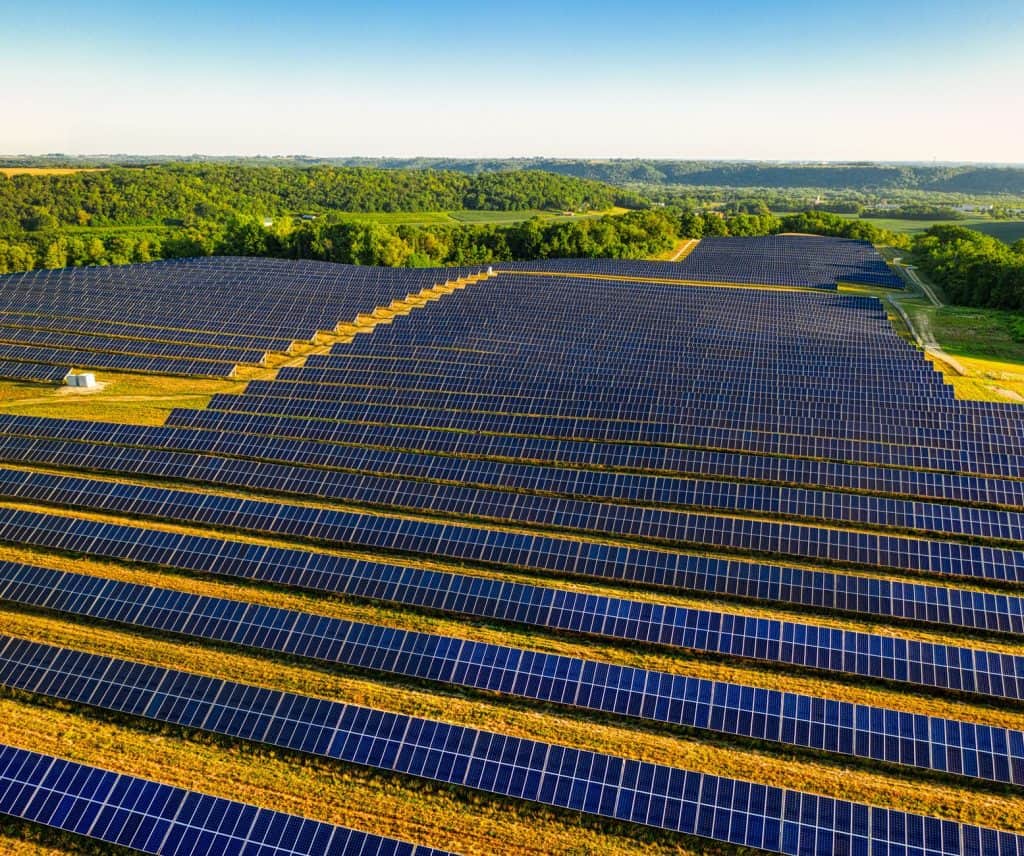
Solar Plus Garden integrates a 10 MW solar project with a community-centered “garden” membership model, creating distinct income and engagement channels. The Solarpark is owned and operated by a Serbian limited liability company (DOO), which holds the physical infrastructure and manages operations including installation, maintenance, and grid integration.
Concurrently, the Garden community functions through a separate legal entity, responsible for membership management and community activities linked to Agrivoltaik. This dual-entity structure complies with both Estonian and Serbian corporate frameworks, enabling clear financial and operational separation under relevant jurisdictions.
Garden membership requires a €200 one-time fee, which funds solar infrastructure development and community initiatives. Members can further opt into a Gartenkasten subscription at €20 per month, receiving 18 annual deliveries of fresh, local produce cultivated under solar panels, reflecting agrivoltaic land use. This arrangement adheres to agrivoltaic standards for mixed solar-agriculture land use, optimizing landowner returns by combining energy generation with food production.
The platform supports up to 3,000 garden parcels (referred to as boxes), balancing community scale and operational capacity. Payment flows are managed through an escrow-based model compliant with European anti-money laundering and utility-sector transaction regulations, ensuring funds are allocated exclusively to operational costs or community expenses without unauthorized diversions.
- Solar power capacity: 10 MW installed, fixed-tilt PV panel arrays
- Garden membership fee: €200 one-time, funds solar and community operations
- Garden box subscription: €20/month, with 18 fresh produce shipments annually
- Platform capacity: up to 3,000 garden parcels aligned with agrivoltaic design
This model enables multiple access points for investing in solar energy passive income and supports community solar participation aligned with operational and legal transparency.
Pathways to Earn Solar Energy Passive Income: Equity, Loan, and Membership Models
Solar Plus Garden offers two main investment routes linked to the 10 MW plant’s development phases:
- Eigenkapitalinvestition: Purchasers acquire ownership stakes proportional to invested capital during Phase 1 and Phase 2. Equity holders share in revenue generated from energy sales to the utility grid under Serbian feed-in tariff policies or negotiated power purchase agreements (PPAs). Returns depend on operational performance and market conditions.
- Darlehensfinanzierung: Investors provide capital loans secured by project cash flows and assets, receiving contractually contracted interest payments. This structure is governed by Serbian financial regulations applicable to alternative investment vehicles.
Phase 2 introduces a guaranteed payout mechanism on loan instruments, reducing income volatility for risk-averse investors. Both pathways undergo due diligence and comply with EU financial standards, including transparency directives relevant for sustainable investment projects.
For non-investors, the Garden membership allows participation in the community solar ecosystem without direct financial exposure to solar asset risk. Members contribute financially via membership fees, indirectly supporting solar infrastructure financing and gaining access to community benefits like local produce.
- Risikoprofile: Equity investors assume exposure to operational and market volatility balanced by potential capital appreciation and dividends; loan investors rely on fixed-income returns secured by project assets; community members face limited financial risk but access solar-powered benefits
- Ownership and income streams: Equity entails ownership with residual income rights; loans provide contracted repayments; memberships offer community access without ownership or passive income rights
- Two solar investment ROI pathways: long-term equity shares (Phases 1 & 2) and guaranteed payouts (Phase 2 loans)
- Garden membership without ownership grants community solar engagement
- Investment alternatives catering to diverse risk tolerances and financial goals
Technical Components: Solar Panels and Farm Infrastructure Driving Returns
The 10 MW solar farm utilizes monocrystalline photovoltaic panels selected for efficiency and durability under Serbia’s climatic conditions, rated at approximately 19–21% conversion efficiency per the IEC 61215 standard for PV module performance. Arrays are installed on fixed-tilt racks angled for optimal solar irradiance capture year-round, following local insolation data and minimizing performance losses.
The project applies agrivoltaic land use by interspersing solar panel rows with agricultural plots, following agrivoltaic operational guidelines that maintain at least 30–40% sunlight penetration to crops. This sustainable land use increases revenue potential by combining electricity generation with the production of climate-resilient, shade-tolerant crops grown beneath and between panels.
Operations comply with Directive 2014/94/EU on alternative fuels infrastructure, Serbian energy grid codes, and IEC 61724 for PV system performance monitoring. The Serbian DOO manages installation by certified installers and contractors, maintaining periodic inspection schedules and remote performance monitoring to optimize energy yield and operational uptime.
- 10 MW installed solar farm using monocrystalline PV panels, 19–21% efficiency (IEC 61215)
- Fixed-tilt mounting optimized for annual solar irradiance profiles in Serbia
- Agrivoltaic land use balances 30–40% light transmission for crop growth under solar arrays
- Compliance with EU and Serbian technical standards (IEC 61724, local grid codes)
- Operational management by Serbian DOO with certified installers and ongoing monitoring
This integrated technical and operational framework underpins predictable solar production, critical to securing passive income distributions and investor confidence.
Financial Flow: From Solar Energy Production to Passive Income Payouts
Solar energy revenue is primarily generated through electricity sales to utility companies under Serbian regulated feed-in tariffs and bilateral power purchase agreements (PPAs) reflecting 2026 market conditions. Tariffs are subject to annual reviews by Serbia’s Energy Agency and possible future regional EU reforms affecting price and contract terms.
Financial management employs a strict payment and escrow model that ensures investor funds and membership fees are used only for approved operational expenses, solar farm maintenance, loan servicing, and community activity costs. This model aligns with EU regulations on fund segregation for asset-backed securitization and investment protection.
Distributed passive income arises after operational expenses, which include panel cleaning, inverter maintenance, land leasing, local labor for agrivoltaic farming, platform administration fees, and community program costs. Tax credits or utility credits, where applicable under Serbian and EU law, are applied to improve net investor yields, subject to regulatory compliance and reporting requirements.
Passive income payments to investors are scheduled quarterly or biannually, depending on operational cash flow and available surplus, with distributions executed via bank transfers to verified accounts. These schedules correspond with project phase milestones and audited financial statements made available through the platform’s investor portal.
- Energy revenue driven by Serbian regulated feed-in tariffs and PPAs (subject to 2026 conditions)
- Escrow model ensures segregated use of funds for solar operation and community costs
- Operating expenses include maintenance, land leasing, agrivoltaic labor, and platform administration
- Application of relevant tax credits and utility credits under Serbian and EU regimes
- Passive income payouts quarterly or biannually following phase-specific cash flow assessments
Legal and Structural Safeguards Ensuring Investment Integrity and Transparency
Solar Plus Garden is legally structured with an Estonian OÜ incorporated on 20.02.2026 as the project rights holder, holding intellectual property, branding, and investment contracts. The operational asset ownership and management reside with the Serbian DOO, which executes installation, maintenance, and grid interface under Serbian law.
This cross-jurisdictional model complies with EU company law and Serbian corporate regulations, facilitating transparent legal separation and reducing risks associated with multi-national investments. Investors receive clear governance documentation detailing payment flows, rights, and obligations outlined in audited contracts reviewed by third-party legal advisors.
The platform rejects non-transparent escrow-like solutions in favor of verifiable payment trail mechanisms, including blockchain-enabled transaction logging and dual-signature disbursement controls. Investor and community member funds are independently audited annually to prevent misuse and ensure compliance with European Securities and Markets Authority (ESMA) guidelines.
This legal framework enhances investor confidence by minimizing operational risks, improving accountability, and supporting scalable growth aligned with international compliance standards.
- Incorporation of Estonian OÜ: 20.02.2026, holding project rights and contracts
- Serbian DOO responsible for physical solar farm operation and asset management
- Cross-jurisdictional compliance with EU and Serbian corporate and investment regulations
- Transparent payment and disbursement controls with annual independent audits
- Investor-ready governance eliminating escrow ambiguity and enhancing scalability
Garden Membership: A Non-Investment Access Point Supporting Solar and Community
The Garden membership provides an alternative engagement route for those who prefer to support solar development and community without direct financial risk or ownership. The €200 membership fee funds ongoing solar infrastructure support, platform maintenance, and community initiatives connected to agrivoltaics.
Members opting for the garden box subscription pay €20 monthly to receive 18 shipments annually of fresh, seasonally adapted vegetables cultivated on agrivoltaic plots distributed across the platform’s maximum of 3,000 garden parcels. These parcels are leased to the community entity under agrivoltaic agreements ensuring sustainable land use and local food production consistent with EU agri-environmental schemes.
This model extends cooperative-style participation, enabling non-investor individuals to contribute to environmental sustainability and local agricultural economy while benefiting from community solar’s social and nutritional dividends. Members gain access to periodic educational content and community events coordinated via the platform.
- €200 one-time Garden membership fee supporting solar infrastructure and community
- Optional €20/month garden box subscription delivering 18 fresh vegetable shipments annually
- Up to 3,000 agrivoltaic garden parcels leased to community entity
- Cooperative model fostering sustainable local food production linked to solar revenues
- Non-investor access to solar-driven community activities and educational resources
Steps for New Investors and Members to Join the Solar Plus Garden Platform
The Solar Plus Garden onboarding process combines regulatory compliance with user-friendly digital tools:
- Anmeldung: Users create accounts on the web portal, entering personal or corporate details relevant to their participation type.
- KYC/KYB Verification: Know Your Customer and Know Your Business procedures confirm identity and legitimacy, complying with EU’s AMLD (Anti-Money Laundering Directive) and Serbian regulations to prevent fraud.
- Zahlungsabwicklung: Investment payments include a minimum €500 commitment for equity shares or loan contributions; Garden community members pay a €200 one-time membership fee and optional garden box fees.
- Participation Selection: Users choose their model—equity investment, loan financing, or Garden membership with optional garden box subscription.
- Platform Access and Monitoring: Following verification and payment, users receive credentials to an investor dashboard providing real-time data on solar farm production, financial statements, transaction history, and community updates.
Phased investing options allow staggered capital deployment aligned with project development milestones and regulatory approvals, providing flexibility and transparency.
- Sequential process: Register → KYC/KYB → Payment → Participation model choice → Platform access
- Minimum €500 solar investment or €200 Garden membership fee
- Adherence to EU and Serbian compliance standards
- Digital portal enables continuous transparency and performance tracking
Illustration: Year-by-Year Passive Income Breakdown for a €500 Solar Investment
This example assumes a €500 initial equity investment in Phase 1, linked proportionally to the 10 MW solar farm’s operational revenue. Financial figures incorporate estimated solar energy generation, platform fees including installation and maintenance costs, and community contributions. Returns depend on stable feed-in tariffs under Serbian utility contracts current as of 2026, subject to future regulatory changes.
| Year | Gross Solar Income (€) | Operational & Platform Fees (€) | Net Passive Income (€) | Cumulative Net Income (€) |
|---|---|---|---|---|
| 1 | 40 | 6 | 34 | 34 |
| 2 | 42 | 6 | 36 | 70 |
| 3 | 44 | 6 | 38 | 108 |
| 4 | 45 | 6 | 39 | 147 |
| 5 | 46 | 6 | 40 | 187 |
Notes on illustration: Assumes solar panel generation allocated on a per-€500 equity basis, with operational and platform fees fixed at €6 annually to cover inverter maintenance, panel cleaning, agrivoltaic land rent, and administrative costs. Net passive income excludes taxes, which vary by investor jurisdiction and applicable tax credit utilization. Figures illustrate potential income growth from improving solar farm performance and operational efficiencies over five years, but returns are dependent on ongoing regulatory and market conditions.
This example highlights how investing in solar energy within a community solar framework generates income over time, while Garden members support the project’s social and environmental objectives without direct income.
Häufig gestellte Fragen
How much initial investment is required to start earning passive income with Solar Plus Garden?
The minimum equity investment to participate in solar energy passive income earnings is €500. Alternatively, joining the Garden community requires a one-time membership fee of €200, with an optional monthly €20 fee for the garden box subscription. Neither the membership fee nor the garden box subscription confers ownership or income rights.
What are the differences between investing directly in solar and joining as a garden community member?
Direct solar investors acquire equity or provide loans tied to 10 MW plant revenues and receive income from electricity sales. Garden members contribute financially via membership fees to support solar and community activities, accessing agrivoltaic produce and community engagement without ownership or dividend rights.
How often are passive income payments made to solar investors?
Income payments to investors are distributed according to operational cash flow and contractual phase milestones, typically on a quarterly or biannual basis. Actual frequency depends on solar farm performance and administrative schedules established in investment agreements.
Are there any legal safeguards to protect my investment in Solar Plus Garden?
Yes. The platform’s structure clearly separates ownership and operational responsibilities between Estonian OÜ and Serbian DOO, with audited contracts and transparent payment flows governed by investment-grade compliance standards. Unauthorized fund usage is prevented through escrow-like safeguards and investor oversight mechanisms.
Abschluss
Solar Plus Garden offers multiple ways to invest in solar energy passive income, combining a large-scale 10 MW solar farm with an integrated community solar and agrivoltaics model. Investors can choose equity or loan pathways aligned with their risk profiles, while community members contribute through Garden membership without direct investment risk.
Market conditions, regulatory frameworks, and project phase progression influence income timelines and yield, underscoring the importance of ongoing project engagement and transparency provided via the platform. This approach enables a scalable, legally sound, and multi-dimensional involvement in the transition to clean energy and regenerative local agriculture.