









Understanding Polycrystalline Solar Panels: Efficiency, Structure, and Investment Insights
Structure and Composition of Polycrystalline Solar Cells
Polycrystalline solar cells, the building blocks of polycrystalline solar panels, are manufactured from polycrystalline silicon, also known as polysilicon. This material is produced by casting molten silicon into square molds followed by rapid cooling, resulting in wafers composed of multiple small silicon crystals rather than a single continuous lattice. The surface of these wafers reveals distinct grain boundaries—angular patterns of varying orientation—which differentiate polycrystalline silicon solar cells from monocrystalline silicon solar cells that exhibit uniform crystal structure.
Standard silicon wafer dimensions for polycrystalline solar cells are typically 156 mm x 156 mm or 158.75 mm square, adhering to Photovoltaik industry standards. These wafers are arranged into photovoltaic (PV) modules with typical configurations of 60 cells (6×10) or 72 cells (6×12), compliant with IEC 61215 specifications for crystalline silicon PV modules. The grain size of polycrystalline silicon crystals ranges from a few microns up to several millimeters, influencing carrier mobility. The existence of multiple grain boundaries increases electron scattering, which negatively impacts electrical conductivity compared to monocrystalline silicon solar cells.
While monocrystalline silicon offers higher purity and electrical performance, polycrystalline silicon’s manufacturing process consumes less energy and silicon feedstock, leading to cost efficiencies. Consequently, polycrystalline solar modules are widely used in utility-scale solar PV installations where balanced cost and performance are critical factors.
- Base material: polycrystalline silicon formed by casting and rapid cooling of molten silicon.
- Visible grain boundaries create characteristic mosaic patterns on the solar cell surface.
- Standard wafer sizes: 156 mm or 158.75 mm square, conforming to IEC 61215.
- Module configurations typically 60 or 72 solar cells arranged in grids per industry norms.
- Multi-crystal grain structure reduces electron mobility relative to monocrystalline cells.
Efficiency Performance of Polycrystalline Solar Panels in Real-World Conditions
Solar panel efficiency measures the ratio of electrical output power to incident solar power under defined test conditions. Polycrystalline solar panels usually exhibit a solar panel efficiency between 15% and 17% when tested according to IEC 61215 Standard Test Conditions (STC): irradiance of 1000 W/m², cell temperature of 25°C, and air mass 1.5 spectrum. This contrasts with conventional monocrystalline solar panels which range from 18% to 22% efficiency under the same conditions.
The temperature coefficient, expressed as a percentage output loss per °C increase above 25°C, is crucial for estimating performance over a range of operational climates. Polycrystalline modules generally have a temperature coefficient between -0.43% and -0.45%/°C. Thus, if cell temperature rises from 25°C to 45°C under full sun, output power may degrade by approximately 8.6% to 9%, an important factor when considering installation sites in regions with elevated ambient temperatures.
Real-world efficiency also depends on sunlight intensity and the angle of incidence. Polycrystalline solar panels maintain robust output under direct solar irradiance but experience sharper efficiency reductions under diffuse light or partial shading conditions compared to monocrystalline solar pv modules, which often incorporate enhanced shading resilience technologies such as half-cell and multi-busbar designs. Despite this, polycrystalline panels remain effective for diverse operational scenarios, including agrivoltaic projects operating under evolving light conditions.
- Efficiency range of 15-17% per IEC 61215 Standard Test Conditions.
- Temperature coefficient approximately -0.43% to -0.45% output per °C above 25°C.
- Output affected by irradiance intensity and incidence angle, with some performance drop under shading.
- Trade-off: lower efficiency than monocrystalline panels compensated by reduced cost.
Comparing Monocrystalline and Polycrystalline Solar Panels for Investment Decisions
Monocrystalline and polycrystalline solar panels differ primarily in their silicon solar cell structure. Monocrystalline solar cells consist of single-crystal silicon with uniform dark coloring and rounded edges, leading to higher efficiency and better performance in low-light and partial shading conditions. In contrast, polycrystalline solar cells exhibit a fragmented crystalline structure with grain boundaries visible on their surfaces and have square edges.
From a solar panels cost perspective, polycrystalline modules typically cost 10% to 20% less per watt of capacity than monocrystalline solar panels. This price differential arises due to less complex manufacturing processes and lower purity requirements for polysilicon feedstock. For large-scale solar PV projects where budget constraints dominate, polycrystalline solar panels offer a favorable capital expenditure (CAPEX) profile.
Durability and lifespan are comparable, with typical warranties ranging from 25 to 30 years for both monocrystalline and polycrystalline modules, although specifics depend on manufacturer and installation quality. Monocrystalline panels tend to perform better at elevated temperatures and in partially shaded environments due to higher electron mobility and advanced cell designs. This performance variance impacts project viability in hotter climates or complex shading scenarios.
Investment decisions balancing monocrystalline vs polycrystalline solar panel use must consider upfront costs, energy yield over system lifespan, site-specific temperature and shading conditions, and long-term degradation rates. Polycrystalline solar panels provide stable performance with slightly reduced efficiency—often 10-15% lower compared to monocrystalline—but benefit from lower initial investment and suitable durability metrics for community and utility projects.
- Monocrystalline cells: single crystal, uniform dark appearance, higher efficiency (18%-22%).
- Polycrystalline cells: multi-crystal, grain boundaries visible, slightly lower efficiency (15%-17%).
- Module lifespan typically 25+ years with manufacturer warranties adhering to IEC 61215 and IEC 61730.
- Polycrystalline solar panels cost 10-20% less per watt than monocrystalline panels.
- Monocrystalline offers better heat tolerance and shade resilience, affecting site suitability.
Role of Polycrystalline Solar Panels within Solar Plus Garden’s Agrivoltaic Community Framework
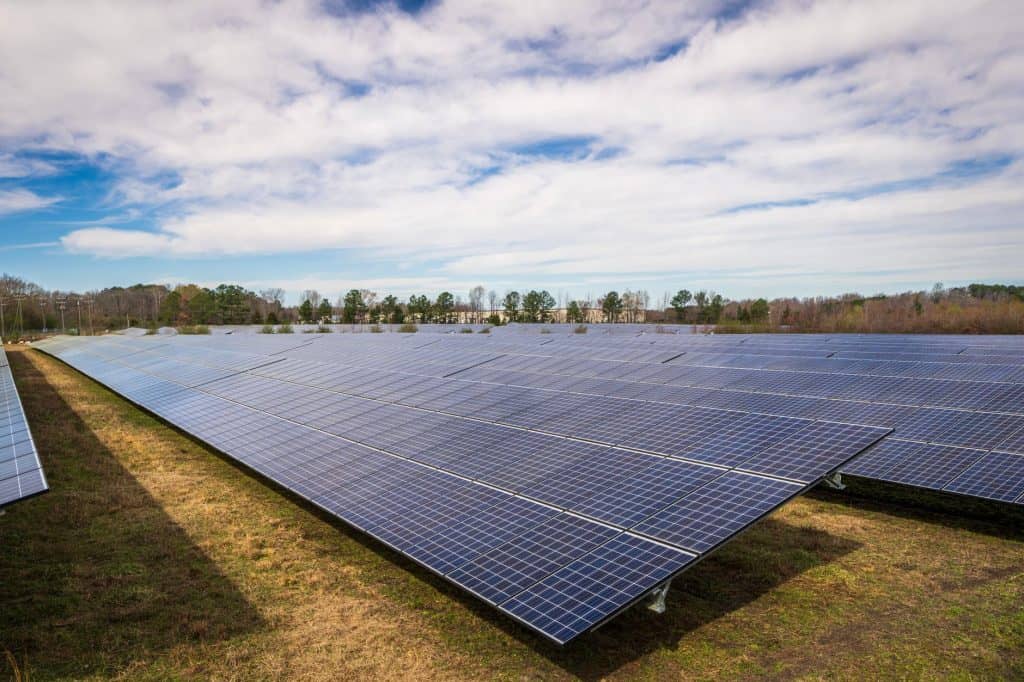
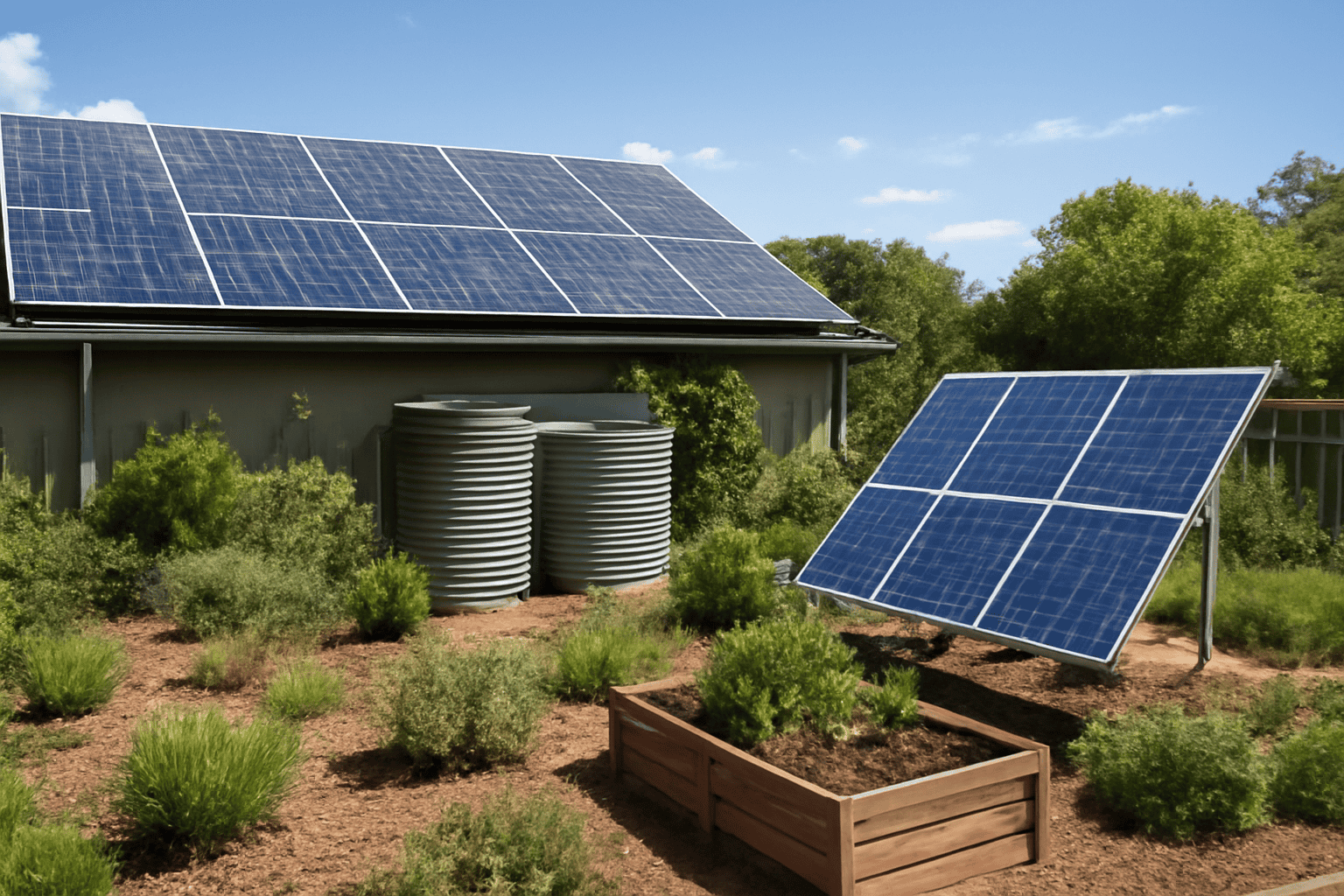
Solar Plus Garden deploys a 10 MW solar plant based on polycrystalline solar modules integrated into an agrivoltaic community model that couples renewable energy generation with local agricultural practices. This approach maximizes land use efficiency by enabling simultaneous solar power production and regenerative cultivation on the same area.
The solar pv system’s revenue sustains the Gartenmitgliedschaft community—comprising up to 3,000 garden plots—with fresh, local produce deliveries managed through a membership fee structure. Community members pay a one-time €200 membership fee to gain access plus an optional €20/month Gartenkasten subscription for 18 annual deliveries of seasonal vegetables. This payment system channels solar energy income transparently to fund both operational costs and community-oriented agricultural programs, as detailed under the project’s financial management policy.
Legally, Solar Plus Garden operates with a clear separation between the Estonian OÜ entity owning and maintaining the solar plant and the Serbian DOO entity managing the agrivoltaic garden community. This structure complies with European and Serbian corporate law, ensuring investor protection and transparent governance. The segregated roles simplify compliance with relevant EU renewable energy directives and safeguard operational accountability.
This scalable model facilitates participation of small and medium investors with regulated controls and platform-based transparency. The use of polycrystalline silicon solar technology balances cost efficiency with reliable energy output, aligning financial returns with environmental and community impacts.
- 10 MW solar plant equipped with polycrystalline solar modules is core to energy generation.
- Solar revenue funds community agriculture over 3,000 garden plots via membership fees.
- €200 membership fee plus €20/month optional garden box deliver fresh produce 18 times yearly.
- Clear legal separation between Estonian solar plant owner and Serbian garden operator.
- Scalable investment framework supports small-to-medium investors in renewable energy and agriculture.
Durability and Maintenance Requirements Specific to Polycrystalline Modules
Polycrystalline solar panels are engineered to endure environmental stresses common in photovoltaic deployments, including hail impact resistance up to 25 mm hailstones at terminal velocity per IEC 61215 testing protocols, wind load resistance up to 2400 Pa, and thermal cycling between -40°C and +85°C. The multi-crystalline silicon structure contributes to mechanical integrity required for a typical solar panel lifespan of 25 to 30 years.
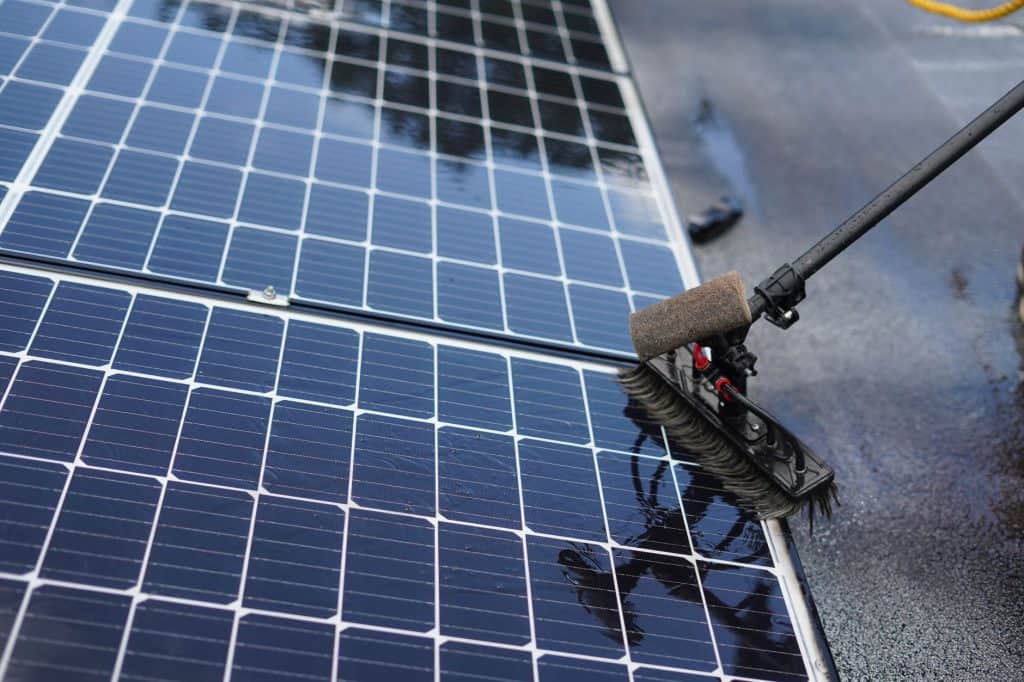
Maintenance is critical for sustaining solar panel efficiency in settings like Solar Plus Garden, where agricultural dust, pollen, and organic debris can accumulate on module surfaces. Cleaning intervals vary by locale but generally range from quarterly to semiannual, applying water-based cleaning methods without abrasive chemicals to prevent micro-scratching of the glass.
Polycrystalline silicon solar cells can develop microcracks along grain boundaries due to mechanical stress from transportation, installation, or thermal expansion. These microcracks marginally reduce performance but are factored into system design safety margins mandated by IEC 61215 and IEC 61730 standards. Early detection through infrared thermography or electroluminescence imaging during commissioning and maintenance helps mitigate efficiency losses over time.
Solar Plus Garden adheres to IEC 61730 electrical and mechanical safety standards, ensuring module integrity, fire resistance, and safe operation for investors and community members alike.
- Panel design resists hail (up to 25 mm), wind loads (up to 2400 Pa), and thermal cycling (-40°C to +85°C).
- Recommended cleaning frequency quarterly to biannually depending on local environmental conditions.
- Microcracking at grain boundaries is a known degradation mechanism monitored by non-destructive testing.
- Compliance with IEC 61215 and IEC 61730 ensures long-term safety and reliability.
- Typical degradation rate of 0.5% to 0.7% per year under standard operating conditions.
Evaluating the Economic Trade-offs of Polycrystalline Solar Panels in Clean Energy Projects
As of 2026, polycrystalline solar panels cost approximately €0.20 to €0.35 per watt installed, excluding balance of system (BOS) components. BOS costs—which include mounting hardware, inverters, wiring, land preparation, and installation labor—add an estimated 40% to 60% overhead on the total system cost. These values reflect market conditions in the European Union and Serbia but are subject to fluctuations from supply chain variability and material price changes.
The reduced solar panel efficiency of polycrystalline modules necessitates larger system footprints compared to monocrystalline solar panels to achieve equivalent power output. This translates into higher land use and structural costs, partially offsetting the lower PV module price. Project developers must evaluate site availability, land lease costs, and BOS logistics to optimize overall cost-effectiveness.
Solar Plus Garden’s business model leverages membership fees and solar power sales revenue within a transparent escrow-based payment structure, mitigating common investment risks such as capital misallocation or operational inefficiencies. While payback periods vary based on local feed-in tariffs and electricity market prices—both subject to regulatory and market shifts—the cost structure of polycrystalline solar pv modules supports competitive financial returns for community-scale renewable energy projects.
- Polycrystalline solar panel cost: €0.20-0.35 per watt excluding BOS.
- BOS components add 40-60% to total system cost, including installation and permits.
- Lower efficiency requires larger area/foundation, impacting land use and labor costs.
- Transparent fee and revenue model improves financing security for investors.
- Return on investment sensitive to market tariffs and regulatory frameworks.
Technical Advances Driving Improved Efficiency in Polycrystalline Silicon Solar Cells
Recent advances in polycrystalline silicon solar cell manufacturing focus on optimizing crystal grain size uniformity and enhancing surface passivation to improve electron charge carrier lifetime. These improvements reduce recombination losses that limit efficiency in multi-crystalline solar cells.
Multiplying efficiency gains, Passivated Emitter Rear Cell (PERC) technology has been integrated into polycrystalline solar modules, improving solar panel efficiency by about 1% to 1.5% relative to standard polysilicon modules. PERC adds a dielectric passivation layer on the rear cell surface, increasing photon absorption and reducing electron recombination.
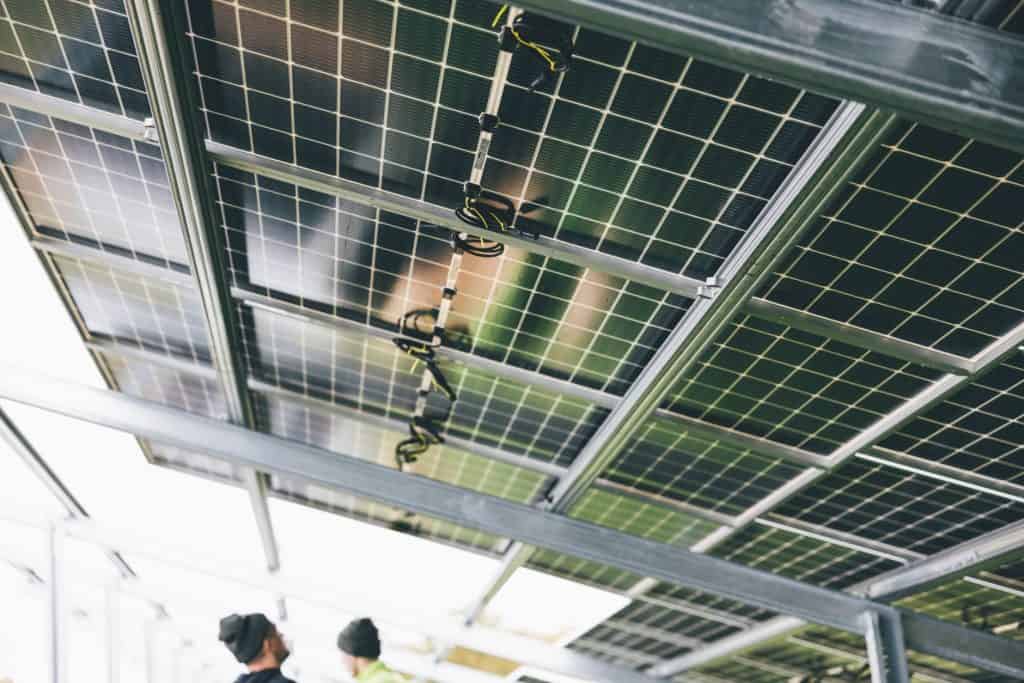
Bifacial polycrystalline solar modules, which capture sunlight reflected from the ground and surrounding surfaces, can increase total energy yield by 10% to 15% depending on albedo conditions and mounting height. This technology is particularly advantageous in agrivoltaic installations such as Solar Plus Garden, where the combination of crops and reflective soils enhances backside irradiance.
Ongoing research explores hybrid photovoltaic architectures that combine polycrystalline silicon with thin-film materials, seeking efficiency improvements without substantial cost increases. These innovations aim to keep polycrystalline solar panels competitive with emerging high-efficiency monocrystalline and tandem technologies.
- Grain size uniformity improvements reduce electron recombination losses.
- PERC technology increases efficiency by 1-1.5% over conventional poly cells.
- Bifacial polycrystalline modules offer 10-15% additional energy yield under favorable conditions.
- Hybrid poly + thin-film cells under development to improve cost-effective efficiency.
- Implementations adhere to PV module testing standards IEC 61215 and IEC 61730.
Regulatory and Standardization Considerations Relevant to Polycrystalline Solar Modules
Polycrystalline solar panels marketed and installed in the European Union must meet the IEC 61215 standard, which governs design qualification and type approval for crystalline silicon photovoltaic modules. This standard ensures that quality control includes thermal cycling, humidity freeze, mechanical load, and hail impact testing, validating performance and durability across operational conditions.
The IEC 61730 standard certifies that PV modules comply with electrical and mechanical safety requirements, including protection against electrical shock and fire hazards. Compliance with both IEC 61215 and IEC 61730 certifications is mandatory for commercial solar pv modules distributed across the EU power generation market as of 2026.
EU renewable energy policy directives, such as the Renewable Energy Directive (RED II), influence project development frameworks by mandating sustainability reporting, transparent financing structures, and accountability toward investor and environmental interests. Solar Plus Garden’s model implements these requirements by clearly separating the legal entities managing the solar plant and community garden, facilitated through escrow-managed payment flows that safeguard investor funds throughout the project lifecycle.
- IEC 61215 certifies design qualification and performance testing for crystalline silicon PV modules.
- IEC 61730 ensures electrical and mechanical safety compliance, mandatory for EU markets.
- EU renewable energy directives enforce sustainability, reporting, and financing transparency.
- Legal entity separation and escrow models mitigate investment risks and enhance governance.
- Solar Plus Garden integrates all required certifications and compliance in project execution.
Häufig gestellte Fragen
What distinguishes polycrystalline solar panels from monocrystalline panels in terms of efficiency?
Polycrystalline solar panels typically achieve 15% to 17% solar panel efficiency under IEC 61215 conditions, which is approximately 10-15% lower than monocrystalline solar panels that range between 18% and 22%. This difference is primarily due to the multiple grain boundaries present in polycrystalline silicon, which hamper electron flow compared to the uniform crystal lattice in monocrystalline silicon solar cells.
How does the temperature coefficient impact the performance of polycrystalline solar panels?
The temperature coefficient for polycrystalline solar panels ranges from -0.43% to -0.45% per degree Celsius above the standard 25°C test condition. This metric implies that with each degree Celsius increase in the panel temperature, the energy output decreases by roughly 0.43% to 0.45%, a significant factor that reduces energy yield in warmer climates.
Are polycrystalline solar panels suitable for community projects like Solar Plus Garden’s agrivoltaic model?
Yes. The balance between lower solar panels cost and acceptable efficiency alongside proven durability makes polycrystalline solar panels appropriate for community projects. At Solar Plus Garden, the cost-effectiveness of polycrystalline silicon pv modules supports a 10 MW plant whose revenue funds the agrivoltaic community gardens and member services, aligning renewable energy generation with social and environmental benefits.