Hoppa till innehåll







Solar EPC Contract Structures: Key Models and Selection Factors
Fundamental Components of Solar EPC Contracts
An EPC contract in commercial solar projects is a legally binding agreement covering Engineering, Procurement, and Construction services to deliver a fully functional solenergi plant. The solar EPC company eller epc contractor assumes responsibility to design, procure equipment, construct, and commission the solar energy system according to precise technical specifications and regulatory requirements.
Typical solar EPC contracts include these key elements:
- Scope of Work: Detailed engineering design parameters specifying system capacity (e.g., 10 MW DC), PV panel technology type (polycrystalline, monocrystalline, bifacial), mounting system (fixed tilt, single-axis tracking), grid interconnection interface (medium voltage level, compliance with grid operator requirements), and integration with inverters and transformers.
- Procurement Specifics: Definitive vendor qualifications and technical standards for sourcing PV modules, string or central inverters (e.g., 1500 V DC, 50 Hz, IEC 62109 certified), cabling (UV-resistant, XLPE insulated), transformers (oil-immersed or dry-type meeting IEEE C57 standards), and balance-of-system components meeting IEC and UL certifications.
- Installation Modalities: Construction phases covering site preparation (earthworks to meet soil bearing capacity standards), civil works (foundations per EN 206 concrete standards), mechanical mounting installations, electrical wiring conforming to IEC 60364, and comprehensive safety protocols.
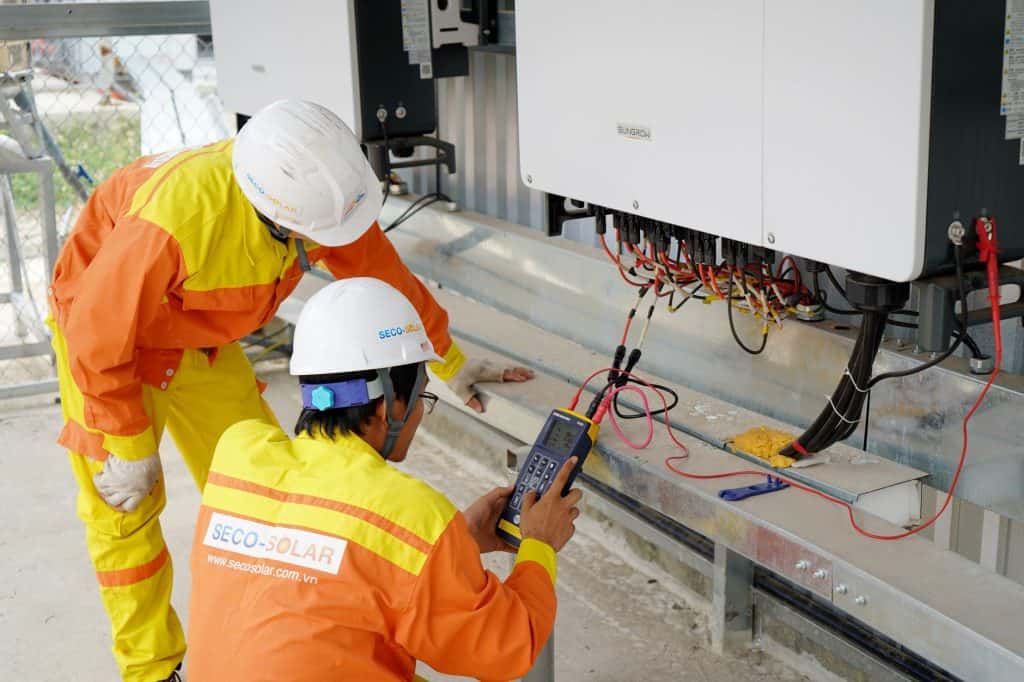
- Commissioning Criteria: Acceptance tests including insulation resistance measurements, megger tests of cable runs, full-load performance tests, power curve validation, and grid synchronization tests performed per IEC 62446 guidelines before handover.
- Milestone Schedule: A detailed timeline with checkpoints—design approval, procurement completion, mechanical completion, electrical completion, commissioning—linked to contract payment milestones.
- Liabilities and Risk Shares: Clauses defining responsibilities for project delays, quality defects, non-conformance, with stipulated liquidated damages, warranty durations (typically 5 years for workmanship, 10-25 years for PV modules), and indemnity terms.
De epc contractor bears risk for engineering precision, supply chain management, and construction execution. This demands integrated project management skills combined with technical expertise to meet specific performance targets under commercial solar energy industry standards.
Turnkey Versus Modular Solar EPC Contract Models
Two dominant epc contract models are applied to commercial solar energy projects: turnkey and modular (phased). Selection depends on project complexity, investor risk profiles, and desired control levels.
Turnkey Solar EPC Contracts
A turnkey solar EPC contract involves a single contract with one solar EPC contractor responsible for delivering the complete solar energy system. The contract typically fixes price and schedule, transferring project risks to the contractor.
- For a 10 MW solar plant, turnkey projects commonly run 9 to 12 months from contract signing to commissioning, assuming standard site conditions and supply chain stability.
- Risk management centralizes on the epc contractor, who commits to deliver engineering designs, procurement, construction, and commissioning as per contract.
- Turnkey contracts reduce interface complexity for project developers or investors by consolidating epc services under one partner.
- Once signed, flexibility for scope modifications or schedule renegotiations is limited, putting emphasis on thorough upfront design and risk quantification.
Modular or Phased Solar EPC Contracts
Modular contracts segment the project into separate work packages, for example dividing engineering, procurement, construction, and commissioning into distinct contracts or phases.
- This model allows engagement of specialized partners for each phase, potentially optimizing procurement costs or improving quality control by competitive tendering.
- Phased delivery can align cash flow with project milestones and allow technology updates mid-project, such as switching inverter brands or mounting technology based on market developments.
- Requires enhanced coordination to manage interfaces and technical handovers, increasing oversight burdens on developers or investors.
- Phased schedules typically extend overall project delivery by 10–20% relative to turnkey models due to added interface management and contract award processes.
The choice between turnkey and modular epc models hinges on investor preferences for risk allocation, schedule certainty, and operational involvement.
Payment and Escrow Structures in Solar EPC Contracts
Solar EPC contracts predominantly use milestone-based payment mechanisms that align cash flows with demonstrable construction progress. Properly structured payment schedules incentivize contractors to meet deliverables while controlling investor risk.
A representative payment schedule for a 10 MW commercial solar EPC project may be structured as follows:
- 10% Mobilization payment at contract signature, funding initial labor mobilization and site preparation startup.
- 40% Payment after verified completion of procurement milestones, including delivery of PV modules (with Factory Acceptance Tests documented), inverters, transformers, and balance-of-system equipment.
- 40% Post-construction payment following mechanical installation, electrical wiring, completion of civil works, and passing electrical safety inspections consistent with IEC 60364 standards.
- 10% Final retention payment released after commissioning tests are reviewed and system acceptance certificates issued (e.g., per IEC 62446 or local grid operator acceptance criteria).
Escrow accounts are often employed as secure payment intermediaries. Funds are held by a neutral third party and released only after milestone certification by independent inspectors or project managers. This arrangement mitigates payment default risk and enhances transparency in investor-epc contractor financial interactions.
Legal and Compliance Considerations in EPC Contracts for Solar Projects
Effective solar EPC contracts must clearly delineate legal obligations, risk allocation, warranty coverage, and regulatory compliance to protect all parties involved.
- Warranties: Defining workmanship guarantees (commonly 3–5 years), material warranties (typically 10–25 years on PV modules), and performance warranties ensuring minimal degradation rates (annual degradation ≤ 0.5%).
- Indemnities: Contract provisions obligate the epc contractor to assume liability for third-party claims stemming from construction activities, environmental damage, or intellectual property infringements.
- Prestandagarantier: Binding commitments requiring the solar system to meet specified output benchmarks (e.g., ≥ 90% of nominal capacity over first year) under defined test conditions.
- Force Majeure: Clauses that release parties from liability for non-performance caused by acts such as earthquakes, extreme weather events, changes in legislation, or grid interruptions, subject to notification protocols.
- Penalties: Liquidated damages calculated per day for delays exceeding contract schedule, typically set as a fixed percentage of project value or per MW installed.
Regional compliance is critical. For example, projects owned by Estonian OÜ entities must conform with the Estonian Construction Act, Environmental Protection Act, and relevant EU Directives on renewable energy. Serbian DOO–managed projects require compliance with Serbian Law on Construction and Energy Law governing grid access and licensing. Failure to align contract terms with jurisdictional requirements creates legal exposure and delays.
Role of the Solar EPC Contract in Supporting Integrated Community Models like Solar Plus Garden
Solar EPC contracts underpin the energy infrastructure that enables community-centric models integrating clean energy with local food production and social engagement.
In the Solar Plus Garden model, a 10 MW solenergi plant is legally and operationally segregated from the community garden, reflecting a layered ownership structure:
- De solar energy system is owned and operated by the Estonian OÜ under a robust turnkey solar EPC contract.
- The garden community is administered by a separate Serbian DOO entity, operating under a membership fee and community participation structure.
- Contractual payments and escrow structures for the EPC contract secure funds exclusively for the solar plant development and operation, independently of garden revenue streams.
- Membership fees finance access to the garden and community activities and simultaneously support solar investments, creating a financial symbiosis without commingling assets or liabilities.
- This structure maintains transparency, legal clarity, and regulatory compliance essential for investor confidence and community trust over the long term.
The separation afforded by distinct epc contract och medlemskap i gemenskapen frameworks demonstrates how integrated renewable energy projects can scale while preserving clear financial and legal boundaries.
Checklist for Selecting a Solar EPC Contractor and Drafting the Contract
This checklist aids property owners, developers, and investors in selecting reliable solar EPC companies and drafting comprehensive epc contracts for commercial solar energy projects.
- Experience Verification: Confirm the epc contractor has successfully delivered at least five commercial solar projects in the 5 to 20 MW range, preferably with proven performance data and commissioning reports.
- Financial Stability: Review audited financial statements to assess capacity for upfront procurement financing and mobilization of construction resources, minimizing insolvency risk during project execution.
- Compliance Review: Validate adherence to international EPC contract standards (such as FIDIC Yellow Book) and regional construction and environmental regulations applicable to the project location.
- Timeline Clarity: Require a detailed project timeline with clearly defined milestones, contingency buffers, and penalties for delays exceeding agreed durations.
- Scope Definition: Scrutinize inclusion/exclusion lists within the scope of work to prevent ambiguities that cause scope creep or claims during construction.
- Risk-Sharing Terms: Examine warranty terms, performance guarantees with measurable KPIs, indemnities, and force majeure clauses ensuring balanced risk allocation aligned with investor risk appetite.
- Payment Schedule: Confirm a staged payment structure with milestone-based disbursements and integration of escrow accounts to secure funds until contractual completion benchmarks are met and verified.
- Escalation and Dispute Resolution: Include protocols for handling price escalations due to inflation or currency fluctuation, contract amendments approval mechanisms, and multi-tiered dispute resolution (mediation followed by arbitration).
Case Illustration: Cost Breakdown of a Typical 10 MW Solar EPC Contract
Detailed understanding of cost components within the EPC contract is vital for budgeting and investment appraisal.
| Cost Component | Percentage of EPC Contract Cost | Typical Role |
|---|---|---|
| Engineering | 8% | System design, site assessment, electrical and civil engineering, and integration studies. |
| Procurement | 60% | Supply of PV modules (assumed 450 Wp monocrystalline modules), inverters (string or central, IEC 62109 certified), transformers, mounting structures (galvanized steel), cables, and auxiliary equipment. |
| Construction | 25% | Site preparation (earthworks, grading), concrete foundations (conforming to EN 206), mechanical installation, electrical cable pulling, and interconnections. |
| Commissioning | 7% | Testing, performance validation against IEC 62446 standards, regulatory inspections, and final handover documentation. |
This EPC cost allocation excludes external expenses such as land acquisition, grid connection fees (which can vary by grid operator tariffs), permitting, and project management overheads—each managed under separate contracts or ownership entities.
Turnkey contracts generally consolidate these costs within a fixed lump sum, facilitating budget certainty. Modular contracts require detailed coordination to integrate budgets from separate contracts, influencing financing and risk management.
Vanliga frågor (FAQ)
What distinguishes a solar EPC contract from a standard construction contract?
A solar EPC contract specifically addresses the engineering, procurement, and construction phases tailored for solar power systems, incorporating technology-specific specifications such as PV module standards (IEC 61215, IEC 61730), inverter certifications (IEC 62109), and commissioning procedures (IEC 62446). Standard construction contracts may cover civil or structural works without these specialized technical and operational requirements.
How do payment milestones typically work in a solar EPC contract for a 10 MW plant?
Payments align with clearly defined milestones. An initial mobilization payment (~10%) funds startup activities. Completion of procurement milestones triggers approximately 40% payments, often after delivery verification through Factory Acceptance Tests. Another 40% is paid post-construction upon passing mechanical and electrical inspections per IEC 60364. The final 10% is retained until successful commissioning and formal acceptance by testing authorities or grid operators, secured via escrow when applicable.
What risks does the EPC contractor typically assume under these contracts?
De epc contractor assumes risks associated with procurement delays, quality deviations, construction defects, safety compliance, and failure to meet defined performance criteria. Contracts typically assign liquidated damages for schedule overruns and include warranty clauses compelling the contractor to rectify defects for defined periods.
Can investors access the Solar Plus Garden community without direct solar investment via EPC contracts?
Yes. Solar Plus Garden’s membership model allows community access through payment of a membership fee independent of direct EPC investment participation. Membership fees contribute to solar project funding and community activities under separate legal entities, preserving clear operational and financial boundaries.
Slutsats
Stakeholders including property owners, project developers, and investors must select solar EPC contract structures fitting the project’s scale, risk management preferences, and integration with community models. Turnkey contracts provide fixed pricing and consolidated accountability, whereas modular contracts enable phased delivery and adaptable procurement but increase interface management demands.
Structured payment and escrow mechanisms are essential to secure cash flow and safeguard interests. Adherence to legal and regulatory frameworks in jurisdictions such as Estonia and Serbia ensures project legitimacy and risk mitigation.
Choosing a verified solar EPC company with a track record in commercial solar projects, alongside detailed contract terms on timelines, scope, warranties, and dispute resolution, is fundamental to minimizing operational risks.
Innovative models like Solar Plus Garden demonstrate how solar EPC contracts support clean energy infrastructure while fostering community engagement and regenerative initiatives through transparent financial and legal structures.
Active management of regulatory and financial environments throughout project lifecycles supports sustainable and transparent investment outcomes for commercial solar energy projects combined with community benefits.