


Redaktionell anmärkning: detta är en oberoende pedagogisk översikt. Solar Plus Garden är inte anslutet till, godkänt av eller samarbetar med något företag som nämns i den här artikeln. Avgifter, minimibelopp och regleringsdetaljer ändras över tid. Kontrollera alltid plattformens officiella sidor innan du investerar.
Bedömning av den verkliga kostnaden och det regelverk som gäller för solcellsparker i Polen för välgrundade investeringsbeslut
Key Legal and Regulatory Permits Required for Establishing a Farma Fotowoltaiczna in Poland
Developing a farma fotowoltaiczna (solcellspark) in Poland requires obtaining multiple permits to comply with technical, environmental, and grid integration standards. The primary permits start with the building permit (pozwolenie na budowę), governed by the Polish Construction Law (Ustawa Prawo Budowlane), which demands detailed technical designs, land ownership or lease documentation, and local government approval.
An essential environmental requirement is the environmental impact assessment (ocena oddziaływania na środowisko), triggered for projects exceeding certain thresholds or located in protected zones. This process aligns with EU Directive 2011/92/EU on environmental impact, assessing effects on local habitats, water, and protected species. Compliance with Natura 2000 protected areas regulations is mandatory where applicable.
Securing a grid connection agreement with the regional Distribution System Operator (DSO) is a prerequisite for any solar farm in Poland. This involves submitting an application to DSOs such as PGE Dystrybucja or ENERGA-Operator, which assess local grid capacity and set technical conditions under Polish energy law (Ustawa Prawo Energetyczne). The energy market regulator, Urząd Regulacji Energetyki (URE), oversees tariff frameworks and ensures standardized processes. Timelines for obtaining these permits generally range from 3 to 6 months per permit but can extend depending on project complexity and local administrative efficiency.
Additionally, local zoning and land-use plans (Miejscowy Plan Zagospodarowania Przestrzennego) determine whether agricultural or otherwise zoned land is eligible for solar panel installation. Restrictions apply in nature reserves, forested zones, and areas designated for agriculture under strict protection categories. Early-stage due diligence must verify site qualification against these plans, recognized by municipal planning authorities.
- Essential permits: building permit (pozwolenie na budowę), environmental impact assessment, grid connection agreement
- Responsible bodies: Urząd Regulacji Energetyki (URE), regional DSOs, local planning authorities
- Permitting timeframe: 3–6 months per permit, subject to administrative review and public consultation
- Land eligibility subject to zoning laws and environmental protection designations
Typical Construction Costs per Hectare and per MW for Solar Farms in Poland
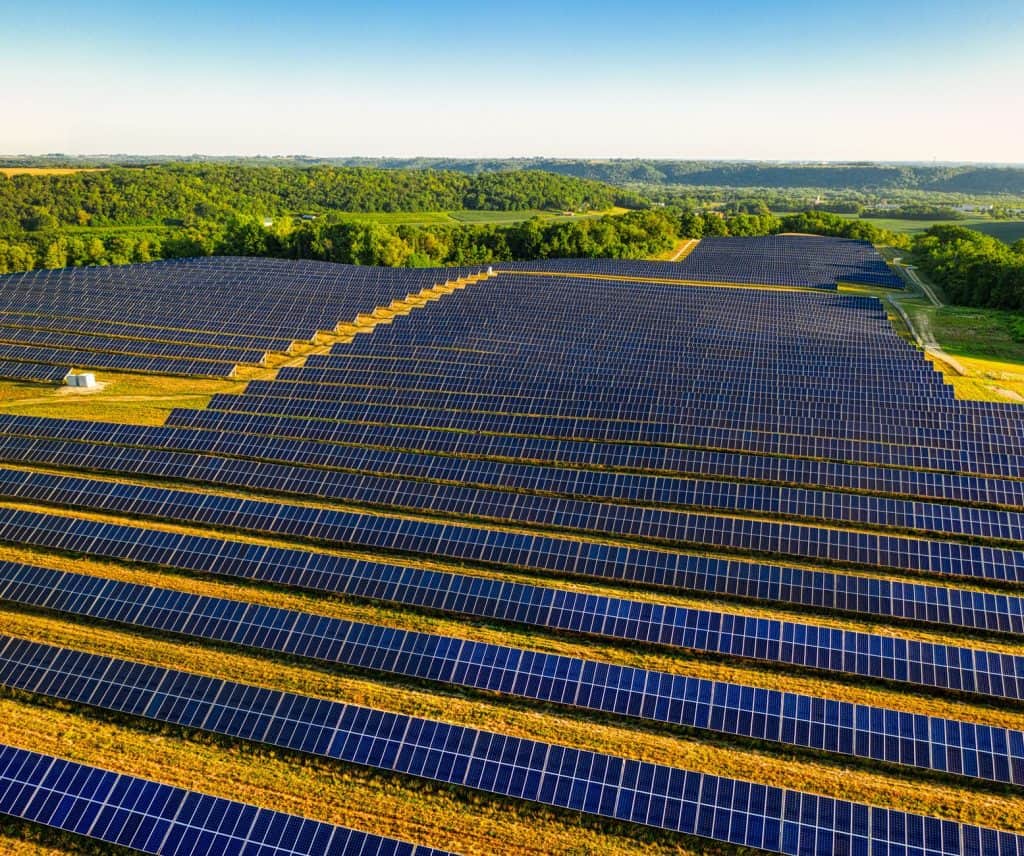
Poland costs for solar farms involve variable expenditure categories across a photovoltaic system’s lifecycle, from site preparation to commissioning. The average land footprint is approximately 2.5 to 3.5 hectares per MW of installed capacity, reflecting panel spacing, inverter stations, and ancillary infrastructure. This land-use metric directly influences costs per hectare.
Key construction cost components include:
- Land preparation: Excavation, grading, and access road construction, typically costing €5,000 to €15,000 per hectare depending on terrain complexity.
- Fotovoltaiska paneler: Predominantly monocrystalline panels dominate the Polish market due to higher efficiency, with prices influenced by global polysilicon supply chains and panel wattage classes (e.g., 400–450 Wp per panel).
- Inverters and electrical balance of system: Central or string inverters with grid compliance certification under standards such as PN-EN 62109, plus transformers and switchgear.
- Mounting structures and cabling: Typically galvanized steel trackers or fixed racks, designed according to local wind load standards (e.g., PN-EN 1991-1-4), with selection based on topography and panel orientation.
Installation costs are subject to market conditions but indicative capex can range between approximately €650,000 and €900,000 per MW installed, exclusive of land acquisition and grid connection fees. Grid connections can add €20,000 to over €100,000 depending on distance from grid infrastructure and required upgrades.
Additional expenditures such as project management, engineering, and contingency reserves generally contribute 10-15% of total project costs. Variability in poland costs per hectare arises when the site requires significant civil works or when advanced tracking systems increase mechanical complexity.
- Land area: ~2.5–3.5 hectares per MW
- Construction cost range: approx. €650,000–€900,000 per MW (excluding land and grid fees)
- Cost categories: site prep, solar panels, inverters, mounting structures, cabling
- Grid connection fees vary widely based on network proximity
Expected Returns on Investment for Solar Farms in Poland Under Current Market Conditions
Returns on solar investment in Poland depend on the balance of capital expenditure, operating costs, and revenues under current regulatory schemes. Income typically derives from government-managed feed-in tariffs (FiTs) for projects commissioned before 2022, competitive auction contracts for new capacity, and power purchase agreements (PPAs) negotiated with utilities or corporate off-takers.
Typical payback periods for solar farms fall within 6 to 10 years, influenced by factors including project scale, panel efficiency, and operational costs. The average panel degradation rate of approximately 0.5% per year reduces energy production over operational lifetimes, assumed at 25–30 years.
Operating expenses encompass routine maintenance, inverter replacements typically after 10–15 years, insurance, and administrative costs. Variability in tariff regimes and auction results introduces revenue uncertainty, particularly as recent policy reforms adjust subsidy availability.
Investors must also factor in regulatory risks such as delayed permit approvals impacting project timelines and changes in market prices for renewable energy credits or green certificates affecting returns.
- Payback horizon: typically 6–10 years based on tariff and auction schemes
- Revenue sources: feed-in tariffs, government auctions, PPAs
- Operating expenditures: maintenance, insurance, inverter replacements
- Risks: regulatory revisions, auction price volatility, permit delays
Land Use Efficiency and Planning: Calculating Costs per Hectare in Relation to 1 MW Solar Farm Scale
Land use planning for solar farms directly affects costs measured per hectare. Installing a 1 MW farma fotowoltaiczna usually requires between 2.5 and 3.5 hectares, contingent on site characteristics.
- Topografi: Slope gradients greater than 5% increase civil engineering complexity and may necessitate terracing or soil reinforcement, raising costs.
- Soil type: Clay soils require more robust foundations for mounting systems, while sandy soils may need erosion control measures.
- Shading analysis: Site assessments using tools like PVsyst software quantify shading impacts from trees, buildings, or terrain features requiring additional spacing or site clearing.
- Panel orientation and tilt angle: Optimal tilt between 25° and 35° facing south optimizes irradiance capture, influencing land productivity and reducing the hectare-to-MW ratio.
- Agrivoltaics potential: Integrating photovoltaic arrays with agricultural use supports diversified land productivity but involves design compromises and compliance with agricultural regulatory frameworks.
Land acquisition costs depend on lease or purchase arrangements, with leasing potentially reducing upfront capital requirements but increasing ongoing operating expenses. Ownership imparts asset control but requires full capital outlay.
- Site land use: typically 2.5–3.5 hectares per MW adjusted for terrain and shading
- Higher hectare-per-MW ratios increase infrastructure and civil costs
- Leasing versus purchasing affects capex and ongoing operational costs
- Agrivoltaic designs add complexity but increase multi-use land value
Selecting and Coordinating with Polish Solar Project Providers and Platforms
Solar project development in Poland is typically executed through coordination with specialized EPC contractors, developers, and increasingly, platform-based models merging technical and financial services. Providers offer services from feasibility studies to design, procurement, construction, and operational handover.
Critical selection criteria include:
- Proven track record: Completion of projects compliant with local regulations and technical standards such as PN-EN 62446 for photovoltaic system testing and documentation.
- Regulatory navigation: Experience securing MW permits, environmental assessments, and grid interconnection agreements in coordination with URE and DSOs.
- Technical proficiency: Knowledge of system design optimized for Polish solar irradiance levels (averaging 1000–1100 kWh/m² annually) and resilient mounting systems suitable for local wind and snow loads.
Project delivery stages follow a sequence:
- Detailed feasibility and technical design, including site assessments and financial modeling.
- Acquisition of regulatory permits and grid connection contracts.
- Procurement of photovoltaic system components meeting international standards and local regulatory requirements.
- Construction with adherence to occupational safety standards (Polish Labor Code, BHP regulations) and environmental protections.
- Commissioning, system testing, and connection notification to URE and DSO.
- Operational phase with monitoring and preventive maintenance.
Platforms like Solar Plus Garden incorporate community integration and agrivoltaik into solar investment, enhancing sustainability and social impact while maintaining transparent financial management consistent with Estonian and Serbian legal governance structures.
- Provider selection based on technical, regulatory, and delivery capabilities
- Project phases: feasibility, permits, procurement, construction, commissioning
- Importance of standards compliance and local market expertise
- Community-integrated models enhance investment transparency and sustainability
Navigating Changes in Poland’s Renewable Energy Policies Impacting Solar Farm Investment
Poland’s renewable energy policies evolve through periodic modifications to auction procedures, subsidy mechanisms, and grid access regulations. The Ministry of Climate and Environment regularly updates auction rounds, which allocate capacity and set contract terms for new solar energy projects.
Regulatory risks include delayed permit processing due to administrative backlog, modifications in allowable grid injection profiles, and reform of support schemes such as the green certificate market or FiT levels. These changes can have material implications on permits returns and project cash flow.
Investors and developers must monitor announcements from Urząd Regulacji Energetyki (URE) and relevant ministries. Engaging specialized legal counsel with expertise in Polish solenergi law helps navigate these changes and ensures ongoing compliance with evolving frameworks.
- Renewable energy auctions and subsidies subject to revision impacting project viability
- Risks include administrative delays and grid access restrictions
- Monitoring URE and Ministry of Climate and Environment bulletins critical
- Legal advisory recommended for adapting to shifting regulatory landscape
Step-by-Step Process to Develop a 1 MW Solar Farm Project in Poland
The steps to develop a 1 MW farma fotowoltaiczna include:
- Site selection and land acquisition/lease: Perform zoning checks against local plans (Miejscowy Plan Zagospodarowania Przestrzennego), conduct geotechnical surveys, and secure land tenure contracts.
- Obtaining permits: Prepare documentation for building permits, environmental impact assessments under the Environmental Protection Law, and grid connection applications submitted to the regional DSO, with expected durations of 3–6 months each.
- Project design and procurement: Engineering the photovoltaic system based on irradiance data (1000–1100 kWh/m²/year), selecting certified solar panels, inverters compliant with PN-EN 62109, and mounting systems rated for local snow and wind loads.
- Construction and installation: Civil works including site leveling, foundation setting, mounting panel arrays, electrical cabling, inverter installation, and grid interface equipment assembly, with a timeframe of 6–12 weeks depending on conditions.
- Commissioning and grid integration: System testing per PN-EN 62446 standards, notification to URE, and coordination to complete metering and grid synchronization.
- Operation and maintenance: Ongoing system monitoring, scheduled preventive maintenance, inverter servicing or replacement after typical life spans of 10–15 years, and revenue realization through feed-in tariffs, PPAs, or auction contracts.
- Project phases from land acquisition to operational commissioning with estimated deadlines
- Permits include environmental clearance, building permit, and grid connection
- Compliance with Polish standards throughout design, installation, and commissioning
- Maintenance essential for sustaining forecasted solar energy yields and financial returns
Vanliga frågor (FAQ)
- What are the main permits required before starting construction of a solar farm in Poland?
- The essential permits include the building permit (pozwolenie na budowę), an environmental impact assessment aligned with EU directives, and grid connection agreements with local DSOs. These require detailed project documentation and can take 3–6 months per permit for approval. Regular consultation of the Urząd Regulacji Energetyki (URE) website ensures up-to-date regulatory information.
- How much land area is generally needed to build a 1 MW solar farm in Poland?
- A 1 MW solar farm usually requires between 2.5 and 3.5 hectares, depending on panel technology (monocrystalline panels enable better land efficiency), terrain slope, shading, and site configuration.
- What is the approximate cost range for constructing a 1 MW solar farm in Poland?
- Construction costs fluctuate but generally range from €650,000 to €900,000 per MW excluding land and grid connection costs. Costs incorporate photovoltaic system components, civil works, mounting, and electrical equipment compliant with Polish and EU standards.
- What return on investment period can solar farm investors in Poland expect under current conditions?
- Under current tariff and auction conditions, payback periods typically fall between 6 and 10 years. These depend on project scale, solar panel efficiency, operational costs, and regulatory stability. Investors should regularly monitor market and policy developments for updated forecasts.
Slutsats
Investing in solar farms in Poland requires detailed analysis of poland costs per hectare and per MW, comprehensive understanding of regulatory mw permits, and realistic projections of permits returns reflecting current market and policy frameworks. Alignment with local regulations governed by Urząd Regulacji Energetyki (URE), adherence to technical standards for photovoltaic systems, and due diligence on land use planning are crucial.
Prospective investors and solar project developers should prioritize engagement with qualified local platforms or EPC providers skilled in Polish regulations and technical standards. Continuous monitoring of renewable energy policy changes by relevant authorities is necessary to mitigate operational and financial risks. Detailed financial modeling and legal consultation adapted to project size and risk appetite form critical foundations for successful solar energy investment in Poland.
Intresserad av att deläga ett solkraftverk?
Solar Plus Garden is building a 10 MW agrivoltaic plant in Serbia with direct co-ownership for its members. If a platform like Solar Farms In Poland: Costs Per Hectare And Per MW, Permits And Returns caught your attention, leave your email below: we will send you the investor overview (PDF) and add you to the waiting list. No obligation, no spam.
Föredrar du att ansöka direkt? Gå till formuläret ”Anmäl dig nu” →
Relaterad läsning
- ESG Investing Explained: Navigating Environmental, Social, and Governance Factors for Informed Investment Decisions
- Hur man effektivt använder scenarieplanering för solenergiinvesteringar för smartare investeringsbeslut
- Hur skattelättnaden för solproduktion formar investeringsbeslut i projekt för ren energi