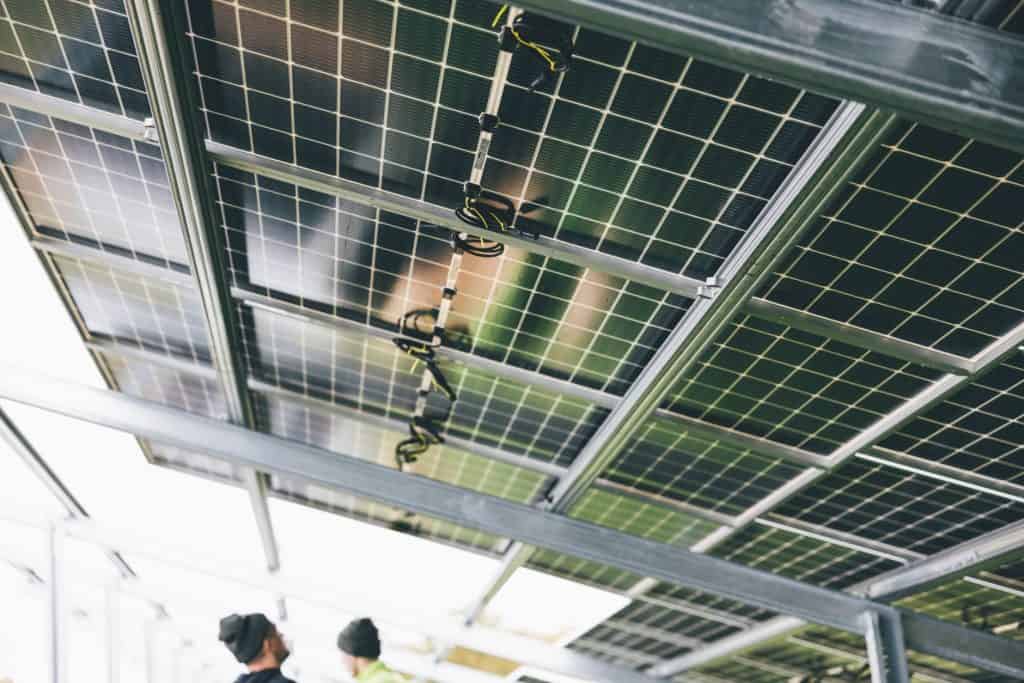











How Solar Machine Learning Improves Power Forecasting and Investment Decisions
Key Challenges in Forecasting Solar Power Production
Accurate solar power forecasting faces several inherent challenges stemming from the high variability and uncertainty of solarna energija inputs. The variability of solar irradiance depends largely on rapidly changing weather conditions and dynamic cloud cover patterns over minutes to hours, significantly affecting power output.
Geographic heterogeneity further complicates forecasting across large-scale solar assets. Microclimatic variations such as localized cloud shadows or atmospheric aerosols can cause spatial irradiance differences of 20% or more between adjacent arrays within a single 10 MW plant footprint. Temporal fluctuations are equally variable, with cloud transients lasting from a few minutes to several hours.
This inherent intermittency challenges grid integration, as operators must balance supply fluctuations against demand in real time, often using ancillary reserves with associated costs. Forecast inaccuracies can force grid operators to procure up to 10%-15% more reserve capacity to maintain reliability.
Investors evaluate these risks quantitatively. Day-ahead forecast mean absolute percentage errors (MAPE) in temperate regions typically range from 10% to 20%, directly influencing revenue variability forecasts and risk premiums embedded in investment returns.
Machine Learning Algorithms Transforming Solar Power Forecasting
Recent advances in machine learning enable solar power forecasting models to capture complex, nonlinear relationships in large historic and real-time data sets of weather and solar production variables. This contrasts with traditional statistical models or physical irradiance simulations, which often rely on simplified assumptions.
The following algorithms are widely implemented in operational solar forecast systems:
- Neural networks: Typically feed-forward architectures with 3-5 hidden layers, processing input features such as irradiance, temperature, cloud cover, and time-series lagged solar output. Well-trained models on 5+ years of data can reduce forecast MAPE by 15%–30% versus baselines.
- Random Forests: Ensembles of up to 500 decision trees that handle noisy meteorological inputs robustly, useful in feature selection and reducing overfitting on limited data.
- Support Vector Machines (SVMs): Employed primarily for short-term prediction windows, utilizing kernel functions to map inputs into higher dimensional spaces for capturing subtle nonlinearities.
- Deep Learning Models: Recurrent neural networks (RNNs) and long short-term memory (LSTM) architectures model sequential time dependencies in weather and solar signal patterns, improving multi-hour ahead forecasts.
Model training pipelines incorporate rolling cross-validation over multi-year hourly time series, benchmarking performance on historical periods with diverse weather conditions. Ensemble approaches combining model outputs further improve reliability by reducing single-model bias.
Integrating Weather Data with Solar Machine Learning Models
Efektivno solar power forecasting depends on the integration of heterogeneous weather and solar inputs into unified machine learning models. Critical data components include:
- Satellite imagery: Geostationary satellites such as the European Meteosat or NOAA GOES provide cloud cover, top-of-atmosphere irradiance estimates, and aerosol optical depth at spatial resolutions of 1-3 km and temporal frequency of 5-15 minutes, forming the backbone for regional solar forecasts.
- Local meteorological sensor networks: Stations onsite or nearby measure direct normal irradiance (DNI), global horizontal irradiance (GHI), ambient temperature, wind speed, and relative humidity at sampling intervals of 1-10 minutes to capture local conditions affecting solar panels.
- Numerical Weather Prediction (NWP) models: Physics-based simulations such as the ECMWF or WRF models generate deterministic and probabilistic forecasts of weather parameters at 1-3 km grid resolution with forecast horizons up to 72 hours, used as exogenous inputs in machine learning models.
Synchronization of these sources requires preprocessing steps including temporal resampling to hourly aggregates, geospatial interpolation to plant coordinates, and outlier removal using quality control algorithms. The ERA5 reanalysis dataset from ECMWF, providing hourly global meteorological fields since 1979, is commonly used to supplement and validate local weather data streams.
Quantifying the Impact of Solar Machine Learning on Predictive Accuracy
Empirical analyses demonstrate that machine learning-based solar forecasts improve day-ahead prediction accuracy by 10%-15% compared to traditional numerical weather model outputs alone. For example, mean absolute percentage error (MAPE) for 24-hour ahead forecasts often decreases from about 18% using physics-only approaches to around 12%-13% with hybrid machine learning models.
These gains translate directly into operational benefits. Grid operators report up to 8% reductions in reserve capacity procurement costs due to more reliable solar forecasts. Furthermore, fewer unexpected curtailments and smoother ramping requirements reduce balancing energy costs by approximately 5% during high solar penetration hours.
From an investor perspective, improved predictability enables more precise financial modeling of expected cash flows. This reduces value-at-risk metrics on operational revenue and supports favorable financing terms. Community solar platforms like Solar Plus Garden incorporate these forecasts to allocate returns and fund programming linked to solar production, reinforcing stability and transparency.
Combining Solar and Wind Forecasts for Renewable Portfolio Optimization
Renewable portfolios increasingly integrate wind and solar power assets to diversify generation profiles. Combined machine learning forecasting leverages distinct meteorological drivers of each resource to improve overall supply prediction.
Modal fusion frameworks adaptively combine independent solar and wind forecast outputs through weighted averaging or meta-modeling, accounting for cross-spectral correlation structures observed in regional weather patterns. Portfolio-level forecast accuracy improvements of 5%-8% MAPE over separate asset forecasting have been documented in European renewable grid studies.
Advantages include enhanced renewable energy yield risk diversification and optimized scheduling of storage or demand response. Investors benefit from reduced covariance in asset revenues, enabling portfolio risk mitigation. Grid operators achieve improved balancing efficiency by co-optimizing variable resource forecasts within dispatch horizons.
Data Requirements and Infrastructure for Effective Solar Machine Learning
Robust machine learning in solar power forecasting necessitates comprehensive data sets that meet the following specifications:
- Volume and duration: Empirically, models require 3 to 7 years of continuous hourly solar power production and corresponding weather data to capture seasonal cycles, interannual variability, and rare meteorological events for reliable generalization.
- Geographic specificity: Data should correspond to the target site or a climatologically similar region with analogous solar irradiation regimes and weather dynamics, facilitating transfer learning and regional model fine-tuning.
- Sensor deployment: Installation of calibrated pyranometers and pyrheliometers supporting direct and diffuse irradiance measurements is essential, complemented by ambient temperature and humidity sensors with measurement accuracies of ±2% or better.
- Data validation protocols: Established procedures include automated anomaly detection for sensor faults, timestamp consistency checks, and gap-filling algorithms based on meteorological models to ensure uninterrupted data streams.
Model retraining cadences depend on site-specific factors. In regions with highly variable climates or equipment maintenance events, annual or biannual retraining is recommended, while stable facilities with minimal hardware changes may adopt multiyear retraining intervals. Continuous monitoring of model performance metrics such as MAPE and RMSE supports retraining triggers.
Applying Solar Machine Learning in Investment and Community Platforms
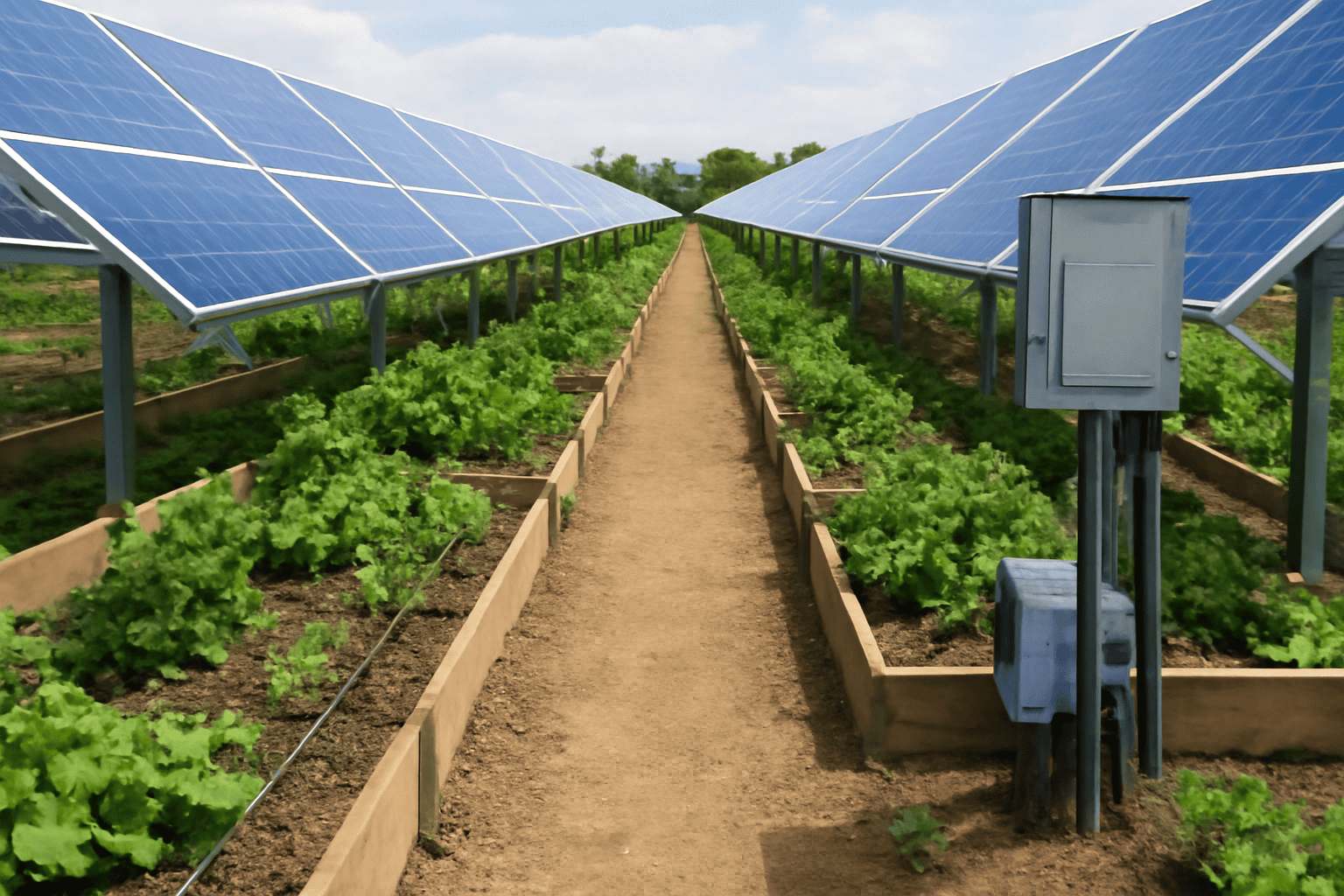
The Solar Plus Garden platform demonstrates practical application of solar power forecasting enhanced by machine learning across a 10 MW fotonaponska plant integrated with community agrivoltaic activities. Machine learning forecasts are embedded into operational and financial decision workflows to:
- Optimize revenue allocation by dynamically projecting hourly generation profiles, informing cash flow management and investor distributions within legally compliant frameworks governed by Estonian OÜ and Serbian DOO structures.
- Finance community initiatives including the operational costs of Garden membership activities, supporting up to 3,000 garden parcels with revenue derived from solar proceeds rather than direct investment.
- Provide transparency through validated predictive analytics dashboards accessible to investors and community members, with forecast accuracy benchmarks regularly updated to maintain accountability.
Separate legal entities manage the agrivoltaic garden and solar asset ownership, ensuring clear regulatory oversight and auditability. Enhanced forecasting underpins the platform’s ability to deliver stable, long-term returns and maintain community engagement in line with defined payment and escrow models.
Future Developments in Solar Machine Learning Forecasting
Ongoing advancements in solar power forecasting powered by machine learning target higher temporal resolution, data fusion, and operational control integration:
- Real-time intraday forecasting improvements aim to reduce forecast horizons from 60 minutes to 15-minute intervals by leveraging denser sensor networks, edge computing, and rapid data assimilation techniques.
- AI steering controls integrate forecasts into automated plant management systems that adjust inverter settings, curtailment schedules, and battery dispatch to optimize output and grid compliance dynamically.
- Multi-modal data fusion combines satellite, ground-based sensors, NWP outputs, and edge computing streams within unified machine learning frameworks to increase spatial and temporal granularity.
- Scaling with community-backed investments leverages improved predictive accuracy to support transparent, multi-site portfolios financed through verified community membership and tokenization models consistent with Estonian and Serbian legal frameworks.
By 2028, 15-minute intraday solar forecasting with end-to-end AI control integration is forecasted to become industry standard, driving both operational responsiveness and refined investor risk management across utility-scale and community solar projects.
Često postavljana pitanja
What data is needed to develop reliable solar machine learning forecasts?
Developing reliable solar forecasts requires multiple years (3 to 7) of historical hourly solar production data matched with detailed weather and solar information including solar irradiance, cloud cover, ambient temperature, and relative humidity. Data must be sourced from local sensor networks calibrated according to IEC 61724 or comparable standards, or supplemented with satellite observations.
How does machine learning improve accuracy compared to traditional forecasting methods?
Machine learning models capture complex nonlinear interactions between solar power output and meteorological variables, which conventional physical or statistical models might approximate only coarsely. Documented forecast error reductions range from 10% to 30% MAPE, depending on algorithm choice and data volume.
How is solar machine learning forecast accuracy relevant to investors?
Enhanced forecast accuracy reduces uncertainty in expected generation profiles, enabling better revenue forecasting, risk assessment, and operational budgeting. This translates into improved investment models and supports community-based platforms like Solar Plus Garden by providing transparent, data-driven allocation of returns and project sustainability.
Can solar power forecasting include wind energy for renewable portfolio management?
Yes. Hybrid machine learning models enable joint forecasting of wind and solar resources by processing meteorological drivers of both independently and applying modal fusion techniques to combine predictions. This integrated approach improves overall portfolio accuracy, benefiting grid operations and investor diversification.
Zaključak
Stakeholders assessing solar energy projects and community-backed investments must incorporate machine learning-enhanced solar power forecasting into their risk and financial models to address inherent intermittency and variability of solarna energija. Understanding critical weather and solar data sets, accuracy benchmarks such as reductions in MAPE to near 12%, and combined forecasting methods for integrated renewable portfolios is essential for sound decision-making.
Emerging capabilities like 15-minute intraday forecasting and AI-driven plant control systems are expected to reshape operational management and investment strategy frameworks by 2028, enabling higher returns with reduced risk and improved grid reliability amid growing renewable penetration.
Povezano čitanje
- Kompanija za investicije u solarnu energiju: Snalaženje u mogućnostima u čistoj energiji
- Kako sistem trgovanja solarnom energijom integriše obnovljivu energiju i investicije u zajednicu za efikasno upravljanje solarnom energijom
- Razumevanje koncentrisane solarne energije: tehnologija, primene i investiciona razmatranja