






Navigating Solar Investment Reporting Standards for Transparent and Compliant Project Evaluation
Regulatory Frameworks Governing Solar Investment Reporting Standards in the EU and Serbia
Solar investment reporting standards are embedded within a multi-tier regulatory framework encompassing European Union directives and national legislation applicable to legal entities such as Solar Plus Garden’s Estonian OÜ and Serbian DOO. The foundational regulation for renewable energy projects in the EU is the Renewable Energy Directive 2018/2001, which mandates that member states submit periodic detailed reports on renewable energy capacity, generation volumes, and subsidy utilizations. This directive requires consistent disclosure of фотонапонска system operational data, financing arrangements, and environmental metrics, directly shaping solar investment reporting standards.
At the national level, Estonia’s Financial Reporting Act (as revised in 2026) obliges the Estonian OÜ managing the solar plant to follow internationally accepted accounting principles with added transparency for capital expenditures (CAPEX), operational expenses (OPEX), and revenue streams from solar energy generation. The Act specifies quarterly and annual reporting deadlines to ensure timely investor disclosures.
Meanwhile, the Serbian DOO complies with Serbian commercial code and tax regulations, with additional consideration for cross-border financial reporting alignment due to its integration with the Estonian entity. This requires harmonizing accounting treatments to avoid duplications or omissions of revenues and costs, particularly distinguishing solar project income from garden чланство у заједници fees.
- Dual compliance: Financial and operational data must be consolidated and reconciled across Estonian and Serbian regulatory frameworks, requiring a rigorous accounting protocol tailored to the 10 MW photovoltaic system and the garden community’s financial flows.
- Disclosure granularity: EU benchmarks set explicit quantitative thresholds for reporting renewable energy generation progress, subsidies received, and expenditure of community funds, mandating detailed data disclosures at least annually.
These layers of regulation form the binding foundation for Solar Plus Garden’s solar investment reporting standards, ensuring accountability and regulatory compliance in a cross-border operational setting.
Core Components of Solar Investment Reporting Standards for Photovoltaic Systems
Investment reporting for photovoltaic systems under Solar Plus Garden follows the International Renewable Energy Agency (IRENA) Solar PV Financial Reporting Guidelines (2025 edition), which structure the presentation of financial, operational, and technical data to maximize transparency and comparability.
Key data elements include:
- Energy production metrics: Total energy output expressed in megawatt-hours (MWh) with capacity factor calculations based on installed capacity (10 MW) and actual generation. Typical capacity factors for utility-scale crystalline silicon panels in the region range between 12% and 18% annually, adjusted for seasonal variability and system degradation documented through monitoring.
- CAPEX and OPEX details: CAPEX includes procurement costs of solar panels (monocrystalline PERC technology), inverters (string inverter model with 98% efficiency), civil works, and grid connection fees. OPEX encompasses maintenance contracts, SCADA system operations, insurance premiums, and administrative overhead. These costs are itemized and reported on a quarterly basis.
- Financial analyses: Return on investment (ROI) is expressed through payback period estimates derived from cash flow models, internal rate of return (IRR) percentages calculated against baseline feed-in tariff assumptions, and net present value (NPV) analyses discounted using a weighted average cost of capital (WACC) appropriate for renewable energy projects in the EU (5%–7% range).
Reporting templates conform to Global Reporting Initiative (GRI) standards with photovoltaic system annexes detailing panel efficiency metrics—usually between 19% and 21% for installed modules—and degradation rates conservatively adjusted at 0.7% annually to account for panel aging effects over the 25-year design life. Operational outputs are validated through SCADA data verified against meteorological station inputs.
The integration of the garden community membership model is explicitly disclosed, with membership fees (€200 initial and €20 monthly garden boxes) categorized as a non-solar operational revenue stream. These fees fund community activities and are reported separately from solar investment returns to meet investor and regulatory expectations on financial segregation.
Quantifying Financial Performance and Risks in Solar Investment Reports
Solar Plus Garden applies a defined set of financial key performance indicators (KPIs) suitable for evaluating the 10 MW photovoltaic system’s economic viability and risk profile.
- Payback period: Estimated between 6 and 9 years under the current EU feed-in-tariff regime, subject to policy adjustments. Payback calculations incorporate net cash flows after operating expenses and assume stable electricity pricing mechanisms linked to long-term power purchase agreements (PPAs).
- Internal rate of return (IRR): Forecasted at 7%–10% annually depending on scenario assumptions for tariff rates and operational efficiencies. IRR computations use modeled production profiles with degradation effects accounted for over the plant’s lifetime.
- Net present value (NPV): Calculated using discount rates between 5% and 7%, reflecting sector-specific risk premiums for renewable energy infrastructure in EU markets. NPV accounts for solar energy revenue, membership fee inflows allocated to the solar entity, and community funding expenditures.
Risk disclosures address:
- Регулаторни ризик: The potential for feed-in tariff modifications or discontinuance impacting projected revenue streams, monitored through quarterly policy reviews.
- Tariff volatility: Exposure to fluctuations in market prices or delays in tariff payments, modeled via sensitivity analyses on cash flow projections.
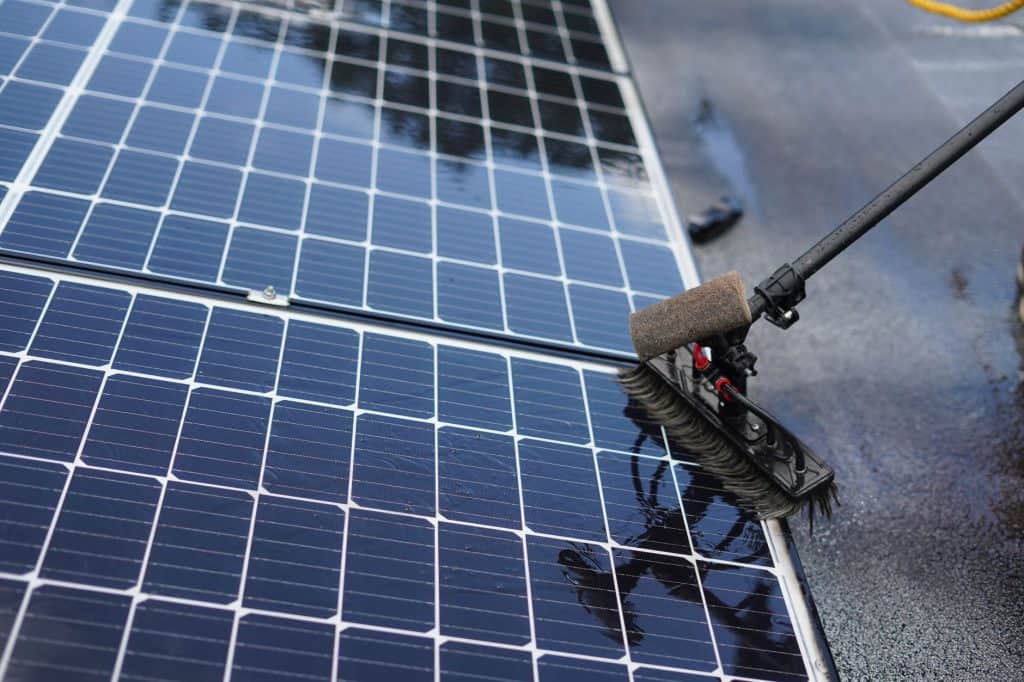
- Оперативни ризик: Variability in solar panel performance due to soiling rates (estimated between 2% and 5% annual energy loss under regional dust conditions), weather disruptions, inverter fault rates, and degradation, all quantified through SCADA-monitored data streams.
By linking performance variations directly to financial outcomes in investment reports, Solar Plus Garden ensures investors receive data-driven, realistic assessments of potential returns and associated uncertainties.
Methodology for Transparent Reporting of Garden Membership Contributions and Community Funding
Solar Plus Garden’s dual-entity model requires clear financial segregation and transparent reporting of чланство у башти fees and their utilization.
- Revenue accounting: Membership fees (€200 one-time plus €20 monthly for optional garden boxes) are recorded in the garden community legal entity’s books, separate from the Estonian OÜ that manages solar project revenues. These fees finance community agrivoltaic activities, fresh produce delivery logistics, and local engagement programs.
- Escrow-based payment model: All membership contributions pass through a designated escrow account governed by contractual agreements between the Estonian OÜ and Serbian DOO. Disbursement rules ensure funds are released strictly for documented community expenses, preventing cross-subsidization or misuse.
- Operational cost transparency: Garden community management expenses, including labor for produce cultivation, packaging, and delivery—averaging €15 per parcel per month—are logged separately but included in consolidated investor reports for comprehensive transparency.
This methodology complies with EU accounting transparency directives and local regulations, providing investors with clear insights into the separation of solar investment returns and garden community expenditures.
Standards and Tools for Monitoring Solar Panel Production and Reporting Efficiency
Solar Plus Garden employs high-resolution monitoring technology and adheres to internationally recognized standards to ensure accuracy in photovoltaic system performance reporting.
- SCADA system deployment: Continuous data capture includes parameters such as AC power output, DC string voltages, ambient temperature, solar irradiance, and fault conditions. Data granularity is set to one-minute intervals to detect early performance anomalies.
- Reporting intervals: Data is summarized daily and aggregated into quarterly performance reports aligned with investor communication schedules. Real-time remote monitoring enables rapid operational intervention to mitigate output deviations.
- IEC 61724 compliance: Performance monitoring follows IEC 61724:2017, which defines standardized methods for measuring energy yield, performance ratio, inverter availability, and energy losses due to system faults or environmental factors, ensuring consistency and comparability of reporting metrics.
These protocols support precise quantification of system efficiency and degradation, informing both operational maintenance decisions and investment performance evaluations.
Investor Reporting and Communication Protocols at Solar Plus Garden
Maintaining transparency through structured investor communications is integral to Solar Plus Garden’s reporting standards.
- Reporting cadence: Investors receive comprehensive financial and operational reports quarterly, with annual reports subject to independent audit per International Auditing and Assurance Standards Board (IAASB) guidelines for renewable energy projects. This includes consolidated statements for the solar project and garden community segments.
- Information management tools: The project uses Notion AI for efficient retrieval and synthesis of project documentation and decision logs, facilitating timely and accurate report compilation. Task tracking through Trello aligns execution with decided protocols recorded in the decision log.
- Access and engagement: Garden membership fees confer access rights to project updates, fostering inclusivity beyond direct solar investors. This membership engagement is tracked and reported back to investors, highlighting socio-environmental returns alongside financial metrics.
Reporting schedules align with standard financial disclosure periods to ensure regulatory compliance and investor confidence while delivering additional transparency on community aspects unique to Solar Plus Garden’s hybrid model.
Challenges and Compliance Risks in Solar Investment Reporting Standards for Emerging Market Projects
The cross-border solar project structure encompassing Estonia and Serbia presents specific compliance challenges affecting solar investment reporting standards.
- Regulatory instability: Potential revisions of feed-in tariff schemes or incentive policies in either jurisdiction require frequent updates to financial assumptions and reporting disclosures, monitored via biannual regulatory audits.
- Cross-border legal coordination: Reconciling reporting requirements for the Estonian OÜ and Serbian DOO involves managing divergent accounting rules, tax treatments, and escrow management regulations. Comprehensive legal reviews ensure synchronized reporting that upholds investor transparency and compliance.
- Escrow and fund management risk: Delays or errors in fund release from escrow accounts for community membership finance could compromise trust and trigger regulatory sanctions. Strict procedural controls and escrow agent audits mitigate this risk.
- Operational uncertainties: Weather variability, system downtime, and soiling effects introduce variability in solar panel output, necessitating detailed, validated documentation of deviations and contingency plans included in quarterly risk assessments.
Continuous governance oversight combined with adaptive reporting protocols ensures resilience against these risks, preserving the integrity of solar investment reporting standards.
Честа питања
What are the minimum data points required in solar investment reporting?
Minimum required data includes energy production in MWh, CAPEX and OPEX details, photovoltaic system efficiency metrics per IEC 61724 standards, net and gross return estimations, and separate accounting of community membership revenues.
How does Solar Plus Garden handle reporting for both solar investment and garden community activities?
The Estonian OÜ records all solar energy revenues and costs, while the Serbian DOO manages garden community finances, including membership fees. Each entity produces separate financial statements that are consolidated for investor reporting while maintaining strict financial segregation.
Which technical standards govern performance monitoring of solar panels for investment reports?
Performance monitoring follows IEC 61724:2017, specifying data collection protocols and reporting formats for photovoltaic systems, ensuring output and efficiency metrics are standardized and verifiable.
How frequently are solar investment reports issued to investors at Solar Plus Garden?
Reports are issued quarterly and annually, with the annual report subject to external audit. Reports include financials, operational data, and updates on garden community impacts.
Закључак
Solar Plus Garden operates its 10 MW photovoltaic system and accompanying garden community under a stringent framework of solar investment reporting standards dictated by EU Renewable Energy Directive 2018/2001, Estonian financial statutes, and IEC technical norms. Clear segregation of financial flows between solar project revenues and garden community membership fees, combined with rigorous SCADA-enabled performance monitoring and scheduled investor reporting, provides a transparent, compliant foundation for stakeholder decision-making. Ongoing adaptation to regulatory changes and operational variability ensures reporting remains current and reliable, supporting sustainable investment in solar energy projects.