








How to Navigate Solar Research Grants for Advancing Clean Energy Innovations
Overview of Current Solar Research Grants and Funding Opportunities
In 2026 and 2027, several funding opportunities support solar research and development under the Department of Energy (DOE) framework, primarily managed through the Solar Energy Technologies Office (SETO). This office allocates energy grants targeting advancement in solar power technologies, including photovoltaics (PV) and concentrating solar power (CSP) systems.
Currently active or upcoming funding programs include:
- Solar Energy Technologies Office (SETO) Research and Development Funding: Supports innovative projects that focus on next-generation solar power system components and integration methodologies. The next application deadline is July 15, 2026.
- DOE Photovoltaics Research Grant: Concentrates on improvements in PV conversion efficiency and development of new materials such as perovskites and organic semiconductors. Applications close on September 30, 2026.
- Concentrating Solar Power Advanced Research Award: Funds research into advanced thermal storage solutions, cost-reduction techniques, and grid interfacing for CSP plants. The deadline for submission is November 1, 2026.
Eligible applicants include accredited universities, federally funded research institutions, established companies with a demonstrated solar power research background, and registered non-profit organizations. Projects must demonstrate alignment with DOE energy innovation goals, provide measurable technical objectives, and have actionable development plans.
These open funding opportunities, detailed on DOE and National Science Foundation (NSF) portals, offer critical financial resources to accelerate solar energy technologies in response to national clean energy directives.
Technical Focus Areas within Solar Research and Development Grants
DOE’s 2026-2027 grant programs prioritize specific technical domains within solar energy technologies. Key areas are photovoltaics (PV), concentrating solar power (CSP), and related thermal power systems.
Photovoltaics research emphasizes increasing cell efficiencies beyond 25% for commercial modules by advancing tandem solar cell architectures and integrating novel materials like perovskite/silicon heterojunctions. Manufacturing cost reduction through scalable thin-film deposition and roll-to-roll processes also ranks high in grant evaluations.
In concentrating solar-thermal power, technical effort targets improving thermal energy storage capacity and efficiency using molten salts or phase change materials with storage durations ranging from 6 to 12 hours to enable dispatchable power delivery. Innovations in power block cycles, such as supercritical CO2 Brayton cycles, and hybridization with fossil backup or battery storage, are supported.
Emerging focus includes agrivoltaïsme systems, which integrate photovoltaïque arrays with agricultural land usage, potentially increasing land productivity by up to 60% while generating power. Additionally, projects investigating grid integration methods aim to enhance system flexibility through advanced inverters compliant with IEEE 1547-2018 standards, supporting synthetic inertia and voltage regulation features.
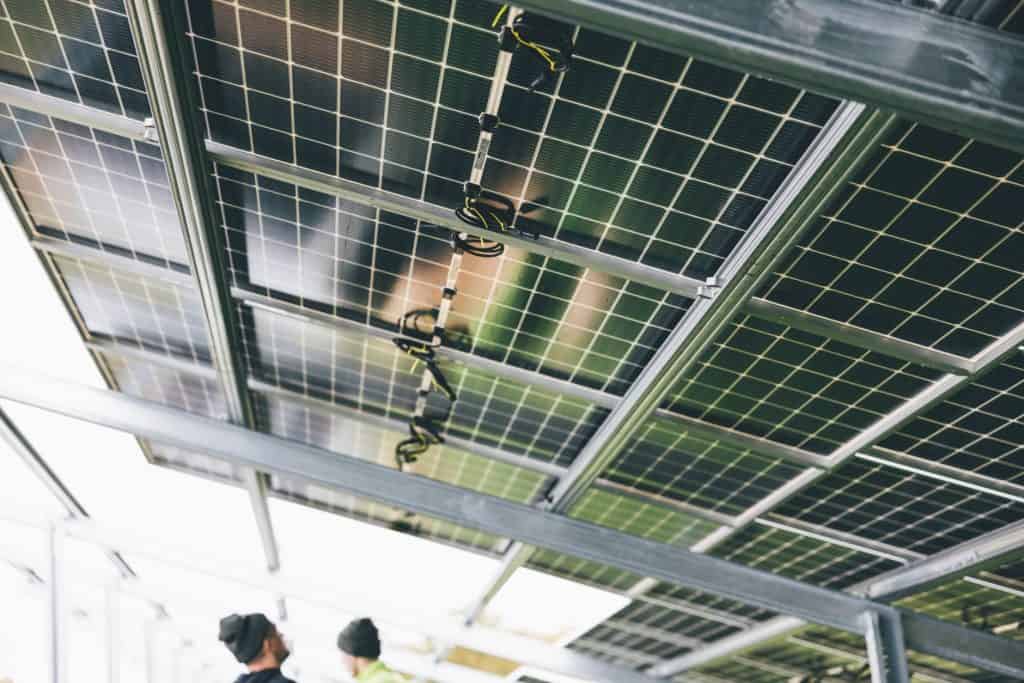
Grant programs favor submissions addressing advanced system components like bifacial solar panels, high-temperature thermal receivers, and scalable energy management software platforms enabling predictive control and real-time grid coordination.
How the Department of Energy’s Solar Energy Technologies Office Structures Grant Programs
The DOE’s Solar Energy Technologies Office (SETO) operates structured grant programs with defined stages and timelines. In 2026, the typical SETO funding cycle proceeds as follows:
- Call for Proposals: Announced through federal grant portals and SETO’s website, detailing target technical areas and application instructions.
- Submission Deadline: Varies by program; for example, the PV Research Grant closes on September 30, 2026.
- Review and Evaluation Period: Applications undergo a 3-4 month evaluation, including eligibility screening, technical merit review by panels of experts, and feasibility and impact assessment aligned with DOE clean energy priorities.
- Award Announcement: Made within 6 to 9 months post call, contingent on budget and strategic balance across energy projects.
Grant programs include direct federal awards to individual applicants and partnership-based grants encouraging multi-institution collaborations involving government agencies, academia, and private industry. Partnership agreements typically require defined roles, cost-sharing arrangements, and intellectual property management protocols consistent with federal regulations (e.g., 2 CFR Part 200).
SETO provides technical assistance throughout the process, including pre-proposal webinars and clarifications via official help desks to improve proposal quality and alignment with funding program objectives.
Strategies for Researchers and Developers to Maximize Success in Solar Grant Applications
Success in obtaining solar research and development funding depends on meeting explicit reviewer criteria used in DOE SETO evaluations. The top five factors are:
- Innovation Level: Projects must demonstrate technological advancements beyond current commercial and research benchmarks, such as exceeding industry-standard solar cell efficiency or novel thermal storage materials with higher heat capacity.
- Technical Feasibility: Viability of conducting research within proposed timelines (typically 12 to 36 months) and budgets defined by cost-volume justifications.
- Potential Impact: Contribution to national clean energy goals including increased renewable penetration, greenhouse gas reductions, and grid resilience improvements.
- Project Team Qualifications: Proven track record in solar energy technologies, supported by publication records, previous project completions, and relevant technical expertise.
- Cost Effectiveness: Demonstrated efficient allocation of funds, potential for scalability, and alignment with cost targets established in DOE roadmaps.
Applicants should ensure highly detailed technical proposals, including experimental design, risk analysis, and quality control plans. Budgets must include line items explicitly covering personnel, materials, overheads, and subcontracting costs consistent with federal guidelines. Letters of support and formalized partnerships strengthen credibility.
Engaging DOE technical assistance teams early during application drafting helps clarify program priorities and enhance proposal competitiveness.
Funding Trends in Concentrating Solar-Thermal Power and Their Impact on Project Innovation
Between 2024 and 2026, DOE funding for concentrating solar-thermal power focused on both fundamental material science and applied system integration. Approximately $7.8 million supported projects developing high-temperature receiver coatings capable of withstanding temperatures above 700°C and improved thermal storage materials with phase change temperature ranges optimized for CSP operational profiles.
Small-scale awarded grants often involved bench-scale testing of novel ceramics or fluid heat transfer mediums, while larger projects integrated CSP plants with hybrid storage systems piloted in grid demonstration sites in California and Nevada.
Funding trends indicate an evolving emphasis toward scaling CSP technology for commercial readiness by 2027. This includes designing CSP facilities with dispatchable power capabilities compliant with Federal Energy Regulatory Commission (FERC) requirements for ancillary services participation.
Sustained investment in CSP reflects its strategic role in providing stable, renewable baseload and peak power, advancing DOE priorities in decarbonizing power generation.
Collaborative Partnerships as a Key Factor in Securing Solar Research Funding
Partnerships among academia, industry, and government entities significantly enhance proposals under solar research and development funding programs. Joint applications tend to outperform single-entity submissions in funding success rates due to the combined expertise and resource sharing.
A salient example is the solar energy innovation network funded by the National Science Foundation (NSF), initiated in 2025 and active through 2026, which aggregates over 15 partners including universities, private sector companies specializing in PV manufacturing, and national laboratories. The network facilitates coordinated research outputs such as peer-reviewed publications, prototype testbeds, and skill-development programs aligned with DOE and NSF strategic plans.
Collaborative proposals must comply with formal partnership frameworks—often including memoranda of understanding, cost-sharing commitments, and management structures ensuring compliance with federal grant administration policies.
Early collaboration formation is critical to align deliverables and intellectual property arrangements, thereby solidifying competitive advantage during the application process.
Navigating the Application Process for Solar Research Grants in 2026
The application timelines for DOE and NSF solar energy grant programs involve 6 to 9 months from grant announcement to award execution. The key procedural steps include:
- Identifying Appropriate Funding Programs: Regularly monitor the DOE Solar Energy Technologies Office and National Science Foundation funding portals for open and upcoming funding opportunities aligned with solar power research interests.
- Entity Registration and Compliance: Complete mandatory registrations such as the System for Award Management (SAM) and obtain any necessary certifications including conflict of interest disclosures as required by federal grant regulations.
- Proposal Preparation and Submission: Assemble comprehensive technical narratives detailing methodology, expected outcomes, milestones, and risk mitigation. Budgets must be transparent and adhere to funding program guidelines. All required supporting documents including letters of support and partnership agreements must be provided by submission deadlines.
- Review and Clarification: Respond promptly to any requests for technical clarifications or interviews during the multi-stage evaluation period handled by expert panels and program managers.
- Award Notification and Post-Award Compliance: Upon award, execute grant agreements and comply with reporting requirements including project progress updates, financial reporting, and final deliverables as specified.
Technical assistance is typically available both pre- and post-award to aid recipients in aligning project execution with grant program specifications and DOE clean energy innovation goals.
Emerging Funding Instruments and Their Potential Influence on Solar R&D After 2026
DOE’s forward-looking roadmap for 2027 anticipates the introduction of innovative funding instruments designed to accelerate solar research impacts. These include blended finance mechanisms combining federal grants with private sector capital investments and outcome-based funding models linking disbursements to the achievement of predefined technology performance milestones.
Policy directions increasingly favor integrated solar-agriculture (agrivoltaics) projects, reflecting sustainability targets that seek to optimize land use efficiency and environmental outcomes alongside energy generation. Future funding calls are expected to incorporate metrics assessing co-benefits in ecosystem services and carbon sequestration.
Stakeholders are advised to adapt application strategies to encompass multidisciplinary research approaches, incorporating agrivoltaics, grid integration technologies, and sustainability performance indicators. This aligns with DOE’s strategic focus on technology convergence and system-level innovation in energy projects.
Foire aux questions
- What are the eligibility requirements for applying to solar research grants from the DOE?
- Eligibility generally requires applicants to be registered research institutions, universities, companies, or non-profits with capabilities in solar energy technologies. Eligible projects must align with funding program priorities, demonstrate technical feasibility, and aim to advance solar power innovation within the scope of clean energy goals. Specific criteria vary by grant program and are detailed in individual funding announcements.
- How can small companies increase their chances of winning solar R&D grants?
- Small companies should clearly articulate innovation strategies aligned with DOE priorities in photovoltaics and concentrating solar-thermal power, establish partnerships with academic or government institutions, and provide detailed technical and financial documentation meeting established reviewer criteria. Early engagement with DOE technical assistance and leveraging open funding opportunities through networks enhance competitiveness.
- What types of projects are favored for funding under concentrating solar-thermal power grants?
- Projects emphasizing novel materials for high-temperature operation, advanced thermal energy storage with at least 6-hour discharge durations, improved power cycle technologies such as supercritical CO2, and cost-reduction methodologies are favored. Proposals demonstrating scalability and compliance with national clean energy standards have increased funding prospects.
- Where can I find upcoming deadlines for open solar research funding opportunities?
- Upcoming funding opportunities and deadlines are published on the Department of Energy’s Solar Energy Technologies Office website, National Science Foundation portals, and federal funding registries such as grants.gov. Monitoring these official sources frequently is essential for timely application submissions.
To maximize success in securing solar research and development funding during 2026 and beyond, stakeholders should closely track DOE Solar Energy Technologies Office and National Science Foundation announcements. Focused preparation on photovoltaics and concentrating solar-thermal power technology areas, coupled with strategic partnerships and adherence to grant program criteria, improves outcomes. Anticipated shifts toward integrated and outcome-based funding models underscore the need for adaptive proposal approaches aligning with evolving clean energy system priorities.
Lectures complémentaires
- How to Navigate Solar Private Placement for Effective Clean Energy Investment in 2026
- Société d'investissement dans l'énergie solaire : Saisir les opportunités offertes par l'énergie propre
- Optimisation de l'énergie propre : comment l'intégration de l'énergie solaire aux systèmes de cogénération et de stockage d'énergie par batterie améliore la fiabilité et l'efficacité