









Comprehensive Guide to Choosing and Using Solar Cleaning Systems for Optimal PV Performance
The Impact of Soiling on Solar Panel Energy Production
The energy production capability of solar panels decreases significantly due to soiling—a buildup of environmental contaminants such as dust, pollen, and bird droppings on the PV surface. These deposits block incident sunlight, causing measurable reductions in irradiance reaching the solar cells.
Empirical studies across diverse climates indicate that soiling-related energy losses typically range between 5% and 30%, depending on geographic factors and seasonal variability. Arid and semi-arid regions, such as parts of Southern Europe and Central Asia, record losses near the upper bound, mostly due to airborne dust accumulation. In contrast, temperate and humid regions experience lower losses—often around 5% to 10%—because regular rainfall partially cleans panels. However, in these regions, biological contaminants like pollen and organic residues may necessitate more frequent cleaning.
For utility-scale solar installations exceeding 10 MW—like those developed by Solar Plus Garden—soiling directly impacts the plant’s capacity factor, leading to reduced energy yield and lengthened financial payback periods. Real-time monitoring of soiling rates, combined with scheduled cleaning, is essential to maintain system productivity and achieve investor expectations within a transparent, scalable investment framework.
Types of Solar Cleaning Systems and Technologies Available in 2026
Solar panel cleaning systems in 2026 are categorized by operational technology, water usage, and automation levels:
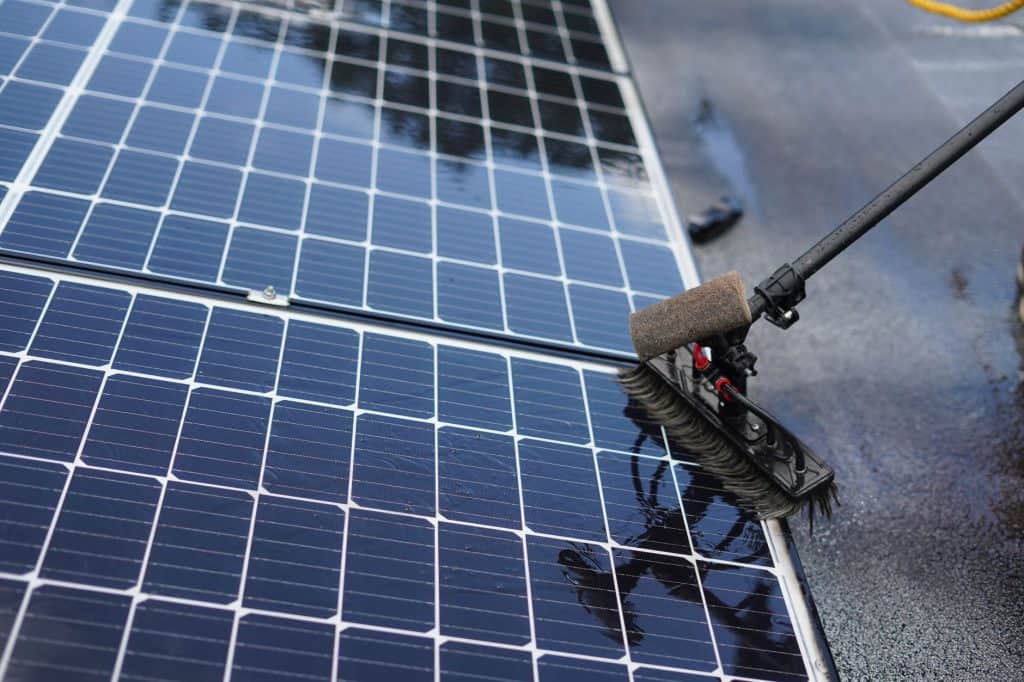
- Manual Cleaning Equipment: Includes handheld brushes with soft synthetic or natural bristles, telescopic water-fed poles using deionized water to prevent mineral deposits, and microfiber pads. These tools suit smaller or complex rooftop installations and areas with limited access. Manual cleaning requires scheduling at intervals of 3 to 6 months based on soiling rates, with labor inputs proportional to installation size.
- Automated Cleaning Systems: Robotic systems incorporate motor-driven brushes, high-pressure low-flow water nozzles, and cleaning solution dispensers. These are programmable for cleaning cycles aligned with performance data. Autonomous mobile robots traverse fixed panel arrays, applying pressure-controlled brushing techniques to avoid surface abrasion. They often integrate with SCADA (Supervisory Control and Data Acquisition) systems for remote operation and diagnostic feedback. These systems suit utility-scale solar installations (10 MW and above), reducing labor costs while delivering consistent cleaning quality.
- Emerging Waterless Technologies: These rely on advanced hydrophobic and oleophobic coatings, combined with electrostatic repulsion mechanisms to minimize dust adherence. Electrostatic solar panel cleaning systems generate low-voltage electric fields to repel fine particulate matter. Although initial capital expenses are higher, operational water use approaches zero, which is advantageous in water-restricted environments. Their effectiveness depends on soiling type; heavy or sticky deposits require supplementary manual intervention.
The selection among these system types involves balancing capital expenditures, operational complexity, installation scale, availability of water resources, and required cleaning frequency.
Installation Considerations for Solar Cleaning Systems in Utility-Scale PV Plants
For utility-scale installations above 10 MW, such as Solar Plus Garden’s projects, several technical and regulatory aspects govern the integration of solar cleaning systems:
- Structural Compatibility: Cleaning machinery must correspond to panel mounting configurations, including fixed-tilt and tracking systems. Engineers conduct structural load assessments to ensure robotic machinery motion paths do not induce undue stress or panel microcracks. This involves finite element analysis and dynamic load modeling during design review phases.
- Performance Monitoring Integration: Cleaning systems connect to plant monitoring frameworks via Modbus or OPC-UA protocols. This allows scheduling cleaning based on thresholds—for example, a 10% drop in normalized energy yield triggers cleaning. Integration with real-time soiling sensors improves operational timing and reduces unnecessary cleaning cycles.
- Electrical and Safety Compliance: All electrical components must comply with IEC 60364 for low-voltage electrical installations and local workplace safety regulations. Proper grounding, insulation, and emergency stop mechanisms are required to mitigate hazards related to machinery operation near energized PV arrays.
- Water Use Regulations: In Estonia and Serbia, water usage for industrial cleaning is subject to national environmental laws limiting withdrawals and discharge standards. Projects must maintain documentation demonstrating water consumption rates, typically ranging from 0.5 to 1 liter per square meter per cleaning cycle, and apply water recycling or rainwater harvesting where possible.
Adherence to these criteria optimizes cleaning effectiveness and system longevity while ensuring regulatory compliance within the Solar Plus Garden investment framework.
Cleaning System Efficiency and Resource Usage: Water, Power, and Labor
Resource utilization metrics for solar cleaning systems directly affect operational efficiency and cost management:
- Water Consumption: Standard water-based cleaning uses between 0.5 and 1 liter per square meter per cleaning cycle, utilizing deionized or filtered water to prevent mineral deposit buildup. Frequency varies by weather and soiling severity; quarterly cleaning is common in dusty climates. Water recycling systems can reduce net water draw by 20-30% where implemented.
- Power Requirements: Automated cleaning robots consume between 100 and 300 watts during operation, depending on model size and cleaning method. On average, they operate for 15 to 30 minutes per hectare per cleaning cycle, translating to approximately 0.025 kWh per square meter annually if cleaned quarterly.
- Labor Intensity: Manual cleaning may require 1 to 2 worker-hours per 1,000 square meters, including setup and brush maintenance. Automation reduces this labor drastically, with operator intervention primarily for routine inspection and maintenance.
- Waterless Technologies: Electrostatic and coated panel systems reduce or eliminate water use. Electrostatic repulsion uses low voltage (under 5 kV) fields consuming minimal energy (under 10 watts continuous operation), enabling near-zero water footprint. Their cleaning efficacy is context-dependent and may require periodic manual cleaning every 6 to 12 months.
Cost-Benefit Analysis of Solar Cleaning Systems in Mid-Sized Projects
Financial evaluation considers initial investment versus performance gains over the project lifetime:
- Investissement de capitaux : Manual cleaning setups incur equipment costs under €2,000 for mid-sized projects up to 1 MW, with associated labor costs increasing over time. Automated machinery for projects in the 1–10 MW range may require capital expenditures exceeding €50,000 but reduce prolonged labor expenses and optimize yield.
- Payback Periods: The payback horizon depends on electricity market prices, soiling loss mitigation, and operational costs. Regular cleaning can improve energy output by up to 30%, potentially shortening payback by 1 to 3 years under current tariffs (subject to change). Sensitivity analysis is recommended as tariffs and maintenance costs fluctuate.
- Operational Costs: Include water consumption, cleaning solution purchase where applicable, labor wages, and periodic machinery maintenance. Automated systems reduce recurrent labor but incur costs for sensor calibration, brush or part replacement every 12 to 18 months, and software updates.
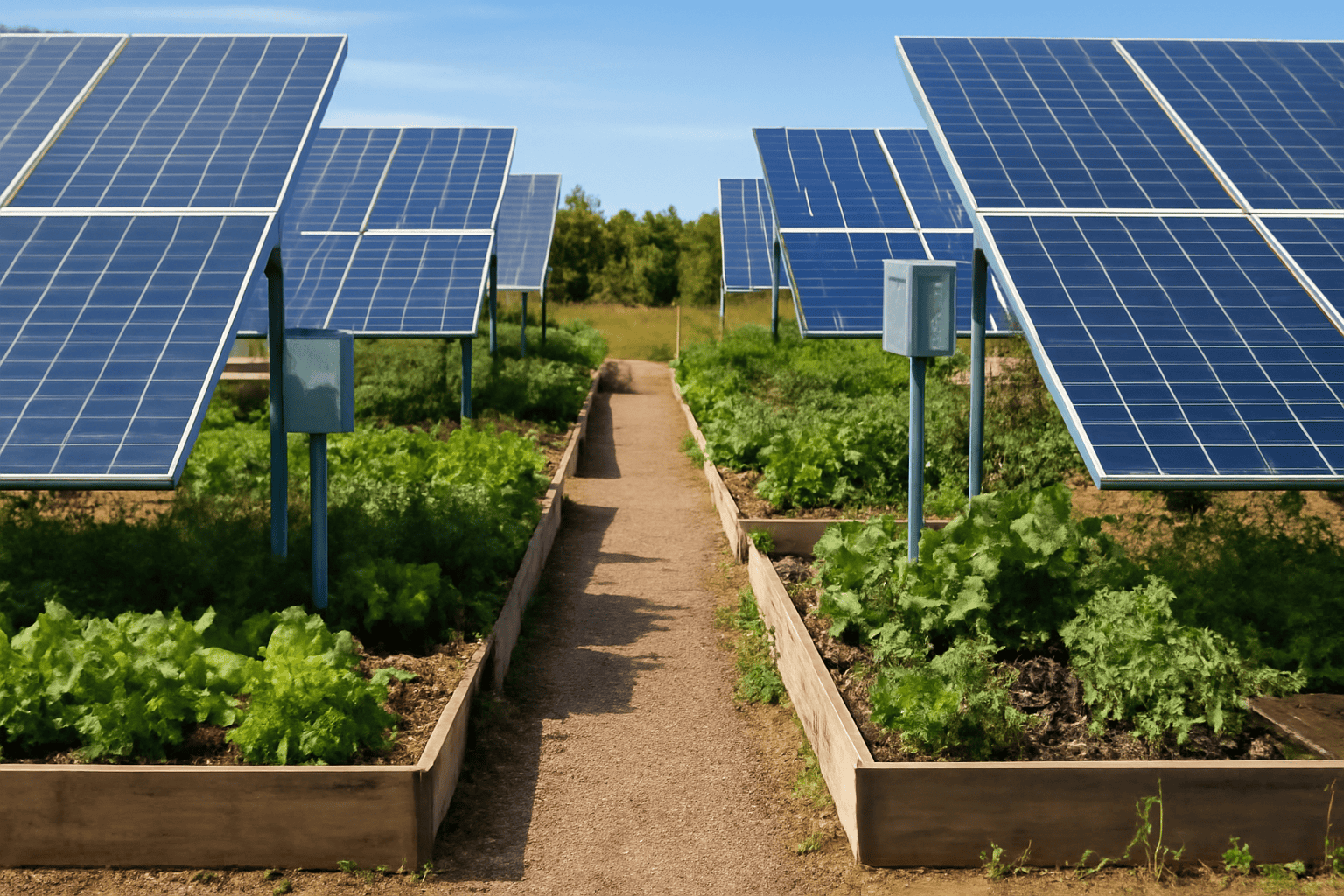
- Community Model Economics: Solar Plus Garden integrates solar investment returns with membership fees funding community gardening. This dual revenue allocation supports transparent distribution of operational expenses and enhances stakeholder engagement through shared benefits in energy and agrivoltaics.
Integrating Cleaning System Data into Solar Plant Performance Monitoring
Integration of cleaning system data enhances decision-making and plant efficiency:
- Sensor Deployment: Soiling sensors, including optical and capacitive types, are installed on representative array sections. These sensors quantify dust density and particulate size, generating threshold-triggered cleaning alerts when production drops exceed 8% over baseline performance.
- Data Analytics: Advanced analytics platforms correlate cleaning events with irradiance-normalized power output changes, validating system effectiveness. Machine learning models can forecast optimal cleaning schedules by analyzing weather, soiling trends, and past cleaning efficacy.
- Maintenance Software: Asset management tools linked to the cleaning system schedule workflows, track cleaning logs, and inventory spare parts. Solar Plus Garden employs such software to coordinate personnel activities across both solar and garden community operations.
- Investor Reporting: Transparent performance data, including cleaning-related productivity metrics, improve investor confidence. Real-time dashboards detail how cleaning interventions impact energy yield and return on investment, fostering accountability.
Regulatory and Environmental Considerations for Solar Cleaning Operations in Europe
Solar cleaning projects within the EU, including Estonia and Serbia, comply with the following frameworks:
- Water Usage Regulations: The EU Water Framework Directive requires sustainable water use, prompting restrictions on cleaning water volumes and mandates to implement water-saving technologies. Compliance includes installing meters and documenting consumption to relevant authorities.
- Chemical and Waste Management Compliance: Use of biodegradable, non-toxic cleaning agents is favored to avoid soil and groundwater contamination. Wastewater runoff management plans follow local environmental agency guidelines for discharge and retention.
- Environmental Impact Minimization: Solar Plus Garden adopts low-water, non-hazardous cleaning solutions aligned with its community and ecological goals. Best practices include prioritizing waterless technologies where feasible and scheduling cleaning to avoid disturbance to local flora and fauna.
- Applicable Standards: No dedicated EU standard governs solar panel cleaning, but adherence to ISO 9001 for quality management and ISO 14001 for environmental management supports operational excellence and regulatory compliance.
Best Practices for Maintaining Solar Panels with Cleaning Systems in Community Solar Projects
Effective maintenance balances cleaning schedules with community engagement:
- Scheduled Cleaning Cycles: Cleaning intervals of 3 to 6 months are recommended based on soiling monitoring data and seasonal weather. Aligning cleanings with the agrivoltaic garden calendar fosters efficient resource use and shared member participation.
- Member Engagement: Transparent communication of cleaning impacts on energy yield and community benefits enhances member retention. Educational sessions about maintenance and sustainability encourage active involvement in supporting the solar installation.
- Cleaning Logs and Analytics: Detailed records of each cleaning event—including date, method, resource consumption, and post-cleaning yield—ensure data-driven process improvements and cost justification.
- Operational Coordination: Regular meetings between solar plant technicians and garden community leadership allow synchronization of maintenance and agricultural activities, optimizing labor deployment and reinforcing the integrated Solar Plus Garden model.
Foire aux questions
How often should solar panels be cleaned to maintain peak efficiency?
Cleaning frequency depends on local climate and soiling rates. Quarterly cleaning is standard in high-dust environments, while biannual cleaning suffices in wetter areas with periodic natural cleansing. Performance monitoring can refine schedules dynamically based on observed production drops exceeding 5-10% thresholds.
Are automated solar panel cleaning systems suitable for community solar farms like Solar Plus Garden?
Automated systems are appropriate for community solar farms with large-scale PV arrays, such as Solar Plus Garden’s 10 MW+ installations. Their use depends on structural integration feasibility and compliance with regional environmental regulations, particularly water use. Automated cleaning reduces labor requirements and supports consistent panel performance.
What are the main cost drivers when selecting a solar panel cleaning system?
Costs arise from initial equipment acquisition, water consumption, labor deployment, and ongoing maintenance. Automated systems have higher upfront expenses but lower labor turnover and improved cleaning regularity. Manual methods involve lower initial capital but higher recurring labor costs.
Does the use of waterless cleaning technology compromise cleaning effectiveness?
Waterless technologies decrease water use significantly but exhibit variable effectiveness depending on soiling type. They perform well against fine dust but less effectively on sticky deposits, necessitating periodic supplemental manual cleaning. Site-specific evaluation of soiling patterns is essential when considering these systems.
Conclusion
Choosing a solar cleaning system requires detailed assessment of local soiling conditions, project scale, resource availability, and legal requirements. For utility-scale projects such as those by Solar Plus Garden, balancing automated cleaning machinery with efficient water use supports sustained energy production and aligns with community agrivoltaic objectives. Integrated monitoring and adaptive maintenance strategies ensure productive, cost-effective PV installations resilient to environmental and regulatory challenges throughout their lifecycle.
Lectures complémentaires
- Différences entre portefeuilles d'investissement conservateurs et flexibles : un guide pour une allocation optimale
- Opportunités d'investissement dans les centrales solaires en 2026 : Guide complet pour investir dans l'énergie solaire
- Investissez dans l'énergie solaire dès aujourd'hui : votre guide complet de l'investissement durable dans les énergies renouvelables