Passer au contenu





Solar Energy Bulgaria Opportunities: 2026–27 Site, Grid and Offtake Map
Solar energy Bulgaria opportunities in 2026–27 are not one market but four decisions stacked in sequence: whether you can control the land and permits, whether the grid will take the power, how the electricity is sold, and who carries the capital. Get the order wrong and the best-looking site becomes a stranded development cost. This article maps each decision point, names the institutions and rules involved, and flags what must be re-verified before any financial model is locked.
Why Bulgaria’s Solar Sector Keeps Appearing on Shortlists
Bulgaria sits in the EU’s higher-irradiance band along the Balkan peninsula, which is the reason it recurs on investor shortlists ahead of northern European markets. Specific yield — the kWh a given kW of installed capacity actually produces — varies with location, mounting type, module selection and soiling, so any yield figure in a business case must come from that project’s own simulation. A national average pasted into a model is a planning error, not a shortcut. The solar resource translates into a business case only once you have a site-specific production estimate from a recognised simulation tool, run against at least ten years of satellite or ground-measured irradiation data for the exact coordinates.
The policy frame is set at EU level and delivered at national level. The revised Renewable Energy Directive, (EU) 2023/2413 (RED III), sets the binding EU-level renewable target and contains permitting acceleration provisions. What determines your project timeline is not the directive text but Bulgaria’s transposition into national law and the administrative practice of the permitting authorities. Those two are not the same thing, and only one of them appears in a legal memo.
On revenue, Bulgaria’s electricity sector operates under EU State aid rules and inside the market-coupling arrangements that apply to its bidding zone. The practical consequence for a developer is that a new utility-scale solar project’s revenue model depends on wholesale market exposure — hourly prices, imbalance settlement, possibly a contract — rather than a single administratively fixed tariff. Trading across the coupled day-ahead market means your captured price is set by the marginal unit in the region, not by a domestic reference alone.
Time-sensitive: support schemes, grid access rules, permitting deadlines and network charges are all in flux through 2026–27. Every figure and rule in this article must be checked against current publications from Bulgaria’s Energy and Water Regulatory Commission (KEVR) and the Electricity System Operator (ESO) before a model is finalised.
That is why the rest of this piece is organised around four decision points — land and permit, grid connection, revenue route, capital structure — rather than a country overview. Each one is a gate, and a gate you clear late costs more than a gate you clear early.
Where the Grid Connection Decision Actually Sits
Grid access in Bulgaria follows a fixed sequence, and the sequence cannot be reordered because a later commercial step looks more attractive:
- Application to ESO.
- Feasibility study for the connection point.
- Connection agreement.
- Construction permit.
Each step is a gate. A common failure mode is signing land rights and commissioning design work before confirming the connection point can absorb the capacity. Capacity availability is the binding constraint in several regions of the country, and it changes as the queue fills. Before committing to land, ask ESO for the current queue position for your point of connection and for any grid reinforcement obligation that would fall on your project. Reinforcement works can be the single largest line in the capital budget, and they are not negotiable once the connection agreement is drafted.
Energy storage is the variable moving fastest. Bulgaria’s rules for co-locating batteries with solar generation are evolving through 2026. The mechanism is straightforward — storage lets you shift output away from low-value hours and reduces exposure to curtailment — but the connection agreement and the metering arrangement must be set up correctly from the start. A battery bolted onto a connection agreement written for generation-only will not deliver the intended value, and retrofitting the agreement later means re-entering the queue.
What to verify line by line in the connection agreement:
- Firm versus non-firm capacity. Non-firm capacity means the operator can restrict your export, and the value of that capacity is lower.
- Curtailment compensation terms. Whether you are paid for instructed curtailment, and on what basis, is a contractual question, not a regulatory given.
- Commercial operation deadline. The date by which the plant must be commissioned, and what happens to the agreement if it slips.
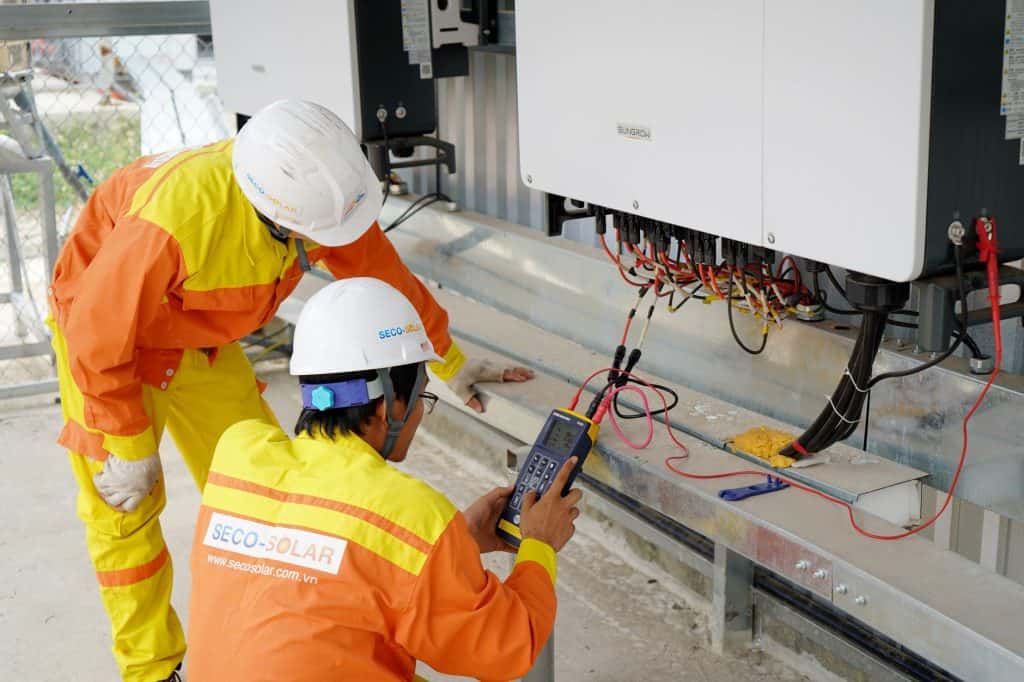
- Technical compliance standard. Confirm the grid-connection technical requirements your plant must meet, and have your equipment supplier declare conformance in writing before the connection agreement is signed.
Time-sensitive: connection fees, queue rules and any priority treatment for storage-coupled projects are subject to change. Confirm against the latest ESO methodology before relying on any of them.
How Revenue Is Actually Captured: Merchant, PPA or Support
A Bulgarian solar asset can sell its output through three routes, each with a different risk profile:
- Merchant sale into the wholesale market. Highest price upside, highest price risk, no counterparty.
- A corporate or utility power purchase agreement (PPA). Fixes a strike price for a defined volume and term; replaces price risk with counterparty credit risk.
- A support or contract-for-difference mechanism, if one open to new projects exists. Must be verified against current KEVR decisions and EU State aid approval — do not assume any named scheme is open.
PPA mechanics deserve more scrutiny than they usually get. A corporate PPA typically fixes a strike price for a defined volume over a defined term. The questions that decide whether it protects you:
- Physical or financial? A physical PPA delivers electricity; a financial one settles the difference between market price and strike. They create different obligations and different accounting.
- Does it cover shape risk? Solar output does not follow a buyer’s load profile. If the PPA prices a flat volume but your production peaks at midday, you carry the mismatch.
- What is the imbalance settlement cost? Deviations between scheduled and delivered volume are settled through imbalance. A small investor cannot ignore this cost line.
- Who is the counterparty, and is it rated? A fixed strike from a weak balance sheet is a different asset from the same strike from an investment-grade offtaker.
The merchant route exposes the project to hourly wholesale prices and imbalance charges. The modelling requirement that follows is specific: forecast the captured price — the volume-weighted price your specific generation profile actually realises — not the baseload annual average. Because solar output concentrates in daylight hours, the captured price sits below the average in a market with substantial solar penetration.
Trading and balancing responsibility is a structural obligation, not an optional service. Under the Electricity Balancing Guideline, Commission Regulation (EU) 2017/2195, a market participant or its balancing responsible party must settle imbalances. For a pooled investment vehicle, the question of who holds that role — and who absorbs the cost — belongs in the legal documentation.
Financial settlement of trades across the coupled market runs through the nominated market participant and the settlement agent. A pooled vehicle that sells merchant must nominate who executes trades, who posts collateral, and who bears a settlement default event. Those are operational facts a business plan should name, not leave implicit.
The Permitting and Land Path, Step by Step
Permitting in Bulgaria is a sequence of administrative gates where land status comes first and everything else is contingent.
- Land control. Secure the rights before spending on anything else.
- Change of use. Agricultural land converted for solar requires a change-of-use procedure under Bulgarian agricultural land rules. The duration of that procedure drives the whole schedule; it is the item most likely to slip.
- Environmental screening. Projects above certain thresholds fall under the Environmental Protection Act and require either an environmental impact assessment or a screening decision. The threshold and procedure are the gating items — not the technical design, which can be revised at low cost by comparison.
- Connection agreement. As set out above.
- Building permit.
- Construction and commissioning, including grid code compliance.
The building permit and the grid connection run in parallel only if the connection agreement is already secured. Developers routinely assume the two can be sequenced freely and discover mid-schedule that they cannot.
RED III sets expectations for faster permitting in designated “go-to” areas. Whether a Bulgarian project benefits depends on the country’s national designation and its implementation. Verify the current designation before building a shorter timeline into your schedule — a directive expectation is not an entitlement. RED III also carries provisions on grid-connection timeframes and on the administrative steps that may be treated as a single application; whether and how Bulgaria applies them is the question to answer with counsel, not with the directive text.
Land title itself is a diligence item. Confirm the cadastral record matches the seller, that no restitution or co-ownership claim sits on the parcel, and that the lease or purchase agreement survives a change in the project company’s ownership. A connection agreement or land right tied to a vehicle that later changes hands must be assignable, or the sale you are planning will not close.
Cost Stack for a Utility-Scale Plant in Bulgaria: A Worked Illustration
The table below is an illustration, built from stated assumptions to show which line items move the total. It is not a price quote, not a market benchmark, and every line must be replaced with your own supplier quotations.
Assumptions: ground-mounted utility-scale plant; monocrystalline modules; string inverters; medium-voltage connection with a short grid reinforcement; land leased, not purchased; development and permitting costs carried by the project; debt drawn at financial close. Percentages are shares of total installed cost, not currency amounts.
| Line item | Share of capex (illustrative) | What moves it |
|---|---|---|
| Modules | ~30–40% | Module technology and procurement timing |
| Inverters and MV/HV equipment | ~10–15% | Architecture choice; transformer and switchgear scope |
| Civil works and mounting | ~10–15% | Terrain, foundations, access roads |
| Grid connection works | ~5–20% | Reinforcement obligation — the largest variable |
| Development and permitting | ~5–10% | Change of use, EIA, legal, grid studies |
| Financing costs during construction | ~3–6% | Debt terms and construction duration |
| Contingency | ~5–10% | Permitting and connection uncertainty |
Grid connection works are the line that most often surprises. Where reinforcement is required, they can rival the module cost, which is why the connection decision is placed before this cost discussion rather than after it. A second sensitivity worth running: how the total moves when the reinforcement line lands at the top of its range. If the project only clears its hurdle rate at the bottom of the range, the business case is a bet on the grid, not on the sun.
Operating cost is a separate model and determines your long-run net position:
- O&M contract (typically priced per MW installed per year, with availability guarantees)
- Insurance
- Land lease
- Security
- Asset management
- Balancing and imbalance costs
Model these apart from capex. A project that clears its hurdle rate on capex alone can fail on operating costs once balancing charges are included.
Curtailment, Storage and the Shape of the Capture Price
Bulgaria’s solar fleet produces in the same hours, so the captured price per MWh is structurally lower than the baseload average. Any business case must model hourly capture. An annual average price applied to annual generation overstates revenue, and it overstates it most in precisely the markets where solar has grown fastest.
Curtailment risk rises as more capacity connects in one region. The grid operator may instruct curtailment, and whether the project is compensated depends entirely on the connection agreement terms. Check them line by line before signing; the difference between compensated and uncompensated curtailment can be a material share of annual revenue.
Co-located storage is the main mitigation. A battery lets you shift part of the output to higher-price hours. The business case rests on four variables:
- The spread between charge and discharge prices, which narrows as more storage is deployed
- Battery degradation, which reduces usable capacity over the asset’s life — model round-trip efficiency and annual capacity fade explicitly, not as a single end-of-life haircut
- Whether the connection agreement permits hybrid operation at all
- Who captures the storage revenue, if the battery is funded by a separate party from the generation asset
Cannibalisation is the structural risk a single-project model usually omits. The more solar Bulgaria adds, the more midday prices compress, and the lower the captured price for every plant in the fleet. A model that holds capture price constant while assuming fleet growth is internally inconsistent.
Time-sensitive: any capacity market, flexibility market or balancing service revenue in Bulgaria is subject to regulatory change through 2026–27. Do not treat it as a fixed income line.
Choosing a Route In: Developer, Co-Investor or Community Platform
There are three ways to participate, and they differ on five dimensions that matter more than headline return.
| Dimension | Develop from land to ready-to-build | Fund a construction- or operating-stage asset | Pooled / community platform |
|---|---|---|---|
| Capital required | Highest; carries development cost before revenue | Mid; entry at financial close or after | Lowest; aggregated tickets |
| Control over decisions | Full | Depends on shareholding and governance rights | Limited; you rely on the platform |
| Permitting and connection risk | Borne by you | Shared or partially resolved | Borne by the platform and, economically, by participants |
| Liquidity | Lowest | Low; depends on transfer rights | Varies; check the terms |
| Diligence you must do | Full technical, legal and grid | Asset-level and counterparty | Structure, disclosure and legal wrapper |
Solar Plus Garden sits in the third category. The direction is a 10 MW solar plant combined with a Garden adhésion à la communauté model. On the publicly stated terms, membership is a paid access that is not conditional on making a direct solar investment: a one-time membership fee on the public site, plus an optional jardinière at €20/month covering 18 deliveries a year. Solar revenue funds the community activities and their operating costs.
Two structural points any participant in a pooled route should check. First, Solar Plus Garden’s Garden activity runs through a separate legal entity from the Serbian DOO that owns and operates the plant, and holds the exclusive right to use the Garden concept and content. Second, the Estonian OÜ was incorporated on 20.02.2026, and the project is in a pre-incorporation/structuring phase. That means the legal documentation, not the marketing summary, is the source that matters.
The decision criteria are four: how much capital you can commit, how much control you need, how long the money is locked, and whether you understand the route’s legal wrapper completely. If the fourth answer is no, the other three do not matter yet.
Agrivoltaics and Co-Located Business Models on Bulgarian Land
Agrivoltaïque pairs solar generation with agricultural production on the same land. The constraint is design sequence: mounting height, row spacing and module density must be built around the crop and the machinery from the start. Retrofitting agriculture onto a plant designed for pure generation is rarely economic.
The business case has two revenue lines — electricity sales and agricultural output — and both must be modelled. The agricultural line depends on crop choice, irrigation and local offtake, and it carries its own yield variability on top of the solar variability. The two lines also correlate with the same bad weather in some cases, so test whether the diversification you are assuming is real or only on paper. On Bulgarian land, the change-of-use rules interact with agrivoltaics because the land can remain in agricultural use, which may change the permitting path. Confirm case by case; the outcome is not uniform.
A community membership model funded by solar revenue is structurally distinct from agrivoltaics and should not be conflated with it. Solar Plus Garden is building that model with the Garden side separated from the plant-owning entity and capped at up to 3,000 garden plots. The separation matters: it means the community activity’s obligations and the plant’s operating risk sit in different legal vehicles.
What to verify before accepting any agrivoltaic claim:
- Crop yield data under the specific mounting design, from a comparable installation — not from a generic study
- Water availability and irrigation rights
- Who bears the loss if the agricultural line underperforms
- Whether the offtake for the produce is contracted or spot-sold, since the produce business carries its own price risk separate from electricity
What Would Change This Picture by 2027
Five watch items, each tied to the decision it would change:
- Bulgaria’s RED III transposition and permitting rules. A faster, designated permitting path shortens the development route’s timeline and raises the value of an early-stage project. Verify the national designation before assuming it.
- KEVR decisions on network charges and balancing. Changes to these lines alter operating cost and therefore the hurdle rate for every route.
- ESO queue reform and reinforcement plans, including any defined fast track for storage co-location. A defined fast track makes the hybrid case easier to finance; its absence keeps storage a case-by-case negotiation.
- Further solar build-out compressing midday capture prices. Sustained compression weakens any merchant-only case and pushes the decision toward storage co-location or a contracted PPA.
- Interest rates and availability of project finance for Bulgarian assets. A change in either resets the hurdle rate for all three routes.
None of these is predictable from the 2026 vantage point. All of them are checkable against published KEVR and ESO material as they land.
Foire aux questions
Can a foreign investor own a solar project in Bulgaria?
EU and non-EU investors can generally hold interests in Bulgarian project companies, but the specific vehicle, the land-holding rules and any sector-specific approvals depend on the structure. The check that matters is whether the project company, the land rights and the connection agreement are all held by entities the investor actually controls, and whether each of those rights is assignable. Confirm the current rules with Bulgarian counsel before committing capital; this article does not provide legal advice.
Is there still a feed-in tariff for new solar in Bulgaria?
Do not assume one. Bulgaria’s support framework for new solar capacity has changed over time, and any mechanism open to new projects in 2026–27 must be verified against current KEVR decisions and the EU State aid approval for the scheme. Most new utility-scale projects are modelled on merchant revenue or a PPA, with any support treated as an additional, verified line rather than a base assumption.
How long does grid connection take for a solar plant in Bulgaria?
It depends on the queue position at ESO and whether reinforcement is needed at the connection point. The sequence is application, feasibility study, connection agreement, then construction permit; the connection agreement step is where timelines diverge most. Ask ESO for the current queue status and any reinforcement obligation before signing land rights, and treat any timeline you are given as subject to change.
What is the difference between investing directly in a plant and joining a community platform like Solar Plus Garden?
Direct investment gives you control over the project company and exposure to permitting, connection and offtake risk. A pooled or community platform aggregates smaller tickets and handles development and operation, but you rely on the platform’s legal structure and disclosure. Solar Plus Garden is in a pre-incorporation/structuring phase, with an Estonian OÜ incorporated on 20.02.2026 and the Garden activity in a separate entity from the Serbian DOO that owns the plant; membership is a separate paid access and is not conditional on a direct solar investment. Read the current legal documents before deciding.
Next Step
Which route fits your capital and control appetite determines what you do first. If you are developing, request the ESO queue position and the land’s change-of-use status before anything else — those two items decide whether the project is financeable, and everything downstream is cheaper to change than they are. If you are investing through a pooled or community structure, read the legal documents of the specific entity — for Solar Plus Garden that means the Estonian OÜ and the separate Garden entity, not the marketing pages — and confirm what happens to your money if the plant is delayed.
Three developments would change this answer. A confirmed faster permitting path under Bulgaria’s RED III transposition would shorten the development route’s timeline. A sustained compression of midday capture prices would weaken any merchant-only case and push the decision toward storage co-location or a contracted PPA. A change in project-finance availability would reset the hurdle rate for every route. Treat all tariffs, support schemes and grid rules cited here as subject to change and verify them against current KEVR and ESO publications before committing capital.
Lectures complémentaires
- Processus de raccordement au réseau électrique : Comment raccorder une centrale solaire au réseau électrique ?
- Opportunités d'investissement dans les centrales solaires en 2026 : Guide complet pour investir dans l'énergie solaire
- Société d'investissement dans l'énergie solaire : Saisir les opportunités offertes par l'énergie propre