Saltar al contenido







Solar Crowdfunding Trends for 2026-2027: What Changes for Investors
Solar Crowdfunding Trends for 2026-2027 are being shaped less by new hardware than by regulatory plumbing, platform licensing and the way community benefits get attached to energy assets. Solar crowdfunding is the practice of pooling many small tickets to finance solar projects. This article covers direction and drivers rather than forecasts: it names the mechanisms that are changing, the documents you can check, and the questions that separate a well-structured offer from a marketing page. Anything tied to tariffs, subsidies or licensing status is subject to change and should be verified at the source before you commit capital.
Why Solar Crowdfunding Trends for 2026-2027 Are Being Driven by Platform Fragmentation
The clearest structural change is that the market is splitting into two camps with very different investor protections.
On one side sit regulated venues: platforms operating under the EU Crowdfunding Regulation (ECSPR, Regulation (EU) 2020/1503) or the US Reg CF regime. These come with prescribed disclosure documents, capital requirements and governance obligations for the platform operator. On the other side sit donation, reward and pre-sale models, plus structures that may fall outside crowdfunding rules entirely. The distinction matters because the same project can appear on either type of venue, and the label on the page tells you very little about which one you are dealing with.
The ECSPR became fully applicable in November 2023, and its relevance for 2026-2027 is passporting: a platform licensed in one member state can operate across the EU under notification, so the number of offers visible to an investor in, say, Serbia or Austria no longer maps neatly onto the number of national regulators involved. Verify the licence on the register of the platform’s home-state regulator rather than on the platform’s own website.
Jurisdiction choice is visible in company formation. Solar Plus Garden operates through an Estonian OÜ incorporated on 20.02.2026 and is currently in a pre-incorporation and structuring phase — an example of a project deliberately choosing a jurisdiction with a defined crowdfunding framework before taking investor money. That sequencing (entity first, legal clarity second, investors third) is itself part of the trend, and it is a pattern worth watching among early-stage solar startup structures that raise from retail investors rather than from a single fund.
Practical consequence for an investor comparing offers:
- Check whether the platform holds an ECSPR licence, a national exemption, or neither.
- Check whether the offer document is the ECSPR-mandated Key Investment Information Sheet (KIIS) or a self-published pitch.
- Check which regulator and which courts would be involved if something goes wrong.
Regulatory timelines and individual platform licensing status change; confirm current status before investing.
Equity Crowdfunding for Solar: The Shift from Debt-Like Returns to Equity Participation
Historically, much of the solar crowdfunding market offered fixed-income or debt-like instruments: you lent money to a project company and received a stated payout. The direction of travel in 2026-2027 is toward true equity crowdfunding, where the investor holds shares in the project SPV or the platform and the return is whatever the asset generates after costs.
That changes the risk profile in ways that are easy to underestimate:
- Returns track energy sales, offtake prices and operating performance instead of a contractual coupon.
- Distributions can be suspended or reduced if generation falls short or O&M costs rise.
- Equity ranks behind debt in a winding-up, so leverage in the capital structure directly affects recovery.
The hybrid approach is becoming common. Solar Plus Garden lists two ROI pathways: a long-term equity share across Phase 1 and Phase 2, or a guaranteed payout in Phase 2. Investors should read which pathway a given offer actually uses, and whether the guarantee is backed by a balance sheet or is simply a stated expectation.
Minimum tickets are falling, which widens access but also changes who is in the cap table. Solar Plus Garden starts from €500 — small enough that a single investor has limited influence and limited ability to negotiate terms, which is why the quality of the standard documentation carries most of the protection.
ESG expectations now attach to equity holdings in a way they did not attach to debt. An equity investor is a part-owner and increasingly expects the platform to report impact metrics alongside financial ones, because the same data feeds both the investor report and any sustainability disclosure the platform has to make. In practice, a private company issuing equity through a crowdfunding campaign usually has no listed-securities disclosure obligation, so the reporting standard is set by the platform and the share agreement rather than by a market regulator.
How Renewable Energy Crowdfunding Platforms Are Structuring Community Membership in 2026
The second structural change is the separation of investing from belonging. Platforms are increasingly decoupling community access from capital contribution, and financing the community layer out of solar revenue rather than out of investor tickets.
The Solar Plus Garden model shows how the pieces fit:
- Membership is no longer conditional on direct solar investment. Community access is bought with a €200 one-time membership fee, and that fee is invested in solar.
- Community activities are funded from solar income. The energy asset pays for the community layer, not the other way round.
- The garden box is optional at €20 per month, with 18 fresh produce deliveries per year — a tangible non-financial benefit attached to an energy project.
- The Garden sits in a separate legal entity from the Serbian DOO that owns and operates the plant. That entity holds the exclusive right to use the Garden concept and content, so community-side risk is isolated from energy-asset risk.
- Capacity is capped at 3,000 garden plots, which sets a hard ceiling on community scale and creates a scarcity dynamic that is operational, not marketing.
For anyone evaluating renewable energy crowdfunding offers, this separation is the point worth testing. Ask three questions: does the membership fee buy equity in anything, which entity receives it, and what happens to membership benefits if solar revenue falls short in a given year. A clean answer distinguishes this model from a bundled offer where community perks quietly depend on the plant outperforming. Note also that a membership fee invested in solar is a contribution to a project, not a share purchase unless the subscription documents say so — the distinction determines whether you have any claim on the asset.
The 10 MW Project Scale: Why Mid-Sized Solar Farms Are Attracting Crowdfunding in 2026-2027
Ten megawatts is the band the crowdfunding market has converged on, and the reasons are structural rather than fashionable.
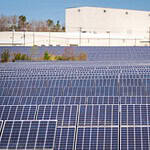
At 10 MW a project is large enough to support commercial offtake arrangements and professional O&M, but small enough that a retail-facing raise can plausibly cover the equity tranche. Utility-scale assets in the hundreds of megawatts are funded by infrastructure capital and never reach a public platform. Rooftop and sub-megawatt schemes are too small to carry the fixed costs of a regulated offer document. The 10 MW band sits between those poles, and Solar Plus Garden’s clean energy project is the anchor asset for its investment narrative for exactly that reason.
What the scale means in practice:
- Fractional ownership becomes feasible. Spreading the equity across many small holders reduces single-investor concentration, though it does nothing to reduce project risk itself.
- Development timelines are governed by permitting and grid connection, not by construction. A 12-24 month path from development to operation is a working assumption for this band, subject to local regulation and grid operator queues; delays here translate directly into a longer period before any distribution.
- Fixed costs are amortised. Legal, audit, insurance and grid studies are largely independent of size in this band, so per-kW soft costs are more manageable than for smaller community schemes.
The trade-off is that a single 10 MW asset is undiversified. A crowdfunding investment in one plant carries single-site generation risk, single-offtaker risk and single-jurisdiction regulatory risk. Small and medium investors gain access to assets previously reserved for funds, but they take on concentration that a fund would spread across a portfolio.
Agrivoltaics and Garden Integration: A Differentiator in Solar Crowdfunding Trends for 2026-2027
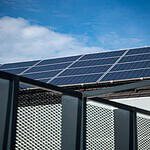
Pure-play solar pitches compete almost entirely on price per kWp and offtake terms. Agrivoltaica — agriculture and solar sharing the same land — gives a platform something else to compete on, and it is showing up more often in 2026 pitches.
The comparison that matters for an investor is not aesthetic. It is cost and complexity:
| Factor | Pure solar | Agrivoltaic / garden-integrated |
|---|---|---|
| Land cost | Full cost allocated to energy | Potentially shared with agricultural use |
| O&M | Standard PV maintenance | PV maintenance plus agricultural operations, access, water |
| Revenue | Energy sales | Energy sales, possible produce or membership revenue |
| Community relations | Often contested at permitting | Local participation can ease social licence |
| Permitting | Single-use zoning | May need dual-use approvals; rules vary by jurisdiction |
Solar Plus Garden funds community activities from solar revenue and attaches a concrete agricultural benefit (18 produce deliveries a year on the optional jardinera). That creates a traceable link between the renewable energy asset and the community layer rather than a generic impact claim.
Two cautions. First, agrivoltaic projects may be eligible for additional grants or support schemes in some jurisdictions, but eligibility rules change and should never be assumed into a base case. Second, dual land use adds operational dependencies: a farming partner failing to perform can affect community benefits even when the plant generates as forecast. Compare pure solar and agrivoltaic offers on land cost, O&M scope and revenue diversification before comparing headline returns.
Regulatory Watch: What Equity Crowdfunding Investors Must Check Before 2027
This is the section that decides whether the rest of the analysis is usable. Work through it in order.
- Platform licence. Confirm ECSPR status or the applicable national regime on the regulator’s public register — for an Estonian OÜ, the Estonian Financial Supervision Authority. A platform describing itself as “regulated” without a register entry is not a verified claim.
- Passporting and home state. An ECSPR-licensed platform can operate cross-border, but the home-state regulator supervises it and investor protection details can differ from your own country’s regime.
- Documentation. The KIIS is the ECSPR-mandated summary document. If the offer has no KIIS and no equivalent, you are looking at a different regulatory category.
- Tax treatment. Returns from equity crowdfunding are taxed by your country of residence. There is no universal rule; distributions, capital gains and any membership fees may each be treated differently.
- Exit liquidity. Equity crowdfunding shares are illiquid. Secondary markets exist on some platforms but volumes are thin, and there is no guarantee a buyer appears when you want out. Assume you are locked in until a defined exit event.
Solar Plus Garden publishes a set of red lines that read like a checklist of what to avoid elsewhere: no false or escrow-like solutions, no spending without control, no structure the team does not understand completely, and no investors before legal clarity. Whatever you think of any individual project, those four constraints are a reasonable screen to apply to every offer you review. Regulatory requirements are subject to change; verify current rules for your jurisdiction and the platform’s.
Worked Example: A €5,000 Ticket in a 10 MW Solar Crowdfunding Project vs a Savings Account
Illustration only — not a forecast, not a guarantee, and not based on any actual project’s figures. All numbers below are assumptions chosen to make the arithmetic visible.
Assumptions: 10 MW plant, total capex €8 million (€0.8/Wp installed), funded 30% equity (€2.4 million) raised via crowdfunding and 70% debt. Annual revenue €1.0 million from an assumed offtake arrangement. Annual O&M €150,000. Annual debt service €200,000. No subsidies, no inflation, no panel degradation, no reserve account, no platform fees.
| Línea | Illustrative figure |
|---|---|
| Annual revenue | €1,000,000 |
| Less O&M | −€150,000 |
| Less debt service | −€200,000 |
| Net cash flow to equity | €650,000 |
| Equity raised | €2,400,000 |
| Illustrative annual distribution to equity | about 27% of equity, before tax |
| €5,000 ticket share of equity | about 0.21% |
| Illustrative annual distribution on €5,000 | about €1,365 before tax |
| Savings account at 2% on €5,000 | €100 per year |
Two observations follow. First, the gap between the two columns is not free money — it is compensation for construction risk, offtake risk, illiquidity and the real possibility of zero distributions in a bad year. Second, the sensitivity is brutal: if revenue lands 20% below assumption, net cash flow to equity falls from €650,000 to €450,000 and the illustrative distribution drops proportionally. A savings account does not do that.
Payback on the illustrative €5,000 ticket is roughly 3.7 years if distributions stayed constant — which they will not, because panel degradation, inverter replacement around year 10-15, and tariff changes all act on the number. Treat any payback figure in a solar pitch, including this one, as a scenario rather than a schedule.
ESG and Impact Reporting: What Solar Crowdfunding Platforms Will Be Expected to Disclose
ESG claims in solar are easy to make and hard to verify, which is why the reporting layer is tightening.
Three frameworks do most of the work. The EU Sustainable Finance Disclosure Regulation (SFDR), (EU) 2019/2088, governs sustainability disclosures by financial market participants and may apply to platforms depending on how they are classified — subject to change. The GHG Protocol provides the accounting method for emissions, including the grid emission factors used to convert generated kWh into avoided CO₂. IRIS+ provides a catalogue of standardised impact metrics, which is what makes one platform’s “community benefit” comparable with another’s.
The Solar Plus Garden structure is a useful example of a traceable impact loop: membership fees flow into solar, solar revenue funds community activities, and the garden box delivers a countable output (18 deliveries a year). Each link is a number someone can audit. Contrast that with a pitch that reports a single blended “impact” figure with no path from revenue to outcome.
For an investor, the practical test is whether the platform can state, per euro invested, what is measured, by whom, and how often. Platforms that publish audited impact data alongside financial reports are the ones ESG-focused investors can actually screen. Those that cannot will find that gap priced in.
What to Do Next: Decision Steps for Evaluating a Solar Crowdfunding Offer in 2026-2027
Six steps, in this order. Do not skip ahead on the strength of a good pitch deck.
- Verify the licence and read the KIIS. Check the regulator’s register, then read the Key Investment Information Sheet for the specific offer. If either is missing, stop here.
- Map the legal structure. Identify the SPV that holds the asset, its jurisdiction, and who owns what. Solar Plus Garden, for instance, separates the Estonian OÜ, the Serbian DOO that owns the plant, and the entity holding Garden rights — three different risk exposures.
- Price the fees. Membership fees, platform and management fees, exit fees and any carried interest. A 1-2% annual fee compounds against a return that is itself uncertain.
- Assess the fundamentals. Scale, offtake agreement and counterparty, O&M contract, insurance, and the grid connection status. For a 10 MW asset, the offtake terms matter more than the panel brand.
- Define your exit before you enter. Is there a scheduled refinancing, a buyback, a secondary market, or nothing? Assume the least favourable answer.
- Confirm the ESG and community commitments in writing. What is reported, how often, and by which entity — particularly where membership fees are involved.
If any step lacks a transparent answer, treat it as a red flag rather than a gap to be filled later by enthusiasm.
Preguntas frecuentes
Is solar crowdfunding regulated in the EU?
Yes, if the platform holds an ECSPR licence. Licensed platforms must provide a Key Investment Information Sheet and meet capital and disclosure rules. Verify the licence on the relevant national regulator’s register. Not all platforms are ECSPR-licensed — some operate under exemptions or entirely different models — so check before investing, and note that licensing status is subject to change.
What is the minimum investment for solar crowdfunding projects like Solar Plus Garden?
Minimums vary by platform. Solar Plus Garden lists a starting investment of €500, while some platforms set minimums lower and others require €1,000 or more. Always confirm the current figure in the platform’s terms and the offer’s KIIS.
How does the Garden membership work with solar investment?
At Solar Plus Garden, Garden community access is separate from solar investment. You pay a €200 one-time membership fee, which is invested in solar, plus an optional €20/month garden box with 18 deliveries a year. Community activities are funded from solar revenue. The Garden operates through a separate legal entity from the Serbian DOO that owns the plant, so membership does not give you equity in the solar plant itself.
What are the main risks of equity crowdfunding in solar?
Illiquidity is the first: shares are hard to sell. Then project risk — construction delays, lower energy yield than modelled, offtake price changes — followed by regulatory change and platform failure. Equity returns depend on project performance and are not guaranteed. Diversify where you can, read the KIIS and the legal documents, and only commit capital you can afford to leave locked up.
Acting on Solar Crowdfunding Trends for 2026-2027
Start by verifying the platform’s ECSPR licence and reading the KIIS, then compare at least two offers on fees, legal structure and exit terms before committing anything. For community-integrated models such as Solar Plus Garden, confirm in the documents that membership fees and solar investment sit in legally separate entities — that separation is the whole point of the structure. Your assessment should change if regulators delay ECSPR enforcement, if a platform loses its licence, or if project fundamentals such as offtake terms or expected yield shift materially; revisit the decision when any of those occur. All figures in this article are illustrations built from stated assumptions. No return, payout or outcome is guaranteed.