Saltar al contenido






Community Solar Challenges and How Projects Deal With Them in 2026
Grid Interconnection Obstacles Specific to Community Solar Projects
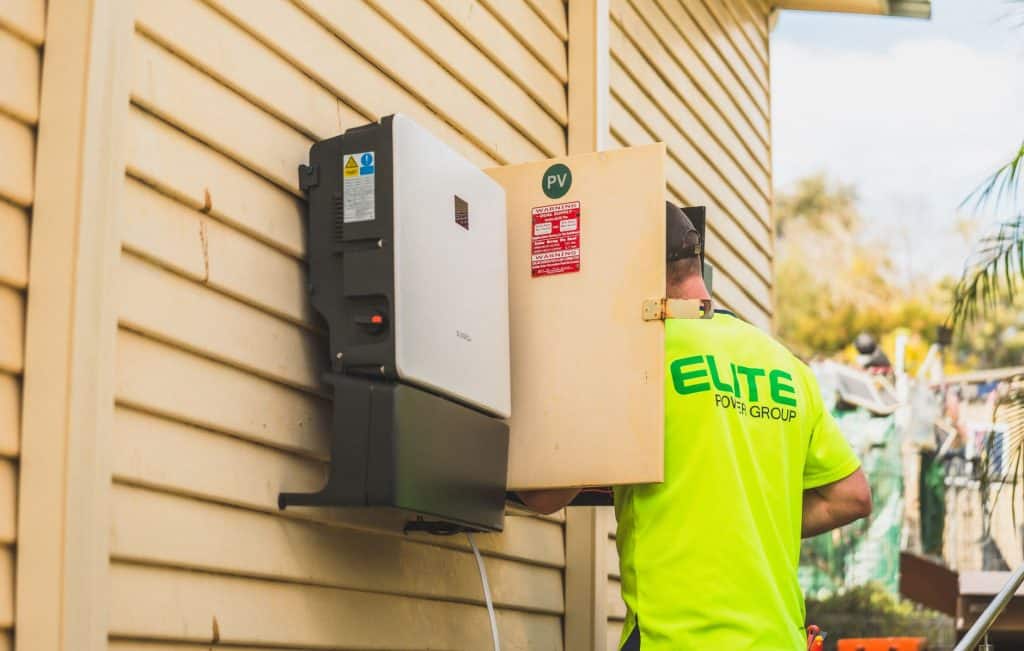
Connecting a community solar project to the electric grid commonly delays overall project feasibility and implementation timelines. These interconnection challenges primarily stem from distribution grid capacity limitations and prolonged utility approval processes driven by multi-customer connections at a single interconnection point.
Community solar projects aggregate multiple small subscriber meters behind a single point of common coupling (PCC), contrasting with utility-scale solar plants that connect via dedicated transmission lines. This model requires compliance with technical and regulatory frameworks designed for handling distributed generation and multiple metering points, complicating utility integration.
Interconnection queue durations vary significantly but typically range between 12 to 24 months. This depends on regional grid congestion, utility workload, application completeness, and the project’s capacity impact on distribution feeders already operating near or at maximum load.
Cumplimiento con IEEE 1547-2018 is mandatory. This standard defines inverter requirements such as low/high voltage ride-through, frequency ride-through, anti-islanding protection, and dynamic reactive power capabilities necessary to maintain grid stability with high penetration of inverter-based resources.
Modern smart grid demands include bi-directional communication protocols conforming to standards like IEC 61968/61970 for energy management interfaces, enabling real-time data exchange for variable generation forecasting and multi-subscriber billing. Incorporating advanced metering infrastructure (AMI) compliant with regulations such as the US Energy Policy Act or equivalent regional requirements entails capital investment in smart meters and control systems.
To address interconnection delays, some utilities offer staged interconnection agreements allowing projects to connect at a fraction of rated capacity while awaiting full grid upgrades. These arrangements reduce upfront waiting times but require close monitoring to ensure capacity compliance. Grid reinforcement investments, potentially funded via utility incentives, project contributions, or government grants, alleviate distribution constraints and shorten queue durations.
- Distribution interconnection queue times range 12–24 months depending on region and utility workload.
- Mandatory compliance with IEEE 1547-2018 inverter standards covering ride-through and reactive power.
- Smart grid integration requires IEC 61968/61970-compliant communication and AMI for subscriber management.
- Staged interconnection and targeted grid upgrades reduce queue delays; funding mechanisms vary by jurisdiction.
Regulatory and Permitting Barriers for Community Solar in Rural Areas
In rural settings, community solar projects navigate complex and layered regulatory requirements distinct from large-scale solar developments. These include local zoning, environmental impact assessments, and land-use approvals that typically extend permitting timelines.
Typical permitting phases cover:
- Land-use permits: Municipal zoning approvals addressing compatibility with agricultural uses and residential proximity.
- Environmental assessments: Evaluation pursuant to national or regional environmental protection acts for biodiversity impact, soil erosion, and water management.
- Building permits: Compliance with structural safety codes for mounting systems and electrical equipment.
- Agricultural regulations: Restrictions on land conversion and parcel fragmentation under agrarian law.
Average permitting durations for community solar projects in rural jurisdictions range between 6 to 9 months, generally exceeding those for larger utility-scale permits due to additional public consultation and impact evaluations.
Zoning ordinances frequently restrict the contiguous aggregation of multiple parcels to maintain local land-use character, hindering projects aiming for capacities up to 10 MW. Negotiations with landowners and iterative adjustments to project boundaries can extend timelines further.
Regulatory uncertainty arises from variations in incentive eligibility, shifting political priorities regarding renewable energy, and ongoing reforms of permitting procedures. This uncertainty affects financing due diligence and proposal finalization, sometimes causing delays exceeding six months beyond initial estimates.
Some jurisdictions are enacting reforms for 2026 aimed at creating unified application platforms, standardizing environmental review thresholds, and instituting strict maximum processing times (e.g., 90 days for certain permits), which should reduce bureaucratic overhead and permit durations.
- Permitting timeframe: 6–9 months typical for community solar in rural areas.
- Land-use zoning often restricts contiguous parcel aggregation required for ≤10 MW projects.
- Regulatory uncertainty regarding incentives and evolving policies complicates financing and proposal approval.
- Pending 2026 reforms aim for standardized permitting processes with strict review deadlines.
Financial Structuring Challenges and Solutions in Solar Plus Garden’s Model
Community solar financing encounters obstacles from investor risk tolerance, minimum capital contributions, and deferred return periods. Many small to medium investors hesitate due to upfront capital demands and uncertain long-term payback horizons typical of utility-interconnected PV plants.
Solar Plus Garden’s membership fee model addresses these barriers by decoupling community access from direct solar asset ownership. Members pay a one-time €200 membership fee, which is pooled into solar development financing. An optional €20 monthly subscription provides 18 deliveries per year of locally grown produce via the jardinera service, enhancing member engagement.
This mechanism permits inclusion of members unable or unwilling to commit to capital-intensive solar investments while still participating in the project’s ecosystem. Collected fees are managed via regulated escrow accounts compliant with European financial oversight frameworks to ensure funds are used solely for solar development and community upkeep.
The investment returns from solar asset operations fund garden maintenance and community events, creating a transparent financial feedback loop. Detailed quarterly reporting on fund allocation and performance is provided to members, fostering trust and compliance with 2025 EU sustainability transparency directives.
- One-time membership fee: €200; optional garden box subscription at €20/month with 18 annual deliveries.
- Community access independent of direct solar investment broadens participant base.
- Escrow-managed funds ensure exclusive use for solar asset financing and community costs.
- Solar-generated revenues underwrite garden operations and community engagement sustainably.
Technical Integration of Agrivoltaics: Combining Solar Production and Community Agriculture
Agrivoltaic integration involves designing solar arrays to co-exist with agricultural production without compromising output on either side. This requires technical design choices that optimize solar energy harvest while minimizing shading and microclimate effects on crops.
Solar Plus Garden deploys fixed-tilt fotovoltaica modules with spacing calibrated to local solar irradiance and crop height profiles to limit shading to less than 15% of daylight hours during peak growth months. Such spacing assessments use computational modeling of sun angles and shading footprints for each parcel.
The garden system encompasses up to 3,000 plots (boxes), each approximately 10 m², distributed across the site to balance solar infrastructure density with community plot accessibility. Management software allocates plots via automated systems accounting for member preferences, maintenance schedules, and agronomic considerations.
Maintenance coordination between solar technicians and agricultural managers follows a defined calendar where PV panel cleaning and inverter servicing are scheduled outside peak planting and harvesting windows, mitigating operational conflicts.
The garden operates as a separate legal entity from the Estonian OÜ owning the solar assets. This separation facilitates distinct contractual agreements, governance frameworks, and liability management while enabling scalable expansions based on member growth and solar capacity increments.
- Fixed-tilt array layout reduces shading impact to below 15% on crops during critical growth periods.
- Up to 3,000 garden plots, each ~10 m², distributed to optimize solar and agricultural activity.
- Synchronized maintenance scheduling to accommodate agrivoltaic dual-use requirements.
- Separate legal entities for solar assets and garden operations enable clear governance and scalability.
Managing Community Engagement and Membership Dynamics Without Direct Investment
Requiring capital investment for community solar participation often limits inclusivity and slows community buy-in. Solar Plus Garden’s model bypasses this barrier by granting membresía de la comunidad through a transparent fee structure rather than equity purchasing.
Governance includes strict financial controls that explicitly prohibit fund use outside designated solar asset investments and community operations. These controls avoid “escrow-like” informal arrangements lacking regulatory oversight, ensuring compliance with EU financial regulations and investor protection guidelines.
The dual legal structure uses an Estonian OÜ to own the solar assets and a separate legal entity holding exclusive rights to the community garden concept and member services. This separation clarifies roles and responsibilities, preventing conflicts of interest and maintaining operational transparency.
Solar power sales revenues flow into community funds to sustain social activities and reduce membership costs over time, aligning economic incentives with sustainability and social objectives embedded in the project proposal framework.
- Community membership occurs independently of direct solar investment, promoting social inclusion.
- Strict governance and financial control frameworks prevent unregulated fund usage.
- Legal separation: Estonian OÜ owns solar assets; distinct entity manages garden membership and community benefits.
- Solar revenue supports ongoing community engagement and activity funding sustainably.
Impact of Evolving 2025-26 Sustainability Standards on Community Solar Projects
New EU sustainability directives introduced in 2025 require renewable projects to report on biodiversity impact, lifecycle emissions, and regenerative agricultural practices. Community solar projects combining energy generation with food production must address these multi-dimensional standards explicitly.
Agrivoltaic projects like Solar Plus Garden contribute positively by preserving soil health, supporting pollinator habitats, and reducing land-use conflicts, aligning with the EU Biodiversity Strategy for 2030. These contribute to sustainability metrics beyond energy performance, required in project proposals submitted for financing or permitting.
Current certification schemes such as ISCC PLUS y Iniciativa de Informes Globales (GRI) lack tailored indicators for hybrid community solar-agriculture systems. Projects typically supplement standard reporting with bespoke environmental impact assessments and stakeholder engagement disclosures to fully comply.
Policy encouragement for transparent community involvement and sustainability reporting incentivizes projects to integrate comprehensive monitoring frameworks and publish impact results to enhance credibility and ensure compliance with evolving regulatory pressures.
- 2025 EU directives mandate biodiversity, lifecycle emissions, and regenerative agriculture metrics for renewable projects.
- Agrivoltaics supports compliance with EU Biodiversity Strategy targets via integrated land stewardship.
- Certification gaps require supplemental reporting frameworks tailored to community solar-agriculture hybrids.
- Transparent stakeholder engagement and sustainability reporting encouraged under evolving policy frameworks.
Standard Operation and Maintenance Challenges for Community Solar Plants
Operating a 10 MW community solar installation involves complexities due to the dispersed subscriber base and variable demand profiles. Reliable operation requires coordinated activities to manage multiple accounts within utility billing systems and maintain high system availability.
Industry-standard maintenance for fixed-tilt photovoltaic systems of this scale follows ISO 45001 safety protocols and IEC 62446 documentation requirements. Scheduled activities include monthly inverter performance diagnostics, biannual panel cleaning, and annual preventative inspections addressing electrical connections and structural integrity.
Remote monitoring platforms using SCADA systems enable real-time anomaly detection, allowing prompt response to inverter trips or output dips. Integration with member portals provides data transparency, enabling subscribers to track production aligned with their usage and optimize consumption patterns.
Maintenance windows are scheduled to avoid conflicts with community garden events and peak agricultural activities, preserving the agrivoltaic dual-use balance. Communication protocols between the solar O&M team and garden managers define escalation procedures to minimize disruptions.
- Operation in line with ISO 45001 and IEC 62446 maintenance and safety standards.
- Remote SCADA monitoring facilitates prompt fault detection and resolution.
- Maintenance planning respects agrivoltaic land use and community event scheduling.
- Subscriber management supports complex billing and variable usage through integrated platforms.
Preguntas frecuentes
- What causes typical delays in connecting a community solar project to the grid?
- Delays primarily result from limited distribution feeder capacity, extensive interconnection queues lasting 12–24 months, and expensive grid reinforcement requirements. Utility workload and completeness of interconnection applications also influence timelines.
- How does Solar Plus Garden ensure community members can participate without investing directly in solar assets?
- Membership is granted via a one-time €200 fee and optional monthly garden box subscriptions. These fees are pooled and escrows ensure transparent allocation exclusively toward solar asset development and community operations, enabling access without direct capital investment in solar.
- What are key regulatory challenges for community solar projects in rural areas?
- Challenges include prolonged permitting averaging 6–9 months, zoning laws restricting parcel aggregation, and ongoing policy uncertainties affecting incentive stability and project financing.
- How does integrating agrivoltaica affect project planning and operation?
- Agrivoltaics demands balancing solar panel placement with crop sunlight needs, minimizing shading impacts, and coordinating maintenance schedules to support both solar production and agricultural productivity sustainably.
Conclusión
Early evaluation of local grid interconnection capacity and regulatory conditions is critical for accurately assessing community solar project feasibility and impacts on costs and timelines. Financial frameworks such as Solar Plus Garden’s membership model facilitate community participation by mitigating capital entry barriers without necessitating direct solar investments.
Aligning project design and operation to evolving sustainability standards through agrivoltaic integration supports proposals that meet enhanced biodiversity and lifecycle emissions criteria increasingly demanded by policymakers and financiers. Due to ongoing changes in utility interconnection policies and regulatory reforms, continuous monitoring of relevant updates is necessary before project commitment.