Zum Inhalt springen






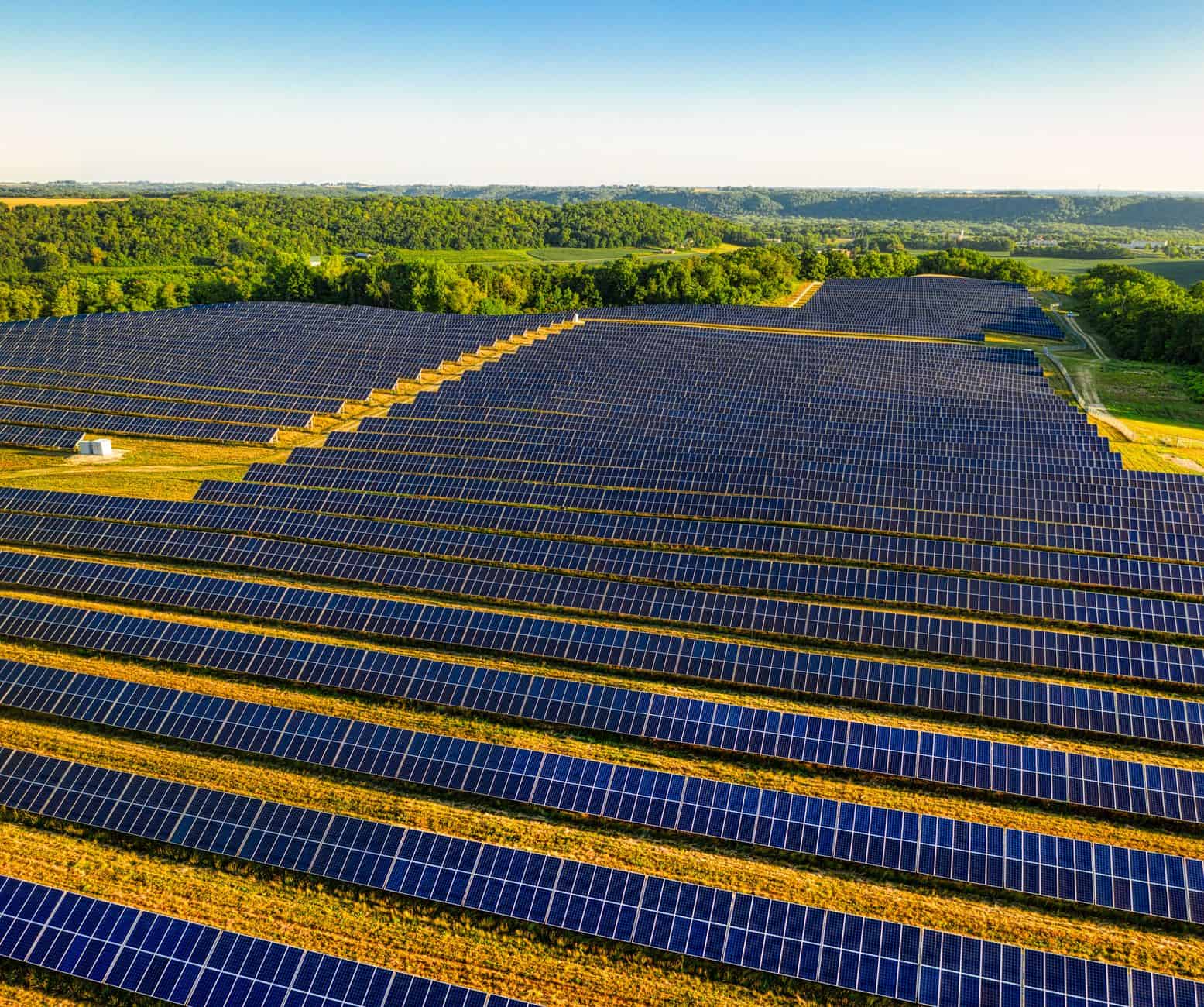
Agrivoltaics Trends for 2026-2027: Six Shifts Reshaping Project Design
Agrivoltaik trends for 2026-2027 are not about proving that crops can grow under panels. They are about which mounting, module and crop combinations make a site bankable. Agrivoltaics means placing a solar array and agricultural production on the same land area and managing both as one system. The cluster explainer covers what the practice is; this article covers where project design is heading.
Four design variables will decide most of the projects that reach financial close in this window: mounting height, panel density (row pitch and spacing), module bifaciality, and irrigation integration. Everything below returns to those four. Subsidy and tariff regimes remain the largest single uncertainty in every market and are subject to change, so no figure is given for them here. Each section below handles one trend a developer or investor can act on now — a design decision, a cost line, a lender question — not a forecast.
Why agrivoltaics trends for 2026-2027 point to design-led projects, not capacity-led ones
The earlier phase of the market rewarded capacity. A site was sized in megawatts, the racking was bought at the lowest cost per kWp, and the agricultural use was described in the planning file and then managed informally. That approach breaks down as soon as the agricultural revenue line appears in the business plan, because the cheapest racking is usually the shortest and the densest — the two properties that most constrain what can be grown or driven underneath.
Design-led means the sequence runs from the agricultural operation back to the electrical layout, not the other way round. In practice, 2026-2027 projects that hold up to lender scrutiny share four traits:
- Mounting height is set by the tallest machine, animal or crop operation on the block, not by a catalogue default.
- Panel density varies block by block so that shade-tolerant and shade-sensitive crops are not forced into one layout.
- Bifaciality is treated as a revenue lever on wide-pitch layouts, where the rear-side gain from a brighter, higher-albedo under-panel surface can be captured.
- Irrigation integration is designed with the racking, because water lines, drainage and root-zone moisture under the array are structural and agronomic issues at the same time.
Market-wide, the binding constraint is policy. Feed-in tariffs, auction ceilings, agrivoltaic bonus schemes and land-classification rules differ by country and are all under revision across 2026-2027, so any business case built on a specific support level should be re-run before the investment decision. The design choices, by contrast, are within the developer’s control — which is why they are where a project team should spend its engineering budget first.
Elevated mounting heights are becoming a specification, not a preference
Higher clearance is the enabler for almost every other agrivoltaic decision. Tracker and fixed-tilt solar racking raised above the crop canopy lets combines, tractor cabs, sprayers, harvest trailers or livestock pass underneath without dismantling rows. The trade-off is physical and shows up in the bill of quantities: more steel per kW, longer piles or deeper foundations, and a larger wind-load case because the structure presents more area to the wind at greater height. Steel is typically the largest single line that grows when clear height rises, and it grows faster than linearly once the structure needs deeper embedment or a wider base to resist the same uplift.
The specification should be deterministic rather than aspirational. A workable rule:
Required clear height = height of the tallest operation on the block + a safety margin the operator states in writing.
The “tallest operation” might be a harvester with its header raised, a tractor with a sprayer boom, a livestock handler, or simply a person on a ladder for module cleaning. The safety margin should be a number in the O&M plan, agreed with the machinery owner, not a round figure chosen at the design meeting. Once that number exists, the racking type follows: single-axis trackers need more vertical clearance at the torque tube and more room for the rotation envelope than fixed-tilt racks at the same clear height.
Hail, snow and wind are the governing load cases, and they interact with height. A taller structure catches more wind, and the same hail event that dents a low array may pass over a high one — or strike the leading row differently. A common specification practice is to certify the module against a hail impact class under IEC 61215-1 and its hail test sequence (IEC 61215-2), and to require the structural engineer to confirm the supporting structure independent of the module certificate, since the module test governs the module and not the racking. This is why the structural engineer signs off on the height and the load combination, not the module vendor; the vendor warrants a module, not a structure. At procurement, requesting the hail class alongside the standard IEC 61215 certificate sequence is one way to make the vendor’s claim checkable before the foundation design is frozen.
National building codes and agricultural-building rules also differ between EU member states and Serbia, and the applicable document depends on how the land and structure are classified, so the project team should confirm with the local authority which rule governs before the foundation design is frozen rather than assume one travels.
A design sequence that keeps the decisions in order:
- Choose the crop and the machinery that will serve it.
- Measure the machinery clearance on site, not from a brochure.
- Add the stated safety margin to set clear height.
- Select racking type against that height and the rotation envelope.
- Hand the height and type to the structural engineer to define the load case.
Panel density and bifacial modules are being tuned per crop, not per hectare
Row spacing and module density are moving from a site-wide constant to a block-level variable. On a single site, one block may run dense rows to maximise generation, while an adjacent block runs wide row spacing to let more photosynthetically active radiation (PAR) reach a shade-sensitive crop. Bifacial modules, single-axis trackers with backtracking, and semi-transparent or spaced-cell modules are the three technologies doing the work:
- Bifacial modules collect light on the rear face, so a brighter, higher-albedo surface between rows — bare soil, a light mulch, a reflective ground cover — can raise output on wide-pitch layouts where more light reaches the ground. The bifaciality coefficient, stated on the module datasheet, is what quantifies the rear-side gain at a given albedo. Confirm the rear-side row-to-row shading model with the tracker or racking supplier, since the rear face sees a different shade pattern than the front.
- Single-axis trackers with backtracking rotate to avoid row-to-row shading at low sun angles, which matters more when the pitch is tight; backtracking protects yield but changes the shade pattern the crop experiences through the day.
- Semi-transparent and spaced-cell modules pass a fraction of incident light through the module itself, letting a designer trade module efficiency for canopy light without changing the racking geometry.
The crop-side metric to design against is PAR reaching the canopy, not the module’s rated output. Two layouts can have identical module counts and different PAR profiles, which means the agricultural plan has to be drawn before the electrical layout is fixed.
| Layout | Row spacing | Effect on generation density | Effect on PAR at canopy | Suited to |
|---|---|---|---|---|
| Dense section | Narrow pitch | Higher MW per hectare | Lower, with sharper midday shading | Shade-tolerant leafy crops, or grazing |
| Wide section | Wider pitch | Lower MW per hectare, more land per MW | Higher and more even through the day | Shade-sensitive fruiting crops |
The right split cannot be settled from a spreadsheet. It needs at least one full growing season of on-site irradiance and yield data for the specific crop, racking geometry and climate. A 2026-2027 trend is that developers are budgeting that pilot year as a line item up front rather than discovering it after construction, because retrofitting row spacing on a built array is effectively a rebuild. No yield figure is claimed here: crop, climate and module choice dominate the result, and a technical number borrowed from another site would mislead a lender.
Where the 2026-2027 pilot money is going: a cost breakdown of an agrivoltaic block versus a plain solar block
The cost conversation is where agrivoltaics is most often misread. A plain solar block and an agrivoltaic block share most of their cost stack; the differences sit in racking and foundations (more steel, more height), in cabling and string routing (longer runs across wider rows), in O&M access (machinery corridors to maintain), and in an agronomic layer that has no counterpart on a plain array: soil preparation, irrigation, sensors, and the pilot-season measurement.
| Cost line | Plain solar block | Agrivoltaic block | Why it moves |
|---|---|---|---|
| Racking and steel | Baseline | Higher | Elevated mounting, more steel per kW |
| Foundations | Baseline | Higher | Taller structure, larger wind-load case |
| Cabling and string routing | Baseline | Higher | Wider rows, longer runs, machinery-safe routing |
| O&M access | Baseline | Higher | Corridors for machinery and crop operations |
| Agronomic layer (soil prep, irrigation, sensors) | Keiner | New line | No equivalent on a plain block |
| Pilot-season measurement | Keiner | New line | Irradiance logging and yield data for one season |
The agronomic layer is the item most often under-budgeted, and it is the one a 10 MW project can amortise over more hectares than a 1 MW pilot. That scale effect is a structural advantage of larger agrivoltaic sites: the same agronomist, sensor network and irrigation design serve more MW, so the agronomic layer’s cost per kW falls as the plant grows. The 2026-2027 shift is to treat the pilot year as a capitalised line item rather than an afterthought. For investors, that changes how the business case should be read: a project that shows a pilot budget, a measurement plan and a decision gate is a different risk profile from one that shows only a construction schedule. No guarantee and no return figure is offered here — the point is the shape of the cost stack, not its total.
Insurance, crop-loss exposure and the questions lenders now ask before signing
Agrivoltaics risk is not one risk; it is a solar risk and an agricultural risk on the same parcel, and the two are insured and underwritten differently. A 2026-2027 lender or insurer will test at least four categories:
- Machinery damage to modules and racking — a harvester clipping a leading-row module, or a trailer striking an elevated leg.
- Crop failure under panels — frost, drought, pest or light shortage that the array configuration makes worse.
- Shading disputes with neighbouring land — a boundary tree or a new building whose shadow crosses the array or the crop.
- Warranty terms on elevated racking — whether the manufacturer’s warranty survives the height and load case the engineer specified.
Crop-loss exposure is not covered by a standard PV insurance policy, which covers the plant and not the crop. That requires a separate agronomic risk discussion with an insurer who understands agriculture, and the terms are not transferable from the solar side. No specific policy or standard is named here because the right instrument depends on the jurisdiction and the crop.
The lender’s question list tends to arrive in a predictable sequence:
- Pilot-season data — irradiance logging and yield results for at least one growing season, on the actual site or a close analogue.
- Independent agronomist sign-off — a named professional confirming the crop plan fits the light and soil conditions.
- Racking warranty and structural report — the engineer’s load case and the manufacturer’s confirmation that the warranty holds at that height and load.
- O&M plan for both the plant and the crop — who maintains the modules, who maintains the irrigation, and what happens when machinery needs the corridor during harvest.
Legal and regulatory treatment of combined land use in Estonia and Serbia is still being clarified and is subject to change, so the project should not assert a specific rule until the local adviser confirms it in writing. What a lender will accept is a documented trail from pilot data to agronomist to structural report to O&M plan — the same sequence as the checklist above.
What a 2026-2027 agrivoltaics site visit should check before the first module goes up
Site assessment for an agrivoltaic project adds agricultural checks that a plain solar survey does not include. Five pre-construction steps, each with a deliverable an investor or lender can read:
- Soil survey and drainage. Deliverable: a soil report covering structure, compaction risk and drainage. This is the point most often skipped, and it matters because the installation traffic for elevated racking can compact soil and change root-zone behaviour for years. Design the construction routes and the recovery plan before machinery arrives.
- One full season of irradiance logging. Deliverable: an irradiance dataset at the candidate heights and spacings, not a single sensor reading. This feeds the PAR decision in the layout.
- Machinery clearance measured on site. Deliverable: a clearance drawing showing the tallest operation, the safety margin and the resulting clear height, signed by the operator.
- Grid connection confirmation. Deliverable: a connection agreement or the operator’s written position on the requested capacity. Without it, the design has no revenue path.
- Agronomist’s crop plan. Deliverable: a season-by-season crop plan matched to the block layout, including rotation and the pilot crop.
Then sequence the build. Install a pilot block first, measure for one full growing season, and release the main build only when the data supports the layout. That pilot gate is the single most useful control a project team can put in front of capital, because it converts an assumption about crop yield and racking performance into a measured result before the majority of the spend is committed.
Garden-community agrivoltaics versus utility-scale agrivoltaics: two different 2026-2027 business cases
Community agrivoltaics and utility-scale agrivoltaics share the physics but not the first funding priority. Side by side:
| Modell | What it funds first | Revenue and value drivers | Dominant early risk |
|---|---|---|---|
| Utility-scale (e.g. a 10 MW plant with an agronomic layer) | Racking, grid connection, structural design | Electricity offtake; agricultural revenue as a secondary line | Grid connection and tariff regime, subject to change |
| Community / garden | Member onboarding, produce logistics, plot infrastructure | Membership revenue and produce delivery as part of the value proposition | Member retention and logistics cost per delivery |
The Solar Plus Garden direction sits in the second column, built around a 10 MW solar plant. Garden membership is a €200 one-time fee that is invested in solar, and the optional Gartenkasten is €20 per month for 18 deliveries a year of fresh produce, with capacity for up to 3,000 plots. Garden access is not conditional on a direct solar investment; the membership fee is invested in solar, and community activities and their running costs are funded from solar revenue. The Garden operates through a separate legal entity from the Serbian DOO that owns and manages the plant, so a member reads two agreements on their own terms rather than one blended promise.
The design implication is that the community model needs its produce logistics and plot infrastructure funded before the array is fully built, while the utility model puts racking and grid connection first. That ordering, not the technology, is what makes the two 2026-2027 business cases different.
Four signals that will tell you whether a 2026-2027 agrivoltaics trend is real for your site
Apply four decision criteria before committing capital. Each has a documentary pass condition, not an opinion:
- Grid connection. Pass looks like a connection agreement or written operator position for the requested capacity. A verbal indication is a fail.
- Crop plan survival. Pass looks like one growing season of measured yield data under the actual racking geometry, or an agronomist’s signed plan backed by local trial data. A brochure is a fail.
- Lender acceptance of the racking warranty. Pass looks like the manufacturer’s written confirmation that its warranty covers the height and load case the structural engineer specified.
- Opex coverage. Pass looks like an agronomic revenue line that covers the agronomic layer’s OPEX — irrigation, sensors, labour, pilot measurement — in the base case, not only in the best case.
A “no” on any one of the four is a reason to redesign the site, not to abandon it. The usual fixes are a different crop block, a different racking height, or a smaller first phase sized to what the connection will accept. Re-check all subsidy and tariff assumptions in the quarter the decision is made, because those regimes are subject to change and a business case built on last year’s support level is a business case built on a different project.
Häufig gestellte Fragen
What is the realistic payback period for an agrivoltaic project started in 2026?
There is no single number, because payback depends on the local electricity price or tariff, the racking cost premium, and whether the agronomic layer produces revenue. A developer should build the payback sketch from their own quoted racking cost, confirmed offtake price and one season of pilot data. Tariff and subsidy regimes in most markets are subject to change during 2026-2027, so any payback figure should be re-run at the point of final investment decision, not borrowed from another project.
Can I combine a solar investment with a garden membership at Solar Plus Garden, or are they separate?
They are separate. Garden community access is not conditional on a direct solar investment; membership is a €200 one-time fee that is invested in solar, and the optional garden box is €20 per month for 18 deliveries a year. The Garden part of the project operates through a separate legal entity from the Serbian DOO that owns and manages the plant, so a member should read each agreement on its own terms.
Which crops actually work under elevated panels, and which should I avoid?
The answer depends on the light levels your specific racking design delivers to the canopy, which is why row spacing and mounting height have to be chosen per crop block. Shade-tolerant leafy crops and some root crops are the usual starting point; shade-sensitive fruiting crops need wider row spacing and are harder to justify on dense layouts. The only reliable way to decide is a pilot block measured over at least one full growing season before committing the main build.
Do I need a separate insurance policy for the crops under the panels?
Yes, in most cases. A standard PV insurance policy covers the plant, not the crop, and crop-loss exposure is a separate agronomic risk. Before signing, ask the insurer in writing whether machinery damage to elevated racking and crop failure under the panels are covered, and take the answer to the lender alongside the racking warranty and the structural report.
Treat the 2026-2027 agrivoltaics trends as a set of design decisions, not a forecast: pick the mounting height from the tallest operation on the site, set row spacing per crop block, budget the agronomic layer as a capitalised line, and put a one-growing-season pilot block in front of the main build. If you are evaluating the Solar Plus Garden direction, read the solar investment and the Garden membership as two separate agreements, because they are. What would change this advice: a confirmed local tariff or subsidy change, a lender that accepts the racking warranty without a pilot season, or a grid connection that cannot be secured — any of those three should send you back to the design before you commit capital. Re-check all tariff and subsidy assumptions in the quarter you make the decision, because those regimes are subject to change.